Electrical fires start without warning and spread fast, especially when the source is a power strip buried under a desk or a distribution panel behind a utility closet. The critical question most homeowners face is not whether they need an extinguisher, but what type of fire extinguisher for electrical fires actually works on energized circuits without creating a shock hazard or damaging sensitive equipment. The answer depends on the agent inside the unit, the rating on the label, and the environment where you store it.
We compared eight widely available options using published specifications, current pricing, and owner-reported experiences to identify which models cover Class C hazards most reliably. What separates a good choice from a bad one comes down to agent type, multi-class rating, mounting flexibility, and whether the unit suits your specific scenario—garage, server room, kitchen, or vehicle. Below you will find a roundup organized by use case, with notes on where each product excels and where it falls short.
Our top picks



As an Amazon Associate we earn from qualifying purchases at no extra cost to you.
Quick Picks
| Product | Best For | Price |
|---|---|---|
| Kidde Basic 110 2-Pack | General home protection on a budget | $35.95 |
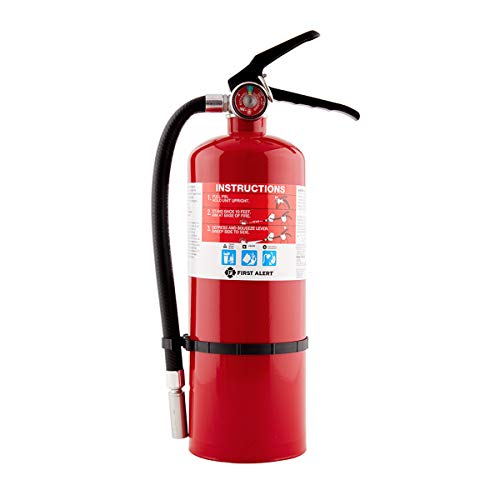
| First Alert Heavy Duty Home & Commercial | Multi-room coverage with larger discharge | $42.98 |
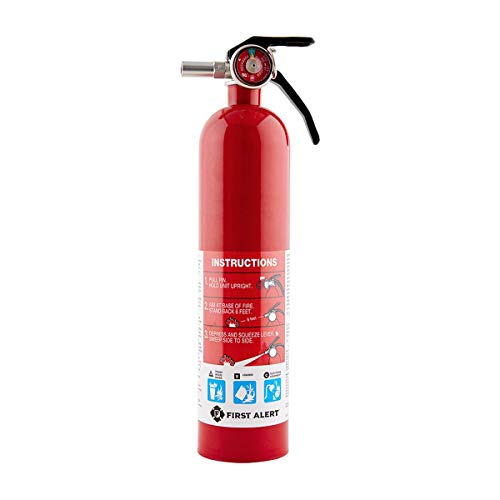
| First Alert Standard Home Use | Single-room starter at the lowest cost | $19.98 |
| Kidde Auto 10 | Cars and trucks with electrical wiring risk | $20.96 |
| 2PACK 5lb Dry Chemical 2-A:10-B:C | Workshops or small businesses needing two units | $104.99 |
| Automatic Dual-Line Cabinet Extinguisher | Electrical distribution boxes and cabinets | $41.95 |
| First Alert Heavy Duty Commercial | Offices, warehouses, and high-risk commercial spaces | $72.98 |
| 2-Pack ABC 5lb Dry Chemical | Boats, trucks, and multi-location home use | $106.93 |
How We Picked
Three criteria determined our shortlist. First, Class C rating: every unit must be certified for energized electrical fires without conducting the agent back to the source. Second, real-world suitability: a five-pound ABC unit works in a living room but is overkill for a car, while a compact B:C extinguisher handles vehicle wiring but cannot touch a kitchen grease fire. Third, value per use case: we weighed pack pricing, expected service life, and owner feedback on nozzle durability and ease of inspection. Units that failed on any single criterion were excluded.
The 8 Best What Type Of Fire Extinguisher For Electrical in 2026
1. Kidde Basic 110 Fire Extinguisher for Home (FA110G, 2-Pack)
This pair is the default recommendation when someone asks what type of fire extinguisher for electrical fires covers an entire small home without blowing past a moderate budget. The 1-A:10-B:C rating means it handles energized circuits, flammable liquids, and ordinary combustibles alike. Owners praise the wall-mount bracket included in the box and the lightweight canister that anyone can lift in an emergency. The trade-off is a relatively short discharge time, around nine seconds, so you must commit your aim and pull the pin before approaching. Skip this one if you need a unit for a commercial kitchen or a high-voltage panel room where the B:C rating is insufficient.
2. First Alert Fire Extinguisher, Heavy Duty for Home & Commercial Use
Step up from basic home units and this model delivers a larger agent charge and longer spray reach, making it suitable for open workshops or retail floors. Owners highlight the aluminum construction that resists corrosion in humid garages. The dual-class home-and-commercial designation means it meets codes in light commercial spaces without requiring a separate unit. On the downside, the pull-pin mechanism has drawn criticism from a few long-term users who found it stiff after years on a wall. If your priority is the lowest possible per-unit cost, the standard First Alert below beats this one on price alone.
3. First Alert Fire Extinguisher, Standard Home Use
At under twenty dollars, this single unit is the most accessible entry point for renters or anyone adding protection to one room. It carries a verified ABC rating and handles energized electrical fires on appliances and outlets. The compact size fits under a sink or behind a door without drawing attention. The limitation is discharge duration—roughly six to seven seconds—so it works best as a first-strike tool before calling 911. Skip this model if your space contains a server rack or breaker panel; the smaller agent volume may not suppress the fire before it spreads beyond reach.
4. Kidde Auto 10 Fire Extinguisher for Cars and Trucks (M10G)
Designed specifically for vehicles, this 10-B:C unit targets wiring fires under the hood or inside dashboards without the risk of a heavier ABC powder contaminating engine components. Owners appreciate the bracket that secures it against vibration and the compact form that fits behind a seat. The drawback is that it cannot handle ordinary combustible fires, so a seat or floor mat ignition is outside its range. If you want a single extinguisher that covers both vehicle wiring and a trash-can fire in the same canister, look at the five-pound ABC options instead.
5. 2PACK 5lb Dry Chemical Fire Extinguisher 2-A:10-B:C
This two-pack suits a small business owner or a homeowner with a detached garage who wants matched coverage in two locations. The 2-A:10-B:C rating provides a modest boost over single-purpose B:C units while remaining manageable to operate one-handed. Owners note the durable brass valve assembly that resists the corrosion issues common in cheaper steel valves. The premium price is the main hesitation: at over a hundred dollars for the pair, you are paying roughly three times the per-unit cost of the Kidde Basic. Skip this if you only need one unit or if your budget is tight.
6. Automatic Fire Extinguishing Device Dual-Line Cabinet Extinguisher
This is a specialized answer for anyone asking what type of fire extinguisher for electrical distribution boxes or control cabinets without manual intervention. The snap-on guide rail design mounts inside a panel enclosure and discharges agent automatically when flame is detected, suppressing the fire before a person ever opens the door. The non-pollution claim means it leaves no residue on breakers and bus bars, which is critical for uptime. The limitation is obvious: it protects only the enclosed space and does nothing for open-area fires. If your concern is a living-room outlet, a portable ABC unit remains the right tool.
7. First Alert Fire Extinguisher, Heavy Duty for Commercial Use
Targeted at facility managers stocking break rooms, warehouses, and loading docks, this model offers extended discharge time and a larger agent charge than residential options. Owners report that the squeeze-lever handle remains operable even with gloves on, a practical detail in cold storage environments. The cost is the clearest barrier at over seventy dollars for a single unit. If you are outfitting a small home office or a single-car garage, the heavy-duty commercial unit is more extinguisher than the scenario demands, and the home-focused options deliver equivalent electrical protection at a fraction of the price.
8. 2-Pack ABC 5lb Dry Chemical Fire Extinguishers (2A:10B:C)
This pair earns its spot for versatility: one for the home, one for the boat or truck, with a quick-release handle that makes repositioning fast. Owners specifically call out the 2A:10B:C rating as a sweet spot between residential convenience and commercial capacity. The powder formulation handles grease, flammable liquids, and energized circuits, so you are not guessing about fire class. The con is weight; five pounds feels light on a shelf but noticeable after a few seconds of sustained aiming. Skip this model if you want something you can hand to a child or an elderly family member without a moment of hesitation.
Buying Guide
Agent Type and Class C Compatibility
For energized electrical fires, you need a non-conductive agent. Dry chemical ABC powder and clean agents like CO2 or halogenated fluids are safe on live circuits. Water and foam extinguishers are not—ever. When comparing what type of fire extinguisher for electrical applications suits your needs, verify the Class C label on the rating panel, not just the product name.
Rating Numbers and What They Mean
The letter-number combination tells you how much of each fuel the unit can suppress. The number before the letter scales with area or volume. A 2-A:10-B:C unit covers more than a 1-A:10-B:C unit on ordinary combustibles while matching on flammable liquids and electrical. For a typical room with an outlet panel, a rating of at least 1-A:10-B:C is the practical minimum.
Mounting, Inspection, and Service Life
A unit that is hard to reach or hard to inspect is a unit that fails when needed. Wall brackets, vehicle mounts, and automatic cabinet systems all solve this differently. Check the pressure gauge monthly and replace or recharge after six to twelve years depending on the manufacturer. The automatic cabinet devices eliminate the human inspection step entirely, which matters in sealed panels where opening the door defeats the purpose.
Our Verdict
The best overall pick for most homeowners is the Kidde Basic 110 two-pack: it covers the full ABC range, includes mounting hardware, and costs less than a single premium unit. The best budget entry is the First Alert Standard Home Use at $19.98, ideal for a single room where you want verified electrical protection without committing to a larger purchase. If your concern is specifically a distribution panel or control cabinet that cannot be opened during a fire, the Automatic Dual-Line Cabinet Extinguisher wins outright because no portable unit can match its hands-free, residue-free suppression inside an enclosure.
FAQ
Can I use a CO2 extinguisher on an electrical fire?
Yes. CO2 is non-conductive and leaves no residue, making it a clean choice for energized circuits and electronics. The main limitation is outdoor or drafty use, where the gas disperses quickly.
What does the C in ABC stand for?
Class C designates fires involving energized electrical equipment such as motors, transformers, outlets, and circuit breakers. The extinguisher must use a non-conductive agent to qualify.
How often should I replace a dry chemical extinguisher?
Most manufacturers recommend a full replacement or professional recharge every six to twelve years. Monthly visual checks of the pressure gauge and pin seal catch premature failures before they matter.
Is a 2A:10B:C rating sufficient for a home office?
For a typical home office with a computer, printer, and wall outlets, a 2A:10B:C unit provides adequate coverage. If you house a rack-mount server or large UPS battery bank, consider pairing it with an automatic in-enclosure device for layered protection.