During severe storms, power outages, and sudden localized emergencies, real-time communication channels provide a vital window into rapidly evolving situations. A dedicated police radio scanner allows homeowners, storm spotters, and emergency planners to monitor public safety broadcasts, weather alerts, and localized traffic logistics directly from original dispatch sources. Relying solely on cellular networks or broadcast television during a disaster can lead to delayed updates when infrastructure fails or regional towers become overwhelmed.
Selecting an effective radio receiver requires matching the broadcast technology used by your local municipal services to the receiver’s decoding capabilities. Public safety agencies across different jurisdictions operate on a wide variety of infrastructure, ranging from simple analog bands to complex digital trunking networks. By analyzing manufacturer technical specifications, user documentation, pricing metrics, and extensive owner feedback, we evaluated the market to identify top-performing receivers based on channel capacity, signal capture features, form factor, and value.
Our top picks



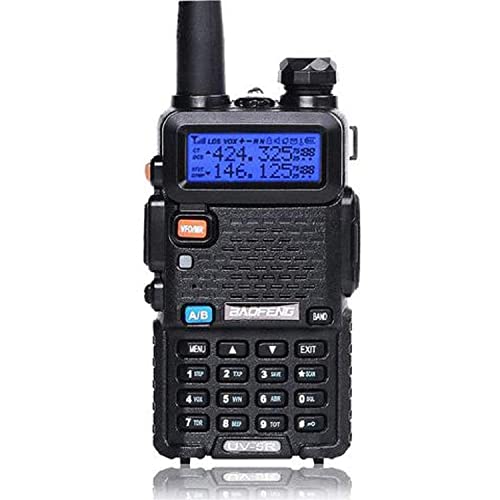 Baofeng UV-5R Ham Radio Handheld
- Frequency Range: 144-148MHz, 420-450MHz
- 128 Channels 50 CTCSS and 104 CDCSS Dual-Band…
- High/Low TX power selectable: Busy channel lock-out(BCLO),128 Channels…

As an Amazon Associate we earn from qualifying purchases at no extra cost to you.
Quick Picks
| Product | Best for | Price |
|---|---|---|
| Uniden Bearcat BC125AT | Portable Analog Monitoring | $139.99 |
| Uniden BC365CRS | Bedside Emergency Station | $119.58 |
| Whistler WS1025 | Desktop Analog Base | $145.95 |
| Uniden SDS150 | Advanced Digital & Simulcast | $949.99 |
| Baofeng UV-5R | Ultra-Budget Monitoring | $15.97 |
| Uniden BCD996P2 | Digital Trunking Mobile/Base | $399.26 |
| Uniden Bearcat SR30C | Compact Handheld Scanning | $128.87 |
| Uniden BC355N | Entry Mobile/Base Receiver | $127.7 |
How We Picked
To determine the top receivers in this category, we focused our comparison on four primary evaluation criteria: signal compatibility (analog vs. digital trunking), channel memory capacity, dedicated threat detection features (such as instantaneous close-range signal capture), and overall physical versatility for desktop or mobile emergency deployment. By contrasting technical data sheets with aggregated feedback from experienced storm monitors, emergency responders, and radio enthusiasts, we identified models that consistently deliver reliable reception, intuitive organization, and durable performance when emergency communications become critical.
The 8 Best Police Radio Scanner Options in 2026
Uniden Bearcat BC125AT Handheld Scanner
The Uniden Bearcat BC125AT is a feature-packed portable receiver tailored for emergency preparedness enthusiasts and storm spotters who require a versatile handheld unit. Equipped with 500 alpha-tagged channels and Close Call RF Capture Technology, this model automatically detects and tunes to strong nearby broadcasts across aviation, marine, railroad, racing, and non-digital public safety bands. Computer programming support enables clean channel organization for quick frequency navigation during active weather events.
- 500 alpha-tagged memory channels for detailed custom frequency labeling.
- Close Call RF Capture instantly locks onto strong local transmissions.
- Does not support digital radio networks or trunked communications.
Skip this scanner if your local emergency management agencies operate exclusively on digital trunking networks.
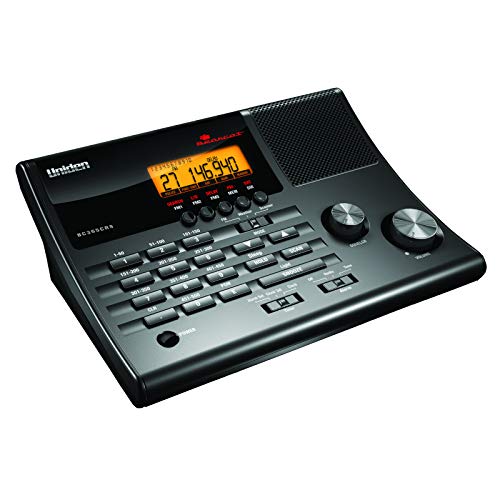
Uniden BC365CRS Scanner and Alarm Clock
Designed as a stationary home alert center, the Uniden BC365CRS combines a 500-channel scanner with an alarm clock, snooze function, FM radio, and weather alerts. It offers specialized search bands covering non-digital police, fire, public safety, aviation, railroad, and marine transmissions. Its continuous desktop design makes it a practical multi-use device for maintaining situational awareness on a nightstand or desk during severe weather warnings.
- Integrated weather alert features combined with a practical desktop alarm clock layout.
- Includes 500 programmable channels covering multiple emergency service bands.
- Lacks digital decoding, Phase 2 support, and trunking capabilities.
Skip this unit if you need a portable hand-held receiver or live in an area with digital public safety signals.
Whistler WS1025 Analog Desktop Scanner
The Whistler WS1025 is an easy-to-use desktop base scanner tailored for users wanting straightforward home radio monitoring. Featuring 200 programmable channels, a crisp backlit LCD display, and pre-configured search bands for police, fire, weather, and marine signals, this black base unit delivers reliable performance without complex navigation. It provides clear audio output in a fixed desktop form factor ideal for storm preparation.
- Clear backlit LCD display offers high visibility during nighttime power outages.
- Simple base unit interface with straightforward button navigation.
- Memory capacity is limited to 200 channels with analog-only reception.
Skip this model if you need to store vast frequency lists or decode complex digital public safety signals.
New Uniden SDS150 Digital Radio Scanner
The Uniden SDS150 represents advanced digital scanning technology, engineered specifically to excel in complex simulcast and weak-signal radio environments. Utilizing Software Defined Radio (SDR) technology, this flagship unit delivers superior voice clarity across modern public safety trunking systems. Built-in GPS capabilities automatically select nearby public safety channels based on your precise geographic location, making it exceptional for mobile emergency tracking.
- Advanced SDR architecture handles difficult digital simulcast signals with high audio clarity.
- Built-in GPS automates location-based service selection for seamless travel monitoring.
- High investment cost relative to basic entry-level analog receivers.
Skip this model if your local area relies purely on basic analog broadcasts and high-end digital processing is unnecessary.
Baofeng UV-5R Ham Radio Handheld
The Baofeng UV-5R is an ultra-budget dual-band handheld transceiver capable of monitoring unencrypted analog VHF and UHF frequencies, including local emergency bands and weather channels. While primarily an amateur radio handheld rather than a dedicated scanner, its extreme affordability and compact form factor make it a popular backup entry in basic emergency kits for budget-focused users.
- Extremely low price point offers accessible dual-band frequency monitoring.
- Compact, portable handheld chassis with standard two-way radio functionality.
- Manual keypad programming presents a steep learning curve without automated scanner features.
Skip this option if you want automated pre-programmed band searches, alpha-tagged memory banks, or digital signal decoding.
Uniden BCD996P2 Digital Mobile Scanner
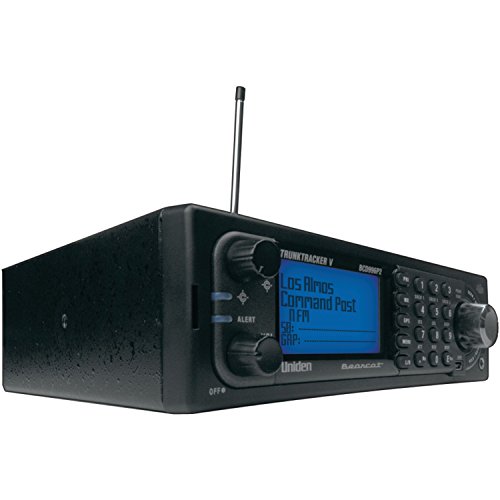
Engineered for vehicle dash mounting or permanent desktop base deployment, the Uniden BCD996P2 features TrunkTracker V technology supporting Phase 2 digital systems. With 25,000 dynamically allocated channels and Close Call RF Capture, this scanner manages complex multi-agency digital networks effortlessly. Its 4-line alpha display gives clear context on active dispatches, making it a robust center for storm tracking.
- Phase 2 digital trunking support with 25,000 dynamically allocated channels.
- Flexible base and mobile mounting layout suitable for vehicles or desk stations.
- Dynamic memory layout requires time to master compared to traditional fixed-channel radios.
Skip this unit if you require a battery-operated handheld scanner for portable field operation.
Uniden Bearcat SR30C Compact Handheld Scanner
The Uniden Bearcat SR30C is a compact handheld scanner built for quick portability during weather events or sporting activities. It provides 500 memory channels, Close Call RF Capture, Turbo Search, and PC programming. The receiver covers racing, NASCAR, aviation, marine, railroad, and non-digital public safety bands in a lightweight body designed for easy one-handed operation.
- Compact, ergonomic housing fits easily into emergency grab-and-go packs.
- Turbo Search rapidly scans through frequency ranges to discover local broadcasts.
- Limited exclusively to non-digital, unencrypted analog transmissions.
Skip this receiver if your local fire and police departments have migrated to digital communication networks.
Uniden BC355N Base/Mobile Scanner
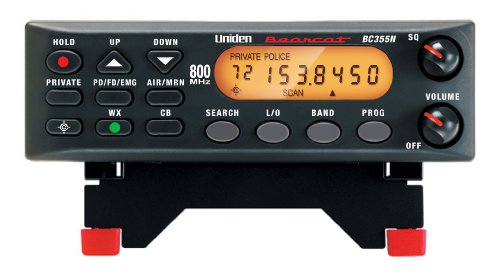
The Uniden BC355N is a budget-friendly 300-channel base and mobile scanner pre-programmed for quick setup. It includes Close Call Capture, NOAA weather alerts, and pre-configured search bands for non-digital emergency services, aviation, marine, railroad, and racing broadcasts. Its versatile mounting accessories make it well-suited for installation in emergency vehicles or home command desks.
- Pre-programmed search bands allow immediate access to local analog bands out of the box.
- Includes power options and mounting hardware for both home desktop and mobile vehicle installation.
- Maximum capacity capped at 300 channels without digital signal capability.
Skip this scanner if your region uses digital trunking or requires extensive alpha-numeric channel tagging.
Buying Guide
1. Understanding Digital vs. Analog Signals
Before purchasing a police radio scanner, determine whether your local emergency services transmit on analog or digital systems. Older, rural, or localized infrastructure frequently uses conventional analog VHF/UHF frequencies, which can be picked up by lower-cost scanners. Modern metropolitan and statewide emergency management agencies generally rely on digital networks, such as APCO Phase 1 or Phase 2 trunking systems. If your municipality uses digital trunking or simulcast networks, an advanced digital receiver with SDR capabilities is necessary to decode broadcasts clearly without missing critical updates.
2. Memory Capacity and Channel Management
Managing frequencies during a severe weather event requires intuitive radio organization. Scanners equipped with fixed channel banks allow you to store frequencies in static blocks, which works well for basic monitoring. Models featuring dynamic memory allocation or alpha-tagging let you assign text names (such as “County Sheriff” or “Severe Weather Dispatch”) to specific channels, making active frequencies instantly recognizable on display screens. High-capacity receivers capable of storing thousands of channels or using location-based GPS programming allow seamless scanning without requiring manual frequency lookups when traveling.
3. Weather Alerting and Rapid Signal Capture
During severe atmospheric threats, immediate situational awareness is paramount. Scanners with integrated NOAA weather alerts can sound automated warnings when severe weather advisories are issued for your area. Furthermore, instantaneous signal capture features—such as Uniden’s Close Call technology—automatically lock onto nearby, high-power radio transmissions. This capability allows emergency monitors to immediately tune into close-range transmissions from nearby emergency vehicles or spotter teams without knowing their exact frequencies in advance.
Our Verdict
For complete emergency preparedness across all signal types, the Uniden SDS150 is our top pick. Its Software Defined Radio platform and built-in GPS deliver unmatched performance in complex digital, simulcast, and weak-signal environments where standard scanners fail.
For buyers seeking an affordable option restricted to analog monitoring, the Uniden Bearcat BC125AT is our recommended budget pick. It offers 500 alpha-tagged channels, Close Call technology, and PC programming at a highly accessible price point.
If you require a fixed mobile or base installation that decodes Phase 2 digital trunking without reaching the premium tier of SDR devices, the Uniden BCD996P2 wins as the best dedicated vehicle and desk setup.
FAQ
Do I need a digital radio scanner to hear local police broadcasts?
Whether you need a digital scanner depends entirely on your local public safety agency’s broadcast equipment. While many rural departments still broadcast on non-digital analog bands, most suburban and urban agencies have transitioned to digital trunking systems. You should research your local county frequencies online to confirm whether they use analog or digital signals before purchasing.
What is Close Call RF Capture technology?
Close Call RF Capture is an automated feature found on select Uniden scanners that instantly detects and tunes to strong nearby radio signals. It eliminates the need to manually search or program local frequencies when a transmitter is operating in your immediate physical vicinity during an emergency.
Can these radio scanners pick up NOAA weather alerts?
Yes, many desktop and handheld radio scanners feature dedicated weather search bands or automated NOAA weather alert modes. Models equipped with weather alert features can remain on standby and sound an audible tone when regional storm advisories or severe weather warnings are broadcast.
What advantage does SDR technology provide in a digital scanner?
Software Defined Radio (SDR) technology processes radio signals digitally via software algorithms rather than relying purely on traditional analog circuits. This provides superior performance when receiving digital trunked networks, especially in difficult simulcast environments where multiple towers transmit identical signals on the same frequency simultaneously.