Our Short List of 3

- Best for: Doors where seeing a visitor and their package in one frame matters most.
- Video: 1536 HD+ video, Live View, color night vision
- Field of view: 150° horizontal, 150° vertical
- Motion detection: Advanced Motion Detection with customizable motion zones
- Audio: Two-way audio with noise cancellation

- Best for: Buyers who want the longest gap between battery changes and a square head-to-toe view.
- Video resolution: 1440 x 1440, 1:1 aspect ratio, 30 FPS
- Field of view: 150° head-to-toe
- Night vision: Infrared
- Power: 3 AA 1.5V lithium metal (non-rechargeable) batteries; up to two-year battery life on default settings; optional connection to existing doorbell wiring (8-24 VAC)

- Best for: Google Home households that want labelled person, package, animal and vehicle alerts without a plan.
- Model number: GA01318-US
- Video: HD video with HDR, 3:4 aspect ratio, 6x digital zoom
- Field of view: 145° diagonal
- Alerts: Intelligent alerts for people, packages, animals and vehicles, no subscription required
All 3 Picks at a Glance
| Product | Specs | Action |
|---|---|---|
| Ring Battery Doorbell Plus |
| Check price on Amazon |
| Blink Video Doorbell (newest model) with Sync Module Core |
| Check price on Amazon |
| Google Nest Doorbell (Battery) – Snow |
| Check price on Amazon |
Key takeaways
- Ring Video Doorbell review: the 2020 battery model with 1080p HD video, compared with Ring Battery Doorbell Plus, Blink and Google Nest picks.
The Ring Video Doorbell is the model most people mean when they say they want a Ring for the front door: a battery-powered camera doorbell with 1080p video, two-way talk and motion alerts in the Ring app. The real decision is not whether it works, but whether its built-in battery, 1080p sensor and subscription-based recording fit the way your household actually uses the front door, or whether a step-up model with a removable battery and a taller field of view would serve you better.
This review looks at the Ring Video Doorbell (2nd Generation, 2020 release) first and in the most depth, using the specifications on its Amazon product page. Alongside it sit three video doorbells of the same type for comparison: the Ring Battery Doorbell Plus, which adds head-to-toe HD+ video and a quick-release battery; the Blink Video Doorbell in its newest-model system bundle; and the Google Nest Doorbell (battery), which leans on built-in intelligence instead of a subscription for its basic alerts.
Quick Picks
As an Amazon Associate we earn from qualifying purchases.
| Product | Best for | Key spec from title |
|---|---|---|
| Ring Video Doorbell (2nd Generation, 2020 release) | The core Ring battery doorbell, reviewed first | 1080p HD video |
| Ring Battery Doorbell Plus | Seeing visitors and packages head to toe | Head-to-Toe HD+ Video |
| Blink Video Doorbell (newest model) with Sync Module Core | Long stretches between battery changes | Head-to-toe HD view, two-year battery life |
| Google Nest Doorbell (Battery) – Snow | Labelled smart alerts without a subscription | Intelligent person, package, animal and vehicle alerts |
How to Choose
Power: built-in battery, removable pack or wired
Start with how the doorbell gets power, because it shapes everyday upkeep. The Ring Video Doorbell reviewed here runs on a built-in rechargeable battery, so recharging means taking the whole unit off its bracket and plugging in the micro USB cable. The Battery Doorbell Plus uses a removable quick-release pack you can swap or charge indoors while the doorbell stays mounted. Blink’s doorbell runs on three AA lithium batteries rated for up to two years. Every model here can also connect to existing doorbell wiring within the transformer range the maker specifies, which keeps the battery topped up.
Video resolution and field of view
Resolution figures only tell half the story at a front door. The Ring Video Doorbell records 1080p HD video with a 155-degree horizontal and 90-degree vertical field of view, a wide but letterbox-shaped picture. The Battery Doorbell Plus raises resolution to 1536 HD+ and squares the view to 150 degrees in both directions, so visitors and packages appear head to toe. Blink matches that square format at 1440 by 1440, while the Nest Doorbell uses a 3:4 portrait ratio with HDR. If parcels left on the step matter to you, vertical coverage deserves as much weight as raw resolution.
Motion detection and smart alerts
Every doorbell here watches for movement and sends phone alerts, but the detail differs. Ring’s Advanced Motion Detection lets you draw adjustable motion zones so the camera pays attention to your porch rather than the street. The Battery Doorbell Plus adds package alerts on its list of features. Google takes a different route: the Nest Doorbell’s built-in intelligence can tell the difference between a person, a package, an animal and a vehicle, and sends those labelled alerts without a subscription. Blink keeps things simpler, with motion detection and app alerts managed through its sync module and app.
Recording history and subscription costs
Live view and motion alerts are only part of ownership; saving video is where the plans come in. On both Ring models, reviewing, saving and sharing recorded video requires a Ring Home subscription, and some listed features sit behind that plan. Blink’s Sync Module Core likewise requires a Blink subscription for video storage, although clips can be handled through the app during the included trial. Google includes three hours of free event video history on the Nest Doorbell, with a Nest Aware plan extending that window. Compare the ongoing plan, not just the hardware, before you commit.
The 4 Best Options
Ring Video Doorbell (2nd Generation, 2020 release)
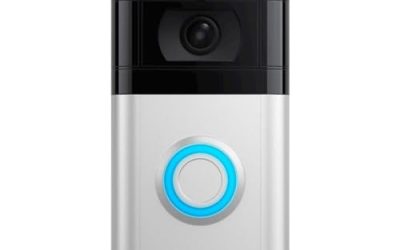
The Ring Video Doorbell (2nd Generation, 2020 release) is Ring’s straightforward battery doorbell. Its Amazon listing leads with 1080p HD video, improved motion detection and easy installation, and the technical details back that up with a 155-degree horizontal field of view, two-way audio with noise cancellation and night vision. Power comes from a built-in rechargeable battery, with the option to hardwire it to an existing doorbell transformer for continuous charging. It connects over 2.4 GHz Wi-Fi and works with Alexa-enabled devices. Two finishes are listed, Satin Nickel and Venetian Bronze, and Ring rates it for outdoor use in temperatures from -5°F to 120°F.
Specs
- Video: 1080p HD video, Live View, night vision
- Field of view: 155° horizontal, 90° vertical
- Motion detection: Advanced Motion Detection with adjustable motion zones
- Audio: Two-way audio with noise cancellation
- Power: Built-in rechargeable battery; can be hardwired to an existing doorbell system or transformer for continuous charging (8-24 VAC, 40VA max, 50/60Hz)
- Connectivity: 802.11 b/g/n Wi-Fi connection at 2.4 GHz
- Dimensions: 4.98 in x 2.44 in x 1.10 in (126.5mm x 62mm x 28mm)
- Available colors: Satin Nickel, Venetian Bronze
- Operating conditions: -5°F to 120°F (-20°C to 48°C), water resistant
Best for: Households that want Ring’s core battery doorbell with the simplest setup in the range.
Watch out for: The built-in battery means the whole doorbell comes off its bracket to charge, and recorded video needs a Ring Home plan.
ASIN: B07ZLF3H2D
Ring Battery Doorbell Plus
- Best for: Doors where seeing a visitor and their package in one frame matters most.
- Video: 1536 HD+ video, Live View, color night vision
- Field of view: 150° horizontal, 150° vertical
- Motion detection: Advanced Motion Detection with customizable motion zones
- Audio: Two-way audio with noise cancellation
Doors where seeing a visitor and their package in one frame matters most.
It is the largest unit here, and features such as package alerts sit within Ring’s subscription feature set.
The Battery Doorbell Plus is the step up within Ring’s own battery range. Its headline specification is Head-to-Toe HD+ video at 1536 resolution, with a 150-degree field of view in both directions and color night vision, so the picture covers a standing visitor and the parcel at their feet. The quick-release battery pack removes for charging without unmounting the doorbell, and the listing also allows hardwiring for trickle charging or using a Ring plug-in adapter. Advanced Motion Detection with customizable zones, two-way audio with noise cancellation and an estimated install time of about five minutes round out the listing.
Blink Video Doorbell (newest model) with Sync Module Core
- Best for: Buyers who want the longest gap between battery changes and a square head-to-toe view.
- Video resolution: 1440 x 1440, 1:1 aspect ratio, 30 FPS
- Field of view: 150° head-to-toe
- Night vision: Infrared
- Power: 3 AA 1.5V lithium metal (non-rechargeable) batteries; up to two-year battery life on default settings; optional connection to existing doorbell wiring (8-24 VAC)
Buyers who want the longest gap between battery changes and a square head-to-toe view.
The AA batteries are not rechargeable, the Sync Module Core must stay indoors within Wi-Fi reach, and video storage requires a Blink subscription.
The newest-model Blink Video Doorbell takes a different approach to power: instead of a rechargeable pack, it runs on three AA lithium batteries that Blink rates for up to two years of life under default settings. The camera records a square 1440 by 1440 head-to-toe HD view with a 150-degree field of view and infrared night vision, and this system bundle includes the Sync Module Core the doorbell needs to connect. It can also be wired to existing doorbell wiring. Two-way talk, motion detection and Alexa support are all listed, in Black or White finishes.
Google Nest Doorbell (Battery) – Snow
- Best for: Google Home households that want labelled person, package, animal and vehicle alerts without a plan.
- Model number: GA01318-US
- Video: HD video with HDR, 3:4 aspect ratio, 6x digital zoom
- Field of view: 145° diagonal
- Alerts: Intelligent alerts for people, packages, animals and vehicles, no subscription required
Google Home households that want labelled person, package, animal and vehicle alerts without a plan.
The battery model cannot record continuous 24/7 video history, even when wired and even with a Nest Aware plan.
The Google Nest Doorbell (battery), model GA01318-US and listed here in Snow, is built around on-device intelligence. Google lists intelligent alerts that can tell the difference between a person, a package, an animal and a vehicle without a subscription, plus three hours of free event video history. The camera records HD video with HDR in a 3:4 aspect ratio, designed to show a visitor head to toe. A built-in rechargeable battery powers wire-free installation, or you can connect it to existing doorbell wires with the included wire connector. It works with Google Assistant and Amazon Alexa.
Which One Fits Your Situation
You have no doorbell wiring at all
Battery power is the deciding factor here. The Ring Video Doorbell and the Nest Doorbell both mount without any existing wires, and the Blink system does the same while adding its indoor sync module. Choose the Ring if you want the Ring app and Alexa announcements, the Nest if you prefer Google Home, and the Blink if going a long stretch between battery changes matters most.
Parcels pile up on your doorstep
Look at vertical coverage first. The Battery Doorbell Plus and the Blink Video Doorbell both frame a square, head-to-toe picture that keeps the doorstep in view, and the Nest Doorbell’s 3:4 portrait ratio is designed for the same job. The standard Ring Video Doorbell’s 90-degree vertical view can crop low packages depending on mounting height, so placement matters more with that model.
You would rather not pay a monthly plan
No subscription buys you live view and alerts on every model here, but recorded history is where they split. Google includes three hours of free event video history with the Nest Doorbell and labels its smart alerts without a plan. Ring and Blink both tie video storage to their subscriptions, so factor that ongoing cost into the Ring Video Doorbell and Battery Doorbell Plus before choosing them.
Your door already has working doorbell wires
Wiring changes the upkeep picture. All four doorbells can connect to an existing doorbell system within the transformer range each maker specifies, which keeps batteries charged and, on the Ring models, can ring your existing chime. Follow the maker’s instructions and switch off power at the breaker before touching the wires. If your transformer falls outside the stated range, battery-only running is the safer setup.
Common Mistakes
- Skipping the subscription check: on the Ring and Blink models, motion alerts arrive without a plan, but reviewing and saving recorded video needs one, so buyers who skip this step end up with live view only.
- Hardwiring to the wrong transformer: each maker states a voltage range for wired installs (8-24 VAC on these models); an out-of-range transformer can damage the device, so check yours before wiring.
- Wiring with the power on: Ring and Google both direct you to switch off power at the breaker before connecting doorbell wires; leaving it live risks a short and a damaged unit.
- Mounting for faces only: a doorbell mounted too high or without the included wedge can crop packages at the step, especially on models with a narrower vertical field of view.
- Ignoring Wi-Fi reach: all four doorbells use 2.4 GHz Wi-Fi, and a weak signal at the front door causes delayed alerts and dropped live view, so test coverage at the mounting spot first.
Frequently Asked Questions
Does the Ring Video Doorbell work without a subscription?
Yes, for live viewing and alerts. Without a Ring Home plan you can watch live video, receive motion and doorbell-press alerts, and use two-way talk in the Ring app. What the plan adds is the ability to review, save and share recorded videos, plus extra features Ring lists as plan-only. If recorded history matters to you, treat the plan as part of the purchase rather than an optional extra.
How do you charge the Ring Video Doorbell?
The battery is built in rather than removable, so you release the doorbell from its mounting bracket and charge the whole unit indoors with the included micro USB cable. How often depends on how many motion events it records and your settings. If removing the unit is a chore, hardwiring it to a compatible existing transformer keeps the battery continuously charged instead.
Can the Ring Video Doorbell be hardwired?
Yes. The listing says it can be hardwired to an existing doorbell system or transformer for continuous charging, within a range of 8-24 VAC and 40VA maximum. Ring’s guidance is to turn off power at the breaker before wiring and to avoid incompatible transformers such as halogen or garden-lighting types. If your existing setup falls outside that range, run it on battery power alone.
What is the difference between the Ring Video Doorbell and the Battery Doorbell Plus?
Three upgrades stand out on the Plus. It records 1536 HD+ video instead of 1080p, widens the view to a square 150 degrees in both directions with color night vision, and swaps the built-in battery for a removable quick-release pack that charges without unmounting the doorbell. The standard model is the simpler, smaller option; the Plus suits doors where seeing packages head to toe matters.
More from Amazon
Programs that pair well with the guide above. Offers and eligibility are set by Amazon and may change.
Free shipping on eligible items, Prime Video and more. Eligible new members can start with a free trial.
Start a Prime free trialAudiobooks and podcasts to listen to on the go. Eligible new members can start with a free trial.
Try Audible freeAd-free music streaming. Eligible new subscribers can start with a free trial.
Try Music Unlimited freeA free business account with business pricing and bulk-buying tools for work, shop or home office.
Create a business accountAs an Amazon Associate we earn from qualifying purchases.