Key takeaways
- Pro: Piggyback plug installs in seconds with no wire nuts or junction boxes.
- Pro: Tethered geometry tolerates irregular pit shapes better than fixed-column switches.
- Con: Cord and float can tangle around discharge piping or ladders in very cramped basins.
A failed sump pump float switch means a flooded basement, and in storm season that failure often arrives at the worst possible moment. The right replacement should activate reliably every time water reaches the level you set, handle the electrical load your pump draws, and last through hundreds of cycles without sticking or shorting. The wrong one can hang up on the pit wall, fail to sense rising water, or burn out under a motor that draws more current than its contacts can carry.
We compared the eight switches on this list against published specifications and aggregated owner feedback. Price alone is misleading here: a two-dollar difference between a tethered and vertical design can mean dozens of dollars in water damage. What separates a dependable float switch from a disposable one is how well its geometry suits your pit, how its rating matches your pump’s load, and whether it has a plug configuration that eliminates extra wiring. This guide breaks down those factors so you can match the right unit to your setup before the next heavy rain hits.
Our top picks


As an Amazon Associate we earn from qualifying purchases at no extra cost to you.
Quick Picks
| Product | Best for | Price |
|---|---|---|
| PumpSpy Tethered Universal | Sewage and high-load residential pits | $32.99 |
| PumpSpy Vertical Float Switch | Narrow sump basins | $32.99 |
| FLUENTPOWER Vertical Mechanical | Effluent and sewage pump applications | $35.99 |
| Float Switch with 10ft Cable | Budget replacement, multi-tank use | $18.99 |
| WASSERMANN Vertical | Basement sump basins with tight footprints | $33.99 |
| HydroCheck HC6000v2 | Flood prevention with active alarms | $99.99 |
| WASSERMANN Universal Tethered | General residential sump duty | $32.00 |
| Little Giant RFSN-6 | OEM-compatible tethered replacement | $61.33 |
How We Picked
We evaluated each unit on four criteria that owners consistently flag in reviews: switch type and pit fit (tethered versus vertical versus electronic), amp rating compatibility with common submersible and sewage pumps, cord length and plug configuration, and long-term reliability under repeated cycles. A float switch that fits but cannot carry your pump’s inrush current is useless, and one that carries the load but hangs up in a narrow pit is equally worthless. We prioritized products whose published ratings and geometries clearly align with real residential and light-commercial sump applications.
The 8 Best Sump Pump Float Switch in 2026
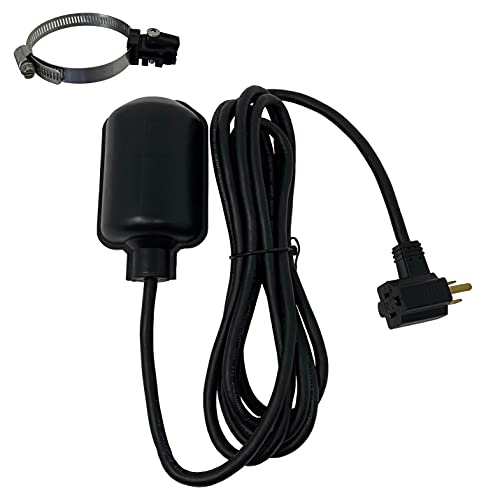
PumpSpy Tethered Universal Float Switch
Best for homeowners with sewage or effluent pumps that draw higher amperage and need a simple, no-fuss replacement. The tethered design swings freely, making it forgiving in wider pits where a vertical column might bind against walls or check valves. Owners praise its piggyback plug for eliminating any splicing and its consistent cut-on/cut-off behavior across hundreds of cycles.
- Pro: Piggyback plug installs in seconds with no wire nuts or junction boxes.
- Pro: Tethered geometry tolerates irregular pit shapes better than fixed-column switches.
- Con: Cord and float can tangle around discharge piping or ladders in very cramped basins.
Skip it if your pit is too narrow for a swinging arm, or if debris frequently snags tethered cords.
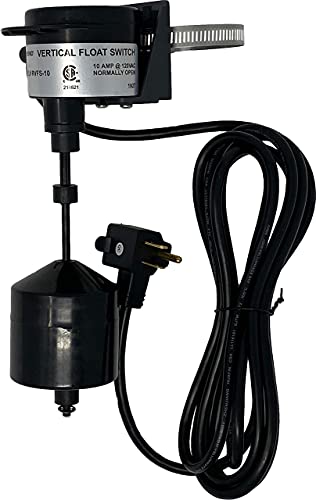
PumpSpy Vertical Float Switch
A direct fit for tight sump basins where a tethered arm has no room to swing. The column-style design keeps the float on a fixed rail, so it rises and drops without contacting the pit wall or nearby check valves. At the same $32.99 price point as its tethered sibling, it gives buyers the same PumpSpy build quality in a space-saving footprint.
- Pro: Vertical travel path eliminates tangles and wall interference.
- Pro: 10-foot cord provides generous routing flexibility from pump to outlet.
- Con: Requires a straight, unobstructed column — some pits have ribs or fittings that block the rail.
Skip it if your basin has protruding fittings inside the vertical path.
FLUENTPOWER Vertical Mechanical Float Switch
Targets the same narrow-pit niche but differentiates itself with a 12-foot cord and explicit sewage/effluent pump compatibility. The piggyback plug mirrors the PumpSpy approach, and the black housing resists UV fading in exposed installations. At $35.99 it sits a few dollars above the PumpSpy vertical, justified if you need the extra cord length or a slightly different rail diameter.
- Pro: Twelve-foot cord covers outlets that sit farther from the pit lip.
- Pro: Mechanical design means no batteries or electronics to fail during a power fluctuation.
- Con: Higher price than functionally equivalent options with shorter cords.
Skip it if your outlet is within reach of a 10-foot cord and budget matters more than the extra two feet.
Float Switch with 10ft Cable (16A IP68)
The most affordable entry on this list at $18.99, and its 16-amp maximum rating means it handles most residential sump and sewage pumps without question. IP68 sealing suggests the housing survives full submersion, which matters for the switch body in a wet pit. It is a single-unit design rather than a branded system, so documentation and warranty terms are thinner.
- Pro: Lowest cost per functional cycle on the page.
- Pro: 16A rating covers virtually every residential submersible pump in service.
- Con: No manufacturer-specific support or widely published MTBF data.
Skip it if you want a recognizable brand with responsive customer service behind the purchase.
WASSERMANN Vertical Float Switch
Another piggyback-plug, 10-foot-cord vertical design at $33.99, aimed at owners who prefer a slightly taller float column or whose pit previously held a different vertical switch and needs a drop-in replacement. The 115V, 16A rating matches standard North American sump circuits. Finish is black, which hides sediment staining better than white housings.
- Pro: Piggyback plug keeps installation tool-free.
- Pro: Vertical format saves floor area in compact pits.
- Con: Brand recognition lags PumpSpy, making replacement-parts sourcing less certain over years.
Skip it if you already own PumpSpy hardware and want uniform parts across a dual-pump setup.
HydroCheck HC6000v2
The only electronic float switch here, and the most expensive at $99.99. It replaces a single mechanical float with Hi-Lo dual sensors that trigger the pump at two distinct levels and sound a built-in alarm if water reaches the high mark — critical if you are away during a storm. Maintenance-free by design, it eliminates the sticking and sediment buildup that plague mechanical units. USA-made construction appeals to buyers who value domestic sourcing.
- Pro: Active alarm gives early warning before overflow occurs.
- Pro: Dual-sensor logic adapts cut-on levels automatically, extending pump life.
- Con: Nearly three times the cost of a mechanical switch, and it depends on an internal battery for alarm function.
Skip it if your basement already has a secondary pump and high-water alarm, making this a redundant layer.
WASSERMANN Universal Tethered Float Switch
At $32.00 this is the cheapest branded tethered option listed, making it an easy pick when price is the deciding factor and your pit has room for a swinging arm. IP68-rated housing, 10-foot cord, 16A contacts, and a piggyback plug round out a spec sheet that is functionally comparable to the PumpSpy tethered unit at $32.99.
- Pro: Under-$33 pricing with a full piggyback-plus-IP68 feature set.
- Pro: Universal fitment reduces the guesswork on compatibility.
- Con: Tethered cord is vulnerable to snagging in cluttered pits.
Skip it if your basin already tangles cords from the discharge pipe or a backup pump.
Little Giant RFSN-6 Tethered Float Switch
A premium option at $61.33 from a manufacturer that makes complete sump systems, so owners of Little Giant pumps often buy this as a guaranteed OEM replacement. The tethered design, 10-foot cord, 115V rating, and piggyback plug mirror what you would find from the aftermarket at half the price. What you pay extra for is brand-specific fitment confidence and the support network of a pump company rather than a switch-only vendor.
- Pro: Direct compatibility assurance if your pump is already Little Giant.
- Pro: Established manufacturer with parts availability over long service life.
- Con: Roughly double the cost of aftermarket switches with identical specs.
Skip it if you have a non-Little Giant pump and a tighter budget.
Buying Guide
Tethered vs. Vertical vs. Electronic
Tethered switches use a cord to swing a ball float, which is simple but demands lateral clearance in the pit. Vertical switches ride a fixed column, ideal for narrow basins but sensitive to any obstruction along the rail. Electronic units like the HydroCheck use pressure or capacitive sensing with no moving parts, eliminating mechanical failure but introducing a dependency on internal power for alarms. Match the geometry to your pit before comparing brands.
Amp Rating and Voltage Compatibility
Most residential submersible sump pumps draw between 5 and 13 amps at 115V. A float switch rated at 16 amps — as several units on this list specify — carries that load with margin for inrush current at startup. A switch under-rated for your pump will overheat, weld its contacts, or trip repeatedly. Check the nameplate amp draw of your pump and select a switch whose rating exceeds it by at least twenty percent.
Cord Length and Plug Type
A ten-foot cord is the industry default and reaches most outlets mounted on a wall near the pit. Piggyback plugs let you plug the float switch into the outlet and then the pump into the switch, requiring no splices or additional boxes. If your outlet is behind the basin or on a far wall, prioritize a longer cord or one that routes cleanly without kinking.
Our Verdict
The PumpSpy Tethered Universal is our top pick for the widest range of residential sump and sewage pits. It balances price, plug simplicity, and the forgiving geometry that handles most basin shapes, with a brand that owners consistently report lasting multiple storm seasons. For the absolute lowest functional cost, the unbranded 16A IP68 switch at $18.99 is hard to beat if you accept thinner support. And if you want a system that will alert you to a rising-water problem while you are away from home, the HydroCheck HC6000v2 is worth its premium because no mechanical float can sound an alarm.
FAQ
How often should a sump pump float switch be replaced?
Mechanical float switches typically last three to seven years depending on sediment load and cycle frequency. Signs of failure include the pump running constantly, not activating at all, or the float sticking against the pit wall. Replacing a switch before a storm season is far cheaper than dealing with a flooded basement.
Can I use any float switch with any sump pump?
Most piggyback-plug switches are universal as long as the amp rating exceeds your pump’s draw and the voltage matches your circuit. The physical fit matters just as much: a vertical column in a pit with cross-ribs will bind, and a tethered arm in a narrow basin will tangle. Always confirm clearance before purchasing.
What is the difference between a tethered and a vertical float switch?
A tethered switch uses a weighted ball on a cord that swings freely to open or close the circuit. A vertical switch keeps the float on a fixed rail so it moves only up and down. Tethered designs need more horizontal space but tolerate irregular pit walls; vertical designs save floor area but require a straight, unobstructed column.
Do I need an electronic float switch or is mechanical fine?
Mechanical switches handle the vast majority of residential sump applications reliably and cost under $40. An electronic or dual-sensor unit adds value if you travel frequently, own a high-value finished basement, or want early-alarm notification before the pump activates. For a basic utility pit with a nearby GFCI outlet, a quality mechanical switch is sufficient.