Standing water in a basement is not just a nuisance. A single heavy storm can overwhelm a foundation’s perimeter drainage, and without a reliable pump, the result is mold, damaged drywall, and thousands in remediation costs. The right sump pump keeps pace with the volume of water your pit receives, turns on without hesitation, and survives years of intermittent duty without burning out.
Across this roundup we compared published specifications, listed prices, and patterns in owner feedback to separate the workhorses from the disappointments. The strongest contenders share three traits: adequate horsepower for their rated flow, corrosion-resistant construction, and a float switch design that resists jamming. The weakest share a single flaw — a motor or housing that fails under the exact conditions it was bought to handle.
Our top picks




As an Amazon Associate we earn from qualifying purchases at no extra cost to you.
Quick Picks
| Product | Best for | Price |
|---|---|---|
| AQUASTRONG 1 HP | High-flow water removal on a budget | $65.99 |
| WAYNE CDU800 | Reliable mid-range backup | $158.78 |
| FOTING 1HP | Dirty-water and mixed debris scenarios | $59.39 |
| Zoeller M53 | Long-term durability in residential pits | $214.33 |
| WAYNE CDU790 | Light-duty basement protection | $137.08 |
| WAYNE CDU980E | Heavy rainfall and frequent cycling | $211.78 |
| 25-Ft Hose Pump | Utility draining with included accessories | $72.99 |
| Lanchez 1/2 HP | Occasional portable water transfer | $50.39 |
How We Picked
We evaluated flow rate relative to price, because a pump that cannot move enough water during a peak rain event is functionally useless regardless of how little it cost. Build materials mattered next — cast iron and stainless steel housings consistently outlast thermoplastic in the damp, chemically variable environment of a sump pit. Warranty length served as a third signal of manufacturer confidence. Finally, we reviewed owner feedback for recurring complaints about float-switch failures, premature motor burnout, and noise.
The 8 Best Sump Pumps in 2026
AQUASTRONG 1 HP Sump Pump 4500 GPH
This submersible unit targets homeowners who need serious pumping capacity without crossing into premium pricing. The 1-horsepower motor driving 4,500 gallons per hour puts it in the same flow range as pumps costing two to three times more. Owners appreciate the compact size, which fits narrower pits without modification. The submersible design also reduces the risk of cavitating when water levels drop quickly. On the downside, the housing material and switch assembly do not carry the long-term corrosion reputation of cast-iron competitors, so plan on replacement sooner in hard-water or acidic environments. Skip this if your priority is a pump you install and forget for five-plus years; it is a strong value play, not a lifetime investment.
WAYNE CDU800
The CDU800 occupies the sweet spot between bargain pumps and commercial-grade units. Cast iron and stainless steel construction resists the rust that kills cheaper pumps, and the vertical float switch avoids the tether-style jams that plague top-mount designs. At 5,100 GPH it handles most residential basements comfortably, and the three-year warranty signals WAYNE’s confidence in the motor. Owners frequently note the quiet, smooth cycling compared to sub-$70 alternatives. The limitation is raw power — at half a horsepower, extremely deep pits or long vertical discharge runs can push it near its ceiling. Skip this if your pit depth exceeds standard residential dimensions or if your area sees sustained multi-inch downpours.
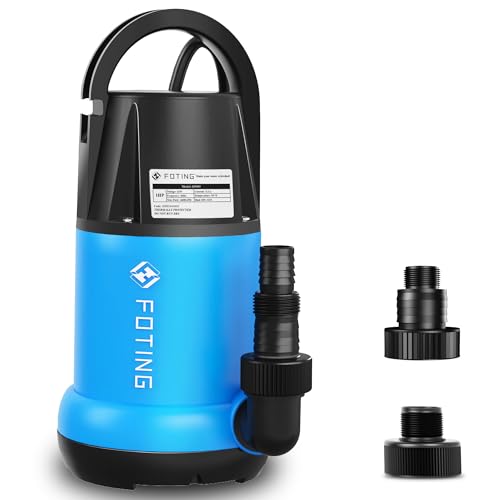
FOTING 1HP 4600GPH Clean/Dirty
The FOTING distinguishes itself by handling dirty water, meaning sediment, small debris, and particulate-laden runoff will not immediately clog its impeller. For homeowners whose sump pit collects leaves, grit, or construction residue, this is a meaningful practical advantage over clean-water-only models. Priced just under $60, it undercuts most 1-horsepower competitors. The trade-off is finish quality and long-term sealing; owner reports suggest the thermoplastic housing is serviceable but not in the same durability class as cast iron. Skip this if your water is clean and your priority is a decade of trouble-free service rather than debris tolerance at a low cost.
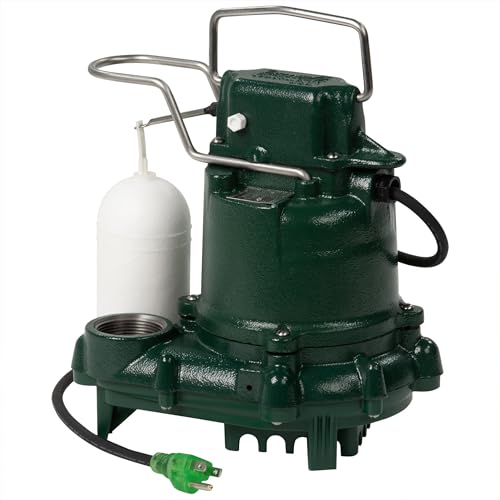
Zoeller M53 Mighty-mate
Zoeller holds a reputation in professional plumbing circles that few consumer brands match, and the M53 is its entry into the residential submersible market. The thermoplastic housing resists corrosion in chemically aggressive groundwater, and the vertical float switch is engineered for millions of cycles without failure. Owners who have replaced cheaper pumps twice cite the M53 as the one that finally lasted. At a third of a horsepower the flow is modest for the price bracket, and the $214 asking price will feel steep if your basement sees only occasional moisture. Skip this if your pit receives more than light seepage; the horsepower simply is not there for high-volume events.
WAYNE CDU790
The CDU790 is essentially the lower-output sibling of the CDU800, sharing the same cast iron and stainless steel construction and vertical float switch design. Up to 4,600 GPH is sufficient for standard residential pits with average water tables, and the $137 price makes it an accessible entry into WAYNE’s build quality. Owners value the compact footprint and the reassuring feel of metal construction. The third-horsepower motor, however, can struggle if discharge piping is long or if the head height is substantial. Skip this if you need margin for unusual installation geometry or live in a region with frequent severe storms that saturate the ground around your foundation.
WAYNE CDU980E
For homeowners who face repeated flooding or who want a single pump that handles worst-case rainfall, the CDU980E is the standout on this list. Three-quarters horsepower and 5,490 GPH give it headroom that half-horsepower models lack, and the five-year warranty is the longest in the group. Cast iron and stainless steel construction addresses corrosion, while the vertical float resists jamming. Owners in storm-prone regions report it keeping pace through extended downpours. The price at $211.78 is justified by capability, but it is overkill for a dry basement with only seasonal moisture. Skip this if your water table is low and you only need insurance against rare events.
25-Ft Hose Submersible Pump
This unit bundles a 25-foot discharge hose and a 25-foot power cord into a submersible pump rated at 4,000 GPH, making it convenient for buyers who want accessories included rather than purchased separately. That is genuinely useful for utility draining, pool covers, or emergency water transfer where reach matters. At $72.99 the all-in value is competitive. The limitation is that it functions more as a general-purpose transfer pump than a dedicated sump pump; float-switch reliability and long-run durability in a pit are less proven. Skip this if you are installing a primary basement defense and want a pump engineered specifically for continuous sump-pit duty.
Lanchez 1/2 HP 2450GPH
The Lanchez is the most affordable option here at just over $50, and it fills a specific niche: occasional portable draining tasks like emptying a hot tub, clearing a garden pond, or servicing a flooded crawlspace. Thermoplastic construction keeps weight low for transport, and the 10-foot cord suits most outdoor outlets. Do not expect sump-pit longevity from this pump; the 2,450 GPH rating and material choices signal a utility tool rather than a permanent installation. Skip this entirely if you need a pump that will activate automatically in a basement pit during a storm, because it lacks the flow rate and build class for that role.
Buying Guide
Match Horsepower and Flow Rate to Your Pit
A pump rated at 4,500 GPH is not automatically the right choice for every basement. The governing factor is how fast water enters your pit, which depends on local water table, soil composition, and the size of your perimeter drainage system. A one-third horsepower unit may handle a well-drained pit with occasional weeping, while a three-quarters or full horsepower is prudent when hydrostatic pressure builds after several inches of rain. Check your pit’s diameter and depth as well; narrower pits benefit from smaller-diameter submersible designs that avoid the housing contacting the walls during vibration cycles.
Float Switch Type Determines Reliability
The float switch is the single most common failure point on a sump pump. Tethered or vertical float switches can snag on pit walls, discharge pipes, or the pump housing itself, especially when debris accumulates. Vertical float designs, as used by the WAYNE CDU models and Zoeller M53, minimize that risk because they move in a guided track rather than swinging freely. Electronic or pressure-activated switches eliminate moving parts entirely but carry their own sensitivity issues. For a storm-emergency context, a mechanical vertical float with a corrosion-resistant housing remains the most proven and serviceable choice.
Build Material and Warranty Signal Longevity
Cast iron housings outlast thermoplastic in terms of structural durability, though they are susceptible to rust if the protective coating is compromised. Stainless steel components resist that corrosion, which is why the combination appears on higher-priced units like the WAYNE CDU line. Thermoplastic avoids rust entirely and is lighter, but it can become brittle over years of thermal cycling. Warranty length is a practical heuristic: a three- or five-year warranty indicates the manufacturer expects the motor and seals to survive that period, while no-warranty or one-year coverage often correlates with higher owner-reported failure rates.
Our Verdict
For most homeowners seeking dependable storm protection, the WAYNE CDU800 is the top pick: it balances flow capacity, corrosion-resistant build, jam-free switching, and a meaningful warranty at a price that does not force a premium budget. The budget pick is the AQUASTRONG 1 HP, which delivers high GPH output at $65.99 and serves well where replacement cost is lower than upfront investment. The one condition that shifts the recommendation: if you live in a region with frequent, intense rainfall that saturates the ground for extended periods, the WAYNE CDU980E wins outright, because its 5,490 GPH and three-quarters horsepower provide the headroom that smaller motors simply cannot match.
FAQ
How long does a sump pump last?
A well-built submersible pump in a residential pit typically lasts seven to ten years, though heavy cycling during frequent storms can shorten that to five. Cast-iron and stainless-steel models with longer warranties tend to reach the upper end of that range.
Do I need a backup pump?
If your area experiences extended power outages during storms, a battery-backed or water-powered backup pump provides insurance when the primary unit cannot run. Without electricity, even the best motor-driven pump is inoperable, so pairing it with a backup is common practice in high-risk zones.
Can I use a utility pump in my sump pit?
Utility pumps like the Lanchez or the 25-foot hose model can technically sit in a pit, but they lack the automatic float-switch activation and continuous-duty sealing that dedicated sump pumps provide. For anything beyond a rare emergency, install a purpose-built unit.
What GPH do I actually need?
A standard residential pit with moderate groundwater usually sees inflow under 3,000 GPH during heavy rain, meaning a pump rated at 4,000 to 5,000 GPH provides adequate safety margin. Homes with poor drainage or high water tables benefit from selecting at the top of that range to prevent overflow.