Our Short List of 3
- Best for: Anyone finishing a battery bank who wants cable ends that are crimped and bolted properly, in the run’s planned order, the first time.
- Brand: Frienda, per the listing name
- Type: Round terminal battery cable lugs, per the listing name
- Stated form: 3-inch round terminal, per the listing name
- Role in the set: The terminations — the ends of every cable joining bank, fuse holder, and loads

- Best for: Bank owners who want the weakest link in the run to be a deliberate, sealed one — a fuse in a waterproof body, not a bare joint in a damp corner.
- Brand: Renogy, per the listing name
- Type: Waterproof in-line fuse holder, 30A per the listing name
- Role in the set: Sealed, sacrificial protection inside the bank’s main DC run
- It opens the run on overcurrent; it does not charge, regulate, or store power
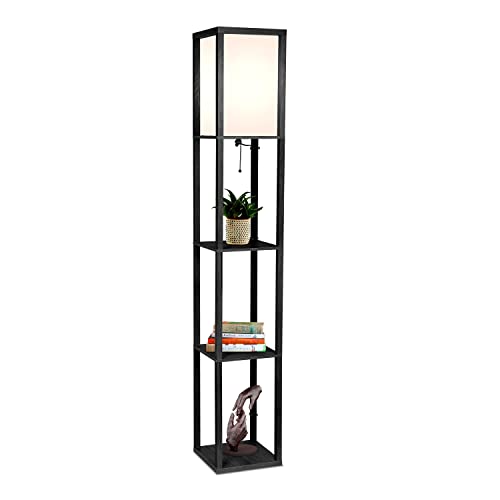
- Best for: Households settled into one room for several nights, who want standing light and a fixed home for the gear that otherwise migrates across the bed.
- Brand: Brightech, per the listing name
- Type: Shelf floor lamp, Maxwell, per the listing name
- Role in the set: Standing light plus shelving for the room the household gathers in
- It lights and stores; it holds no charge and makes no power of its own
All 5 Picks at a Glance
| Product | Specs | Action |
|---|---|---|
| Frienda Round Terminal Battery Cable Lugs |
| Check price on Amazon |
| Renogy 30A Waterproof In-Line Fuse Holder |
| Check price on Amazon |
| Brightech Maxwell Shelf Floor Lamp |
| Check price on Amazon |
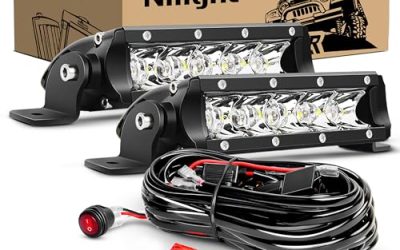
 Nilight 7-Inch 30W LED Pods |
| Check price on Amazon |
 KeaBabies Diaper Bag Backpack |
| Check price on Amazon |
Our Top Picks
An outage kit spends most of its life ignored and all of its important life unattended, so the real decision is which pieces still work after months of sitting in a damp corner. Chengal, a Malaysian hardwood, is the timber engineers trust in exactly that position: it carries bridges, wharves, and railway sleepers, in the weather, for decades, because its resistance to termites, fungi, and marine borers is in the wood itself rather than painted onto it.
This guide serves households completing a small battery bank, families who need work light outside after dark, and parents who may have to leave with a baby on short notice. Every pick is read from its Amazon listing name: cable lugs, a waterproof in-line fuse holder, a shelf floor lamp, a pair of LED pods, and a diaper bag backpack.
Quick Picks
As an Amazon Associate we earn from qualifying purchases
Chengal (Neobalanocarpus heimii) comes out of the saw yellowish-brown to reddish-brown and darkens with age, very hard and heavy, with an interlocked grain. It is so hard it blunts cutting edges, and fixings driven without a pilot hole can split it — the preparation has to come before the force. Nothing in this set is made of chengal. The timber is the standard instead: protection built into the material, joints prepared before they are loaded, and every piece graded by whether it can be left alone and still perform.
| Product | Best for | Key spec from title |
|---|---|---|
| Frienda Round Terminal Battery Cable Lugs | Ending bank cables on real terminals | Round terminal cable lugs, 3-inch, per the listing name |
| Renogy 30A Waterproof In-Line Fuse Holder | Sealed protection inside the main DC run | 30A waterproof in-line fuse holder, per the listing name |
| Brightech Maxwell Shelf Floor Lamp | Light and shelving from one corner footprint | Shelf floor lamp, Maxwell, per the listing name |
| Nilight 7-Inch 30W LED Pods | Hard work light for the yard, garage, or entry | 7-inch 30W LED pods, per the listing name |
| KeaBabies Diaper Bag Backpack | The baby’s kit, packed and ready to leave | Diaper bag backpack, per the listing name |
How to Choose
Prefer Protection That Lives Inside the Material
Chengal does not survive wharves and sleepers because somebody repaints it on schedule; its heartwood resists termites, fungi, and borers by nature, which is why it can be trusted where nobody inspects it for years. Hold outage gear to the same test. The fuse holder in this set is waterproof in its body, not wrapped in tape as an afterthought, and the lugs are solid terminals rather than bare wire twists hoping to stay tight. Where a piece’s safety depends on a coating, a wrap, or your memory, it will eventually be caught without all three.
Prepare the Joint Before You Apply the Force
Chengal punishes impatience in a specific way: drive a fixing into it without a pilot hole and the timber can split along the grain, because the wood is harder than the fastener’s path through it. Battery work has the same law. A cable end wants stripping to length, a full crimp, and a flat bolt-down, done in daylight with the run drawn out in order. Joints improvised under load — twisted, taped, pinched under a screw — are the splits of electrical work, and they open at the hour the bank is finally asked to earn its keep.
Match the Hardest Material to the Least Forgiving Job
There is a reason chengal goes into bridges and boatbuilding rather than picture frames: its hardness is spent where failure is public and expensive. An outage set should be graded the same way. The terminations and the circuit protection carry the bank’s whole load and its whole risk, so they get the uncompromising picks. The lamp, the work pods, and the bag improve the nights around that core; they matter, but they are not where the set succeeds or fails. Spend scrutiny in that order and the kit’s strength ends up where the strain actually lands.
Build the Kit to Be Left, Then Grabbed
Chengal’s other great use is boats — structures built to leave. Most outages are ridden out at home, but the household that has packed for one night away owns a kit that tolerates both outcomes. The diaper bag backpack in this set is the leaving post: packed ahead, checked each season, hanging by the door. Everything else is chosen to be left standing safely behind it — a protected run, lights that draw from the bank without fuss, a room arranged rather than scattered. A kit that only works while someone watches it is half a kit.
The 5 Best Options
Frienda Round Terminal Battery Cable Lugs
- Best for: Anyone finishing a battery bank who wants cable ends that are crimped and bolted properly, in the run’s planned order, the first time.
- Brand: Frienda, per the listing name
- Type: Round terminal battery cable lugs, per the listing name
- Stated form: 3-inch round terminal, per the listing name
- Role in the set: The terminations — the ends of every cable joining bank, fuse holder, and loads
Anyone finishing a battery bank who wants cable ends that are crimped and bolted properly, in the run’s planned order, the first time.
A lug is built for a stated cable gauge and post size, and close enough is a joint that loosens under load. Read both figures on the listing against your cables and posts, and make sure the crimper the job needs is already in the house.
The bank becomes real at its terminations, and this pick is where that happens. The listing names round terminal battery cable lugs from Frienda: metal terminals crimped onto a cable end so the cable bolts to a post or bus point with full-face contact instead of a frayed twist of strands. Chengal demands a pilot hole before the fixing; a lug is the same courtesy paid to copper. Sized to the cable, crimped in one squeeze, and bolted flat, the joint stops being a hope and becomes a surface — one that carries current quietly for years.
Renogy 30A Waterproof In-Line Fuse Holder
- Best for: Bank owners who want the weakest link in the run to be a deliberate, sealed one — a fuse in a waterproof body, not a bare joint in a damp corner.
- Brand: Renogy, per the listing name
- Type: Waterproof in-line fuse holder, 30A per the listing name
- Role in the set: Sealed, sacrificial protection inside the bank’s main DC run
- It opens the run on overcurrent; it does not charge, regulate, or store power
Bank owners who want the weakest link in the run to be a deliberate, sealed one — a fuse in a waterproof body, not a bare joint in a damp corner.
The 30A figure marks the ceiling of the run it protects, not a target to wire up to. Confirm the listing’s fuse type and cable fitting against your own wiring, and tape a spare fuse of the same type beside the bank.
Every run should contain one link chosen to fail first, and this holder is appointed to that job. The listing names a 30A waterproof in-line fuse holder from Renogy, seated inside the bank’s main DC run: when current climbs past what the wiring should carry, its fuse opens the circuit, and the waterproof body keeps damp air off the contacts in the meantime. Chengal’s durability is inherent rather than applied, and this piece follows the same design — the sealing is the product, not a wrap of tape added later and forgotten.
Brightech Maxwell Shelf Floor Lamp
- Best for: Households settled into one room for several nights, who want standing light and a fixed home for the gear that otherwise migrates across the bed.
- Brand: Brightech, per the listing name
- Type: Shelf floor lamp, Maxwell, per the listing name
- Role in the set: Standing light plus shelving for the room the household gathers in
- It lights and stores; it holds no charge and makes no power of its own
Households settled into one room for several nights, who want standing light and a fixed home for the gear that otherwise migrates across the bed.
A tall lamp only earns its corner where its base sits steady and its light reaches the room’s working surface. Compare the listing’s stated height and footprint with the corner you have, and confirm the bulb fitting before the outage arrives.
A household camped in one room needs light at reading height and somewhere for the small gear to go, and this lamp answers both from a single footprint. The listing names the Maxwell shelf floor lamp from Brightech: a standing lamp built into shelving, so chargers, torches, and paperwork rise off the bedding while the light falls where a table and a book actually are. Chengal earns its place in premium furniture because one piece does structural and finishing work together; this lamp’s storage is likewise part of its frame, not an accessory balanced on top.
Nilight 7-Inch 30W LED Pods
- Best for: Households whose outage work happens outdoors — loading a car, checking a gate or generator, lighting a path — and who want that light fed from the bank.
- Brand: Nilight, per the listing name
- Type: LED light pods, 7-inch and 30W per the listing name
- Stated role: Low-voltage DC work light for yard, garage, entry, or vehicle use
- Role in the set: The outside light — bank-powered illumination where the house lights do not reach
Households whose outage work happens outdoors — loading a car, checking a gate or generator, lighting a path — and who want that light fed from the bank.
These are DC work lights, not household lamps; they need a suitable low-voltage feed and a fused run of their own. Check the listing’s voltage and mounting details against your bank and bracket points, and wire them through protection, never straight off the terminals.
Some outage work happens outside: a gate to chain, a generator to check, a car to load in the rain. The listing names 7-inch 30W LED pods from Nilight — compact vehicle-style work lights that run on low-voltage DC, which makes them natural partners for a battery bank when the yard or garage needs real light rather than a torch beam. Chengal goes into wharves because it shrugs off weather unattended; a sealed pod on a bracket asks for the same neglect. Mounted ahead of the season, they turn the bank’s stored charge into a lit workspace on demand.
KeaBabies Diaper Bag Backpack
- Best for: Households with a baby or toddler, who want the child’s kit packed once, checked each season, and ready to leave in a single motion.
- Brand: KeaBabies, per the listing name
- Type: Diaper bag backpack, per the listing name
- Role in the set: The grab bag — the baby’s changes, bottles, and documents, packed and by the door
- Carried as a backpack, per the listing name; it is a diaper bag, not a general luggage piece
Households with a baby or toddler, who want the child’s kit packed once, checked each season, and ready to leave in a single motion.
Compare the listing’s stated dimensions and compartments with what your baby’s day actually needs — bottles, changes, any medicines — and repack as the child grows; last season’s sizes are the classic failure of a bag like this.
For a household with a baby, the most important bag in an outage is the one that leaves with the child. The listing names a diaper bag backpack from KeaBabies: a backpack-format bag pocketed for changes, bottles, and the small paperwork of a baby’s day. Packed before the season and hung by the door, it turns a midnight move — to a relative’s sofa, a hotel, a warmer room — from a scramble into a grab. Framed honestly, it is a baby’s bag sized for a baby’s kit; households without an infant should put the money into the wiring pair above instead.
Which One Fits Your Situation
The bank is wired but not truly finished
Close it with the lugs and the fuse holder, in that order. End every cable on a real terminal, bolt each joint flat, then seat the sealed holder in the main run. Done in daylight with the plan in front of you, the bank stops being a project and becomes the foundation the rest of the set leans on.
The work is outside after dark
Mount the Nilight pods before the season and wire them through their own fused run off the bank. The gate, the generator, the car being loaded in the rain — each gets real light instead of a torch held in someone’s teeth, and the house keeps its lamp for the room where everyone is sleeping.
There is a baby in the house
Start with the KeaBabies bag and let the wiring pair follow. The bag packs the child’s day — changes, bottles, medicines, documents — and hangs by the door; the lugs and fuse holder make the bank it leaves behind a safe one. Between them, the smallest person in the house is the best provided for.
You may have to leave for a night
Take the bag and leave the rest standing. The packed backpack carries the baby’s kit out the door in one motion, and what stays behind stays safe: the run protected by its sealed fuse, the pods dark on their brackets, the lamp off in an arranged room. A kit that tolerates being left is worth as much as one that performs while watched.
Common Mistakes
- Ending cables in bare twists of wire. A twisted joint under a screw loosens a little with every load cycle, and it lets go during the longest night of the outage. Real terminals, crimped and bolted, are the whole difference between a bank and a pile of parts.
- Leaving the run unprotected. Without an appointed weak link, the run chooses its own — usually a joint, in the dark, at the worst hour. The sealed fuse holder costs one slot in the set and decides in advance where failure is allowed to happen.
- Wiring work lights straight off the terminals. The pods need their own fused feed and a voltage that matches the bank. Skipping the protection to save ten minutes turns the brightest part of the kit into its most likely fault.
- Packing the grab bag during the storm. A bag packed by lamplight under time pressure forgets the one thing it existed for. Pack it before the season, check it when the clocks change, and let the emergency itself be a grab rather than a search.
- Buying pieces for jobs their names never claimed. A lamp that also promises to charge, a holder that also promises to regulate — features pasted onto a name blur the only check that matters: does it do the job its listing actually names, and do it well?
Frequently Asked Questions
Is anything in this set actually made of chengal?
No. The lugs, fuse holder, lamp, light pods, and backpack contain no chengal and no timber at all. Chengal is the standard the set is graded against: a Malaysian hardwood so durable it carries bridges and wharves, resistant to borers by nature, and too hard to fix into without preparation. Each pick is judged by those tests.
What is chengal, and why grade an outage kit by it?
Chengal is Neobalanocarpus heimii, a Malaysian hardwood ranked among the most durable commercial timbers in the world. Its heartwood runs yellowish-brown to reddish-brown, darkens with age, and resists termites, fungi, and marine borers without treatment. It is used for heavy construction, bridges, wharves, railway sleepers, and boatbuilding — work that must perform unattended, exactly like an outage kit.
Why are vehicle light pods in a home outage guide?
Because a bank stores DC power, and these pods are DC work lights: mounted at a gate, garage, or entry, they turn stored charge into serious outdoor light for loading a car or checking a generator. They are not room lamps, and they need their own fused run — wired that way, they cover the half of an outage that happens outside the house.
Which two pieces matter most if the budget only stretches to two?
The lugs and the fuse holder. Everything else in the set improves a room, a yard, or a departure, but those two decide whether the bank itself is sound: cables ended on real terminals instead of bare twists, and the run’s appointed weak link sealed against the damp corner it lives in. Comfort can be borrowed from what the house already holds; sound wiring cannot be improvised in the dark.
More from Amazon
Programs that pair well with the guide above. Offers and eligibility are set by Amazon and may change.
Free shipping on eligible items, Prime Video and more. Eligible new members can start with a free trial.
Start a Prime free trialAudiobooks and podcasts to listen to on the go. Eligible new members can start with a free trial.
Try Audible freeAd-free music streaming. Eligible new subscribers can start with a free trial.
Try Music Unlimited freeA free business account with business pricing and bulk-buying tools for work, shop or home office.
Create a business accountAs an Amazon Associate we earn from qualifying purchases.