Key takeaways
- Telescoping poles have overlap joints that flex and twist under load. Most manufacturers rate them for 30-40 mph with flag flying and instruct you to lower the flag and collapse the pole when storms exceed that. Leaving a telescoping pole extended in 60+ mph winds is the most common cause of bent or seized sections.
- In-ground poles with an internal halyard and revolving truck (the pulley housing at the top) let the flag rotate 360 degrees, reducing wrapping and torsional load. Models with a rated wind speed of 95+ mph with flag flying can remain flying in most severe weather, but you should still lower to half or remove the flag in hurricane warnings.
- Flag fabric matters: Heavy 2-ply polyester flags last longer but catch 20-30% more wind than lightweight nylon. In sustained 25+ mph areas, nylon is the safer daily flyer.
The best flagpoles for most homes are 20 to 25-foot aluminum in-ground or telescoping models, while large properties with open wind exposure need 25 to 30-foot heavy-wall aluminum or fiberglass in-ground poles rated for 90+ mph with the flag flying.
Choosing between in-ground and telescoping comes down to wind resistance, installation effort, and how often you want to raise, lower, and maintain the flag. Telescoping poles win for convenience and no halyard maintenance; in-ground sectional poles win for height, rigidity, and storm durability.
Our top picks
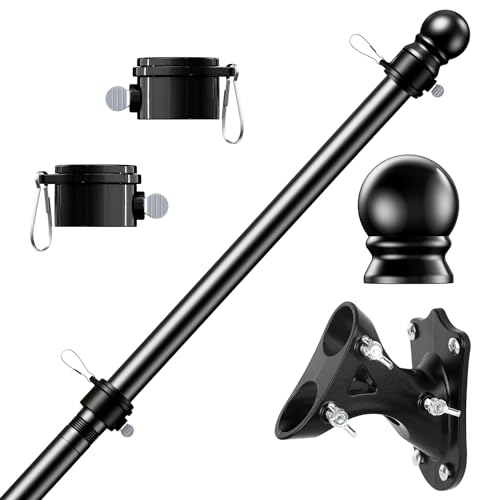


As an Amazon Associate we earn from qualifying purchases at no extra cost to you. Ratings are shown as listed on Amazon.
In-Ground vs. Telescoping: How They Work
In-ground sectional flagpoles are 2-3 piece tapered aluminum or one-piece fiberglass poles set permanently in a concrete foundation with a ground sleeve. The flag travels on an external or internal halyard (rope/cable) with a pulley and cleat or internal winch and retainer ring. They are the standard for 25-foot and taller installations.
Telescoping flagpoles are nested aluminum tubes that collapse into each other, typically raised by extending and twisting to lock each section. There is no halyard; the flag attaches with swivel clips or rings directly to the pole and rotates with the wind. Most residential models are designed for above-ground mounting with a ground sleeve or hinged base, without a deep concrete footing.
Best Flagpoles Compared by Key Specs
Height determines flag size, visibility, and wind load. A common rule is the flag length should be 1/4 to 1/3 the pole height. Material and wall thickness determine weight, corrosion resistance, and wind rating.
| Type / Height | Common Material & Wall | Approx. Weight | Recommended Flag Size | Wind Rating (Flag Flying) | Wind Rating (No Flag) |
|---|---|---|---|---|---|
| 15 ft Telescoping | Aluminum 6063-T6, 14-16 gauge | 18-24 lbs | 2.5 x 4 ft | 30-35 mph | 70-80 mph |
| 20 ft Telescoping | Aluminum 6063-T6, 14 gauge | 26-34 lbs | 3 x 5 ft | 30-40 mph | 80-90 mph |
| 20 ft In-Ground Sectional | Aluminum 6063-T6, 0.125″ wall base | 45-60 lbs | 3 x 5 ft to 4 x 6 ft | 95-110 mph | 150+ mph |
| 25 ft In-Ground Sectional | Aluminum 6063-T6, 0.125″-0.156″ wall base | 70-95 lbs | 4 x 6 ft | 90-110 mph | 145-170 mph |
| 30 ft In-Ground (Large Property) | Aluminum 6063-T6, 0.156″-0.188″ wall / Fiberglass | 110-160 lbs | 5 x 8 ft | 85-105 mph | 140-160 mph |
| 30-40 ft Commercial In-Ground | Fiberglass or Heavy-Wall Aluminum, 0.188″+ wall | 150-250 lbs | 6 x 10 ft | 90-120 mph | 150-180 mph |
Note: Wind ratings assume a single standard nylon flag, proper foundation, and sustained wind. Double flags, oversized flags, or banners significantly reduce the rating. Fiberglass flexes and sheds wind load better than rigid aluminum, which is why it is often specified for coastal and plain states.
Material: Aluminum vs. Fiberglass vs. Steel
Aluminum (6063-T6): The residential standard. Lightweight, naturally corrosion-resistant, and available with anodized or powder-coated finishes. Requires occasional cleaning and waxing to prevent oxidation, especially within 10 miles of saltwater. Thinner-gauge telescoping aluminum will dent and ovalize if heavily loaded in wind.
Fiberglass: Heavier and more expensive, but superior for large properties and high-wind corridors. It will not corrode, conducts no lightning attraction beyond the finial/ground, and whips rather than bends permanently in gusts. Gel coat can chalk after 10-15 years and needs refinishing.
Steel: Rare for residential use. Very strong but prone to rust if the galvanization or powder coat is chipped, and much heavier to install. Not recommended for most homeowners unless specified for a very tall commercial pole.
Wind Resistance: What Actually Matters
Wind resistance is not just the pole — it is pole + flag + foundation + hardware. A 3 x 5 ft flag in 40 mph wind generates over 50 lbs of lateral force at the top.
- Telescoping poles have overlap joints that flex and twist under load. Most manufacturers rate them for 30-40 mph with flag flying and instruct you to lower the flag and collapse the pole when storms exceed that. Leaving a telescoping pole extended in 60+ mph winds is the most common cause of bent or seized sections.
- In-ground poles with an internal halyard and revolving truck (the pulley housing at the top) let the flag rotate 360 degrees, reducing wrapping and torsional load. Models with a rated wind speed of 95+ mph with flag flying can remain flying in most severe weather, but you should still lower to half or remove the flag in hurricane warnings.
- Flag fabric matters: Heavy 2-ply polyester flags last longer but catch 20-30% more wind than lightweight nylon. In sustained 25+ mph areas, nylon is the safer daily flyer.
Installation Method: Foundation and Setup
Installation is the biggest practical difference. An incorrect foundation is the primary reason poles lean or fail.
In-Ground Installation
Requires digging and concrete. Standard residential spec:
- Hole depth: 10% of pole height plus 6 inches of gravel. For a 25-foot pole, that is a 36-inch deep x 18-24-inch diameter hole.
- Foundation: 300-400 lbs of concrete (4-5 bags of 80-lb premix) around a PVC or steel ground sleeve, with 4-6 inches of pea gravel at the bottom for drainage. The sleeve should be plumb and allow 2-3 inches above grade.
- Cure time: 3-4 days before setting the pole. Backfill and tamp soil after concrete sets.
- Clearance: Check for overhead power lines (minimum 10 feet lateral clearance, more for taller poles) and underground utilities before digging. Most municipalities do not require a permit under 25 feet, but HOAs often limit height to 20 feet in subdivisions.
Telescoping Installation
Much simpler, but less stable in soft or sandy soil:
- Hole depth: 24-36 inches deep x 12-16 inches diameter, or manufacturer-provided ground sleeve driven into the ground. Some kits use a hinged base plate bolted to a small concrete pad.
- Concrete: 120-180 lbs (2 bags) is typical for a 20-foot telescoping pole. No need to wait as long, but the sleeve must be perfectly vertical or sections will bind.
- Setup time: 2-3 hours total vs. a half-day or next-day project for in-ground. No halyard to thread, no winch to install.
Worked example: For a 25-foot in-ground pole, you need a hole roughly 3 feet deep x 2 feet wide. Volume is about 9.4 cubic feet. At 0.6 cubic feet per 80-lb bag, you need 5 bags plus gravel, costing $40-$70 in materials plus $30-$50 for the ground sleeve. A 20-foot telescoping pole needs a hole about 2.5 feet deep x 1.3 feet wide (3.3 cubic feet), or just 2 bags, about $20-$30 in materials. Labor if hired is typically $300-$600 for telescoping and $600-$1,200 for 25-30 foot in-ground.
Maintenance and Ownership Realities
Both types need seasonal attention, but what wears out is different.
- Halyard and truck (in-ground only): External polypropylene rope degrades in 12-24 months of UV and should be replaced before it frays. Internal stainless steel cable or rope lasts 5-8 years but requires re-threading if snapped. The revolving truck bearing seizes first if not lubricated annually with dry silicone, causing flag wrap and halyard wear.
- Telescoping joints: Sand, grit, and ice in the twist-locks cause jamming. Rinse sections with fresh water quarterly and apply silicone spray, never grease, to the collars. Over-tightening collars deforms the aluminum and creates permanent wobble.
- Finial and clips: Anodized aluminum ball finials can loosen and leak water into the pole. Check set screws twice a year. Flag clips and swivels should be replaced annually; cheap plastic clips crack in winter and drop flags.
- Cleaning: Wash with mild soap and water twice per year. Do not use abrasive pads on powder coat. Wax aluminum poles annually to slow oxidation. For fiberglass, a marine gel-coat polish every 2-3 years prevents chalking.
- Common mistakes: Flying an oversized flag (e.g., 4 x 6 ft on a 15-foot telescoping pole), leaving the flag up in 50+ mph winds, setting the sleeve in soil without concrete, and mounting too close to trees or rooflines where the flag whips against surfaces.
Which Flagpole Should You Choose? Decision Matrix
Match your situation to the design, not just price.
| Your Situation | Recommended Choice | Why |
|---|---|---|
| Suburban lot, HOA limit 20 ft, want easy daily use | 20 ft Telescoping, 14-gauge aluminum | Meets most HOA rules, no ropes to manage, quick flag changes |
| Open acreage or rural property, constant wind | 25-30 ft In-Ground Sectional, heavy-wall aluminum or fiberglass | Higher wind rating, stable foundation, supports larger flag visible from road |
| Coastal or Great Plains high-wind zone | 25 ft+ Fiberglass In-Ground, internal halyard | Flex absorbs gusts, no corrosion, best sustained-wind performance |
| Budget under $400 installed, temporary or rental home | 15-20 ft Telescoping kit with ground sleeve | Lowest material and install cost, removable and portable |
| Want to fly flag 24/7 with light at night, low maintenance | 20-25 ft In-Ground with internal halyard + solar light | Lockable halyard prevents theft, internal system lasts years, light mounts cleanly |
| Need to fly 2-3 flags or oversized flag | 25-30 ft In-Ground, 0.156″+ wall | Telescoping joints cannot handle stacked wind load; need rigidity and proper halyard spacing |
Cost and Long-Term Ownership
In 2026, general market ranges without installation are $150-$350 for a 15-20 ft telescoping aluminum kit, $400-$800 for a 20-25 ft in-ground aluminum sectional kit with ground sleeve and halyard, and $900-$2,200 for 30-foot and taller heavy-wall aluminum or fiberglass poles. Fiberglass commands a 30-50% premium over aluminum at the same height.
Consumable costs over 5 years: 2 nylon 3 x 5 ft flags ($35-$60 each), 1-2 halyard replacements for external systems ($15-$30), a set of swivel clips ($10-$20), and optional solar LED top light ($40-$90). Budget $120-$250 in replacements if you fly daily; flying only on holidays cuts flag replacement to once every 2-3 years.
Storm and Emergency Preparedness Tips
For mystormalert.com readers, treat the flagpole as part of your property’s wind plan. Before a forecast of 50+ mph sustained winds, lower and remove the flag, and for telescoping models, collapse the pole to its lowest section. For in-ground poles left standing, ensure the ground sleeve drain hole is clear so water does not freeze and heave the foundation. After a storm, check for lean with a level, inspect the truck and halyard for fraying, and re-tamp soil around the base if erosion has exposed concrete. Never attempt to straighten a bent aluminum section — replace it, as the metal has yielded and will fail at a lower wind speed next time.