Key takeaways
- Edge-sealer bags: 300 x $0.70 = $210.
- Chamber pouches: 300 x $0.22 = $66.
- Approximate annual consumables difference: $144.
The best chamber vacuum sealers for home use are the VacMaster VP215 for frequent bulk storage on a moderate budget, the VacMaster VP230 for larger batches, and a compact tabletop chamber sealer when you want lower bag costs without giving up control over liquids.
Our top picks
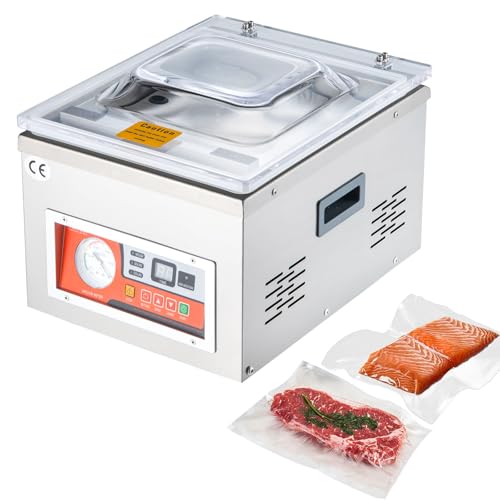
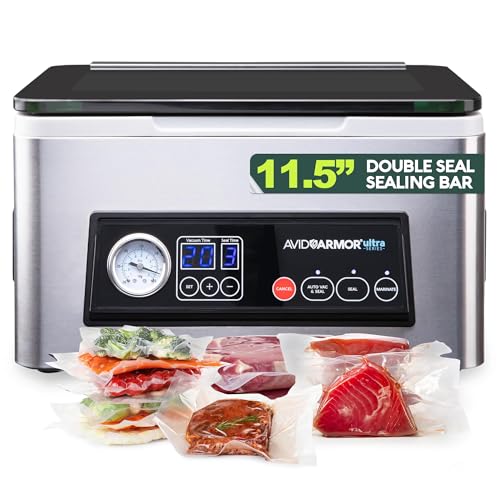


As an Amazon Associate we earn from qualifying purchases at no extra cost to you. Ratings are shown as listed on Amazon.
Best chamber vacuum sealers by situation
| Best fit | Recommended type or model | Why it fits | Typical market range |
|---|---|---|---|
| First chamber sealer, weekly use | VacMaster VP215 | Compact footprint, oil-pump performance, approximately 10-inch sealing bar | $700–$1,000 |
| Large family or serious freezer prep | VacMaster VP230 | Larger chamber and approximately 12-inch seal for bigger portions and multiple bags | $900–$1,300 |
| Frequent, high-volume household use | VacMaster VP320 | Commercial-style construction and faster cycling than entry-level countertop units | $1,300–$2,000 |
| Occasional use with low upfront cost | Compact 8–10-inch chamber sealer | Usually adequate for individual portions, sauces, fish, and small freezer batches | $400–$800 |
Prices are broad 2026 market ranges, not fixed recommendations. Included accessories, pump type, warranty, and regional availability can move the price considerably.
Why chamber vacuum sealers are different
In a chamber machine, the entire bag sits inside the vacuum chamber. The air is removed from around the bag before the machine seals it. This allows you to seal soups, marinades, sauces, and other liquids with much less risk of liquid being pulled into the pump than with an external suction sealer.
Chamber machines also use smooth chamber pouches rather than textured edge-sealer bags. Smooth pouches are commonly less expensive per bag, and you can buy them in rolls or several standard sizes. The trade-off is size: even a countertop chamber sealer is heavier and takes more counter or storage space than a handheld or edge-sealing model.
Head-to-head: VP215 versus VP230 versus VP320
| Characteristic | VacMaster VP215 | VacMaster VP230 | VacMaster VP320 |
|---|---|---|---|
| Chamber class | Compact tabletop | Medium tabletop | Larger commercial-style tabletop |
| Approximate sealing-bar length | 10 inches | 12 inches | 12 inches |
| Pump style | Oil-lubricated rotary pump | Oil-lubricated rotary pump | Higher-capacity oil-lubricated rotary pump |
| Approximate chamber capacity | About 10 x 12 inches of usable bag area | About 12 x 15 inches of usable bag area | About 12 x 15 inches, depending on configuration |
| Approximate machine weight | About 80 pounds | About 90 pounds | About 130 pounds |
| Best workload | Several bags per session | Weekly batch processing | Large or repeated batches |
These are representative published specifications and rounded figures; confirm the current manufacturer specification before buying because dimensions and configurations can change. The important comparison is not only the pump rating. A larger chamber and longer sealing bar can save time when you package several portions or wider cuts.
VacMaster VP215: the sensible starting point
The VP215 is a strong choice when you want the advantages of a chamber machine but do not process commercial quantities. Its roughly 10-inch seal limits the width of each pouch, but it works well for meat portions, vegetables, prepared meals, cheese, fish, and liquid foods.
Its oil-lubricated rotary pump is a significant advantage over many inexpensive dry-pump machines. Oil pumps can pull a deeper vacuum and tend to tolerate regular use well, but they require correct maintenance. Choose the VP215 if your batches are measured in several bags rather than dozens at a time and you have a sturdy place to store an approximately 80-pound appliance.
VacMaster VP230: better for bulk freezer preparation
The VP230 earns its higher price through a larger working area and approximately 12-inch sealing bar. That extra width is useful for family-size portions, larger cuts, and packing multiple smaller bags in one cycle when the chamber layout permits it.
It is the better choice if you routinely buy meat in bulk, prepare several weeks of meals at once, or want more room for wet foods. It still belongs on a solid counter or cart: these machines are not convenient to lift in and out of a cupboard after every use.
VacMaster VP320: capacity over convenience
The VP320 is aimed at households that use a chamber sealer almost like a small production appliance. Its larger construction and pump capacity can make repeated batches less frustrating, but it is expensive, heavy, and difficult to justify for occasional use.
Choose it when your limiting factor is throughput rather than bag width. If you only seal a few portions every month, a VP320 will mostly add cost and storage demands.
What matters more than the headline vacuum level
Chamber size
Check both the chamber footprint and its usable height. A pouch must lie flat enough for the lid to close, and the product must not press against the sealing bar. A machine may accept a long pouch but still be unsuitable for a tall container or bulky food.
For most home users, an internal width around 10–12 inches is the practical dividing line. Smaller chambers are easier to store. Larger chambers handle family-size portions but take up substantial counter space.
Pump strength and pump type
Oil-lubricated rotary pumps are generally preferred for repeated use and liquid-heavy packaging. They may operate more quietly and pull air more consistently than low-cost dry pumps, but the oil must remain clean and at the correct level. A dry pump may be simpler for occasional use, while an oil pump is usually the better ownership choice for bulk storage.
Sealing-bar length
A longer bar does not automatically create a stronger seal; it gives you more flexibility. A 10-inch bar handles most individual portions. A 12-inch bar is more useful for larger pouches and wide food items. Seal width, heat adjustment, and the cleanliness of the pouch opening also affect reliability.
Bag cost
Smooth chamber pouches commonly cost about $0.10–$0.40 each for small and medium sizes when purchased in bulk, with larger heavy-gauge pouches costing more. Exact cost depends on thickness, material, and quantity.
Here is a simple comparison. Suppose an edge-sealer bag costs $0.70 and a comparable chamber pouch costs $0.22. At 300 bags per year:
- Edge-sealer bags: 300 x $0.70 = $210.
- Chamber pouches: 300 x $0.22 = $66.
- Approximate annual consumables difference: $144.
That saving does not repay a $700 machine quickly by itself, but it becomes meaningful when combined with liquid-sealing capability and frequent batch use. Do not reuse bags that held raw meat or other foods unless they can be safely cleaned and the application is appropriate; cutting away the sealed end also reduces usable length.
Decision matrix for home buyers
| Your situation | Chamber size to target | Pump choice | Best direction |
|---|---|---|---|
| Limited space, fewer than 10 bags per month | Compact 8–10-inch class | Dry or small oil pump | Compact chamber unit, if liquid sealing matters |
| Weekly meal prep and freezer storage | 10–12-inch class | Oil-lubricated rotary | VacMaster VP215 or equivalent |
| Bulk meat purchases and large portions | 12-inch class or larger | Oil-lubricated rotary | VacMaster VP230 or equivalent |
| Repeated batches, frequent entertaining, or shared household use | 12-inch-plus class | Higher-capacity oil pump | VacMaster VP320 or comparable commercial-style unit |
Maintenance and mistakes that shorten service life
Before each session, wipe moisture and food residue from the chamber, lid gasket, and sealing area. A dirty gasket can prevent the chamber from reaching its target vacuum, while residue on the pouch opening can create a weak seal.
- Keep the pouch opening flat and centered on the sealing bar.
- Leave enough empty material above the food for the bar to seal cleanly.
- Freeze very watery foods until partially firm if splashing is a concern.
- Allow the machine to complete its cooling cycle instead of opening it early.
- Inspect the seal before storage; wrinkles, channels, or incomplete lines require resealing.
- On oil-pump models, check the oil level and replace contaminated oil according to the manual.
The lid gasket and sealing wire are common wear items. The gasket gradually flattens or cracks; the sealing strip can discolor, wear, or fail after repeated heat cycles. Keep replacement parts available before a large food-preparation day. Avoid overfilling pouches, forcing bulky food into the chamber, or allowing bones and sharp edges to press against the bag.
Bottom line
For most homes, the VacMaster VP215 is the best balance of chamber capability, manageable size, and operating cost. Move to the VP230 when larger portions and weekly bulk batches justify its footprint. Choose a VP320 only when throughput and durability matter more than price and storage convenience. Whichever model you choose, budget for smooth chamber pouches, replacement gaskets, pump maintenance, and a permanent location on a sturdy surface.