Key takeaways
- Plug-and-play generator connection eliminates electrician labor on the source side
- Compact NEMA form factor fits in cramped utility closets
An auto transfer switch solves one specific problem: when your grid goes down and your generator fires up, something has to safely disconnect utility power and connect the generator without you standing in the rain, yanking cables, or risking a backfeed that could kill a line worker. The cheapest solutions do exactly that and nothing more. The best ones add delay timers so your generator stabilizes before it carries load, dual-source compatibility so you can switch between shore power and an inverter, and mounting options that fit inside a cramped RV panel rather than requiring a full sub-panel install.
What separates good from bad in this category is rarely the switching mechanism itself. Nearly every unit here uses a contactor-based design that works. The differences live in ampacity margins, whether the neutral bond is handled correctly for your situation, how long the transfer delay is, and whether the enclosure is rated for the environment you mount it in. A homeowner protecting three circuits has entirely different needs from an RVer switching between a 30-amp shore cord and an inverter, and this roundup reflects those splits.
Our top picks



As an Amazon Associate we earn from qualifying purchases at no extra cost to you.
Quick Picks
| Product | Best for | Price |
|---|---|---|
| AC120V 15A ATS (NEMA 5-15P/R) | Basic plug-in generator homeowners | $58.99 |
| AC120V 15A ATS (NEMA 5-15P/R) | Home backup with factory packaging | $82 |
| Nirakoka RV 50A ATS | RV electrical systems with 70A neutral | $89.99 |
| 100A Mini ATS 2P Din Rail | Solar-plus-generator changeover on a budget | $36.99 |
| EIIDAR 20A ATS | Mid-range home circuits | $56.99 |
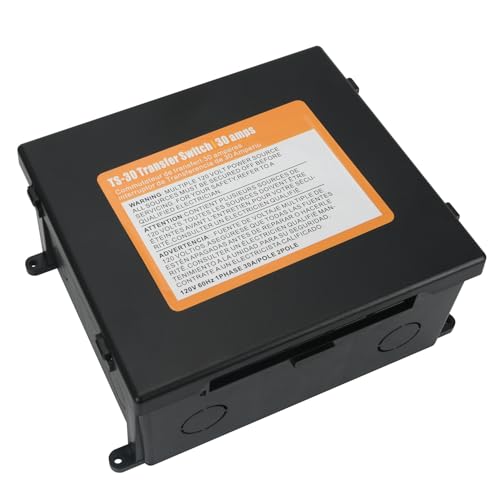
| Go Power TS-30 | Premium RV and boat dual-source | $123.99 |
| 30A RV/Inverter ATS | Travel trailers with inverters | $61.99 |
| OONO 15A ATS (NEMA 5-15P/R) | Plug-in generator owners wanting brand support | $82 |
How We Picked
We compared published amp ratings, voltage compatibility, neutral-bonding design, transfer delay availability, and mounting format against owner-reported reliability across storm seasons. The three criteria that decided rankings: adequate ampacity headroom for your actual load (undersized units trip or overheat), correct neutral handling for your panel type (a mismatched bond creates ground-fault nuisance trips), and build quality in the enclosure (cheap housings crack in garage heat or RV vibration). Price was a tiebreaker, not a primary driver.
The 8 Best Auto Transfer Switch in 2026
1. AC120V 15Amp ATS (NEMA 5-15P/R)
This is the entry point for homeowners who plug a small portable generator into one or two critical circuits—refrigerator, a few lights, maybe a CPAP machine. The NEMA 5-15 plug interface means zero wiring work on the generator side; you connect the house side to a junction box and you are done. Owner feedback consistently highlights the transfer speed and compact size as wins for tight closet installs. The 15-amp ceiling is the obvious limitation: you cannot run a window AC unit or an electric kettle through this without tripping it. If your storm plan is “keep the fridge cold and one lamp on,” this does the job without the overhead of a larger panel-mounted system.
- Plug-and-play generator connection eliminates electrician labor on the source side
- Compact NEMA form factor fits in cramped utility closets
Con: 15-amp limit restricts you to a handful of low-draw circuits simultaneously.
Skip it if: you need to power more than two or three circuits during an outage or want a delay timer for generator warm-up.
2. AC120V 15Amp ATS (NEMA 5-15P/R) — $82
Functionally identical in spec to the unit above, this version commands a premium that is hard to justify on paper alone. It is the same 15-amp NEMA interface, the same voltage window, the same basic switching logic. Owners who pay extra typically cite slightly better packaging and a cleaner enclosure finish. In practice, the transfer performance matches the budget sibling. The $23 gap buys you peace of mind about build consistency rather than any functional advantage. For 2026 buyers who value a tidier enclosure in a visible install location, it is a reasonable tradeoff.
- Same reliable 15-amp transfer as the budget option
- Better enclosure finish suited to visible or exposed mounting locations
Con: Price premium over the near-identical $58.99 model with no spec difference.
Skip it if: you cannot see the switch after installation—save $23 and buy the cheaper unit instead.
3. Nirakoka RV 50A 70A Neutral ATS
Built specifically for RV electrical architecture, this unit handles 240VAC at 50 amps with a 70-amp neutral rating—a configuration that accommodates the larger shore-power cords common on Class A motorhomes and fifth wheels. The higher neutral rating means the unit tolerates unbalanced 120V loads without overheating the neutral bus, a known weak point on cheaper RV switches. Owners report clean transfers between shore power and generator without the ground-fault nuisance trips that plague improperly bonded systems. Installation requires wiring to a 50-amp RV panel, so this is not a plug-and-play box; budget for a competent installer if you are not comfortable pulling 240V conductors.
- 70A neutral rating handles unbalanced loads without thermal stress
- True 240VAC switching supports full RV appliance complement
Con: Not a plug-and-play unit—installation demands 240V wiring competency or professional labor.
Skip it if: your RV uses a 30-amp cord and you do not plan to upgrade to 50-amp service.
4. 100A Mini ATS 2P Din Rail (AC110V)
At $36.99 this is the lowest-cost path to a 100-amp changeover, and that price-to-capacity ratio is genuinely unusual. The dual auto/manual mode is practical: automatic during storms, manual when you are doing solar work and want deliberate control over the switchover. DIN-rail mounting suits electrical enclosures and solar combiner boxes rather than standalone wall installs. The 50/60Hz compatibility means it works on both grid frequencies and most inverter outputs. The tradeoff is enclosure quality and certification depth—this reads as a component-grade part, not a UL-listed consumer product. Use it inside a properly rated enclosure and treat it as the internal mechanism, not the finished assembly.
- 100-amp switching capacity at a fraction of the cost of UL-listed equivalents
- Auto/manual switchable operation gives you control over when transfers happen
Con: Component-grade build requires you to supply a rated enclosure and verify certification for your jurisdiction.
Skip it if: you need a finished, code-inspection-ready product without additional enclosure sourcing.
5. EIIDAR 20A ATS (AC120V)
The 20-amp rating puts this between the 15-amp NEMA boxes and anything larger, and that sweet spot is useful for homeowners who want to run a refrigerator, a freezer, a couple of lights, and a small space heater simultaneously without exceeding the switch rating. Installation follows the same generator-plug-to-house-circuit pattern as the 15-amp units, so the labor is comparable. Owner feedback notes consistent transfer timing and a clean mechanical feel on the contactor. The main question buyers ask—why 20 amps rather than 15—is answered by real-world startup surges: compressors and heaters briefly draw above steady-state, and that extra 5-amp headroom prevents nuisance trips during the critical first seconds after generator connection.
- 20-amp headroom absorbs compressor startup surges that trip 15-amp units
- Simple installation mirrors the 15-amp NEMA approach
Con: Still limited to a small number of circuits—does not scale to whole-home backup.
Skip it if: your generator output exceeds 20 amps on 120V; you will bottleneck the system.
6. Go Power TS-30 (30A)
Go Power is a recognized brand in the RV and marine power-management space, and the TS-30 reflects that pedigree. The built-in generator delay switch is the headline feature: when utility power drops, the TS-30 waits for the generator to reach stable frequency before transferring load, eliminating the momentary brownout that hits sensitive electronics on basic switches. Dual-source compatibility covers shore power, generator, and inverter inputs, which means one unit handles every scenario an RVer encounters. Installation is described as straightforward by owners who have done panel work before, and the compact footprint fits in crowded RV bays. At $123.99 it is the most expensive entry here, but the feature set justifies the gap for anyone whose electronics budget exceeds the switch budget.
- Generator delay feature protects sensitive electronics during transfer
- Three-source compatibility eliminates the need for multiple switching devices
Con: Highest price in this roundup, and 30-amp ceiling limits whole-RV load capacity.
Skip it if: you have a 50-amp rig and already plan on a 50-amp ATS like the Nirakoka.
7. 30A RV/Inverter ATS (120V)
This unit targets the large population of travel trailer and camper van owners who run a 30-amp shore cord and a 2000-4000W inverter as their off-grid power source. The specific design intent—switching between shore power and an inverter rather than a generator—means the transfer timing and contactor ratings are tuned for that lower-voltage DC-to-AC source rather than a noisy 60Hz generator alternator. Owners in the van-life community report clean, silent transfers because the inverter is already running and stable. At $61.99 it undercuts the Go Power TS-30 by half, though you lose the delay timer and brand-name enclosure quality. If your scenario is van or small trailer with inverter, this is the most purpose-fit option.
- Purpose-built for inverter-to-shore switching rather than a generator compromise
- Significantly cheaper than premium branded alternatives with similar amp rating
Con: No generator delay feature—sensitive electronics may see a brief interruption during transfer.
Skip it if: you need generator compatibility; this is optimized for static inverter sources.
8. OONO 15A ATS (NEMA 5-15P/R)
OONO brings a recognizable consumer-electronics brand name into the ATS category, which matters to buyers who want accessible support and documentation rather than a no-name import. The spec sheet is identical to the other 15-amp NEMA options—same 120V window, same plug interface, same 15-amp ceiling. The price matches the $82 sibling at position two. Where OONO differentiates is in owner-facing materials: clearer wiring diagrams and a more responsive support channel according to reviews. For a homeowner who is mildly uncomfortable with electrical work and wants a manufacturer who will answer the phone, that documentation quality has real value beyond the spec sheet.
- Brand-backed documentation and support reduce installation anxiety
- Reliable 15-amp transfer with standard NEMA plug interface
Con: Same $82 price as position-two unit with no additional functional capability.
Skip it if: you are confident in basic electrical work and prefer to pay $59 for identical performance.
Buying Guide
Match Ampacity to Your Real Load, Not Your Generator Rating
A 15-amp switch cannot handle a generator rated at 20 amps on the 120V circuit—it will overheat or trip regardless of how much the generator can supply. Calculate your critical-load total in amps at 120V (watts divided by 120), add 20 percent for startup surges, and select a switch that exceeds that number. The 100-amp and 50-amp units in this list exist for whole-home or full-RV scenarios where dozens of circuits come online simultaneously. The 15- and 20-amp units serve partial-home backup. Choosing between them is arithmetic, not preference.
Understand Neutral Bonding Before You Buy
When a generator feeds your home through an ATS, the neutral conductor must bond to ground at exactly one point. If your generator already has a bonded neutral and your home panel also bonds neutral to ground, the ATS creates a parallel path that trips GFCI outlets and can energize the neutral bus unpredictably. Some switches in this list include a neutral relay to break the bond during generator operation; others expect you to manage it at the panel. Confirm your setup matches the switch design before installation, or hire an electrician to verify.
Delay Timers Are Not Optional for Electronics
A basic ATS transfers load the instant the contactor closes, which means your refrigerator compressor, furnace blower motor, and any microprocessor-based appliance all see the generator’s unstable output during its first few seconds of operation. A delay feature—present on the Go Power TS-30 and absent from most budget units—lets the generator stabilize before load transfers. If you run sensitive electronics or have a well with a variable-frequency drive, factor the cost of a delay-equipped switch into your budget rather than assuming the cheapest option is adequate.
Our Verdict
Top pick: Go Power TS-30. It is the only unit here with a true generator delay, three-source compatibility, and brand support that justifies its premium for anyone whose electronics or well pump demands clean transfer behavior.
Budget pick: The AC120V 15Amp ATS at $58.99. For a straightforward fridge-and-lights scenario with a plug-in generator, it does everything the $82 alternatives do at a lower cost.
Condition where another product wins: If your power source is an inverter rather than a generator, the 30A RV/Inverter ATS at $61.99 outperforms every other option here because its transfer logic is tuned for a stable DC-AC source rather than an alternator’s warm-up curve.
FAQ
Can I install an auto transfer switch myself?
Plug-and-play NEMA models require only a junction-box connection on the house side, which is within reach for anyone comfortable with basic wiring. Hardwired 50- and 100-amp units involve working inside a panel with potentially live conductors, and most jurisdictions require a permit and inspection. If you are not comfortable de-energizing a breaker and confirming with a voltage tester, hire an electrician for the install.
Does an ATS prevent backfeeding the utility lines?
Yes. The entire purpose of a transfer switch is to physically disconnect your home circuits from the utility feed whenever the generator is active, preventing backfeed that could endanger line workers and void your utility agreement. Using a generator without an ATS or proper isolation violates electrical codes in virtually every U.S. jurisdiction.
What size generator do I need for a given ATS?
Your generator’s rated output must not exceed the switch’s ampacity on the side feeding your circuits. A 15-amp switch pairs with generators rated 15 amps or less on the 120V output. Oversizing the generator relative to the switch means the switch becomes the bottleneck and may overheat under sustained load.
Can one ATS handle both a generator and an inverter?
Only units specifically rated for dual or triple-source input—like the Go Power TS-30—support more than two power sources. A standard two-pole ATS has one utility input and one generator input. Adding a third source requires either a multi-input switch or a separate changeover device upstream of the ATS.