Key takeaways
- Testing panels through glass. Window glass and screens cut output sharply. Panels need to be outside, angled toward the sun.
- Partial shade. A shadow across a small part of a panel can collapse its output. Move panels as the sun moves.
- Running the station indoors near a sump pit or water. Keep it dry and elevated; it is battery storage, not a waterproof device.
- Storing at 100 percent for a year. Most makers recommend storing around 60 to 80 percent and topping up every few months.
- Backfeeding a home outlet. Never plug a station into a wall outlet to power the house. Use a proper transfer switch.
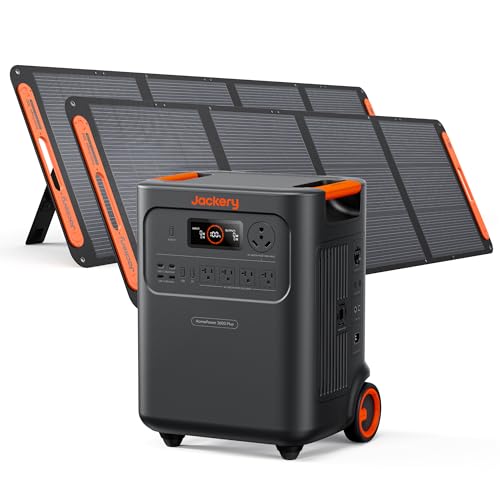
The best solar generator kits with panels in 2026 are the EcoFlow DELTA 3 Plus kit for most home backup needs, the Jackery Solar Generator 1000 v2 for the simplest carry-and-go setup, the Anker SOLIX C1000 Gen 2 kit for the fastest wall recharging and highest output, the Bluetti AC180 kit for value, and the EcoFlow DELTA Pro 3 when you want to keep a refrigerator, sump pump and furnace fan alive for days. The right kit is the one whose panels can actually refill the battery in a day of storm-season sun, so start with the math before the brand.
Our top picks



As an Amazon Associate we earn from qualifying purchases at no extra cost to you. Ratings are shown as listed on Amazon.
How Much Can the Included Panels Really Recharge?
Panel wattage is a peak rating under lab conditions. In practice, a portable panel delivers about 60 to 75 percent of its rating once heat, angle, cloud and conversion losses are counted. A useful planning formula:
Daily solar energy (Wh) = panel watts x peak sun hours x 0.7
| Panels in kit | 3 sun hours (cloudy fall day) | 4.5 sun hours (typical) | 6 sun hours (clear summer) |
|---|---|---|---|
| 60 W | about 125 Wh | about 190 Wh | about 250 Wh |
| 200 W | about 420 Wh | about 630 Wh | about 840 Wh |
| 400 W | about 840 Wh | about 1,260 Wh | about 1,680 Wh |
| 800 W | about 1,680 Wh | about 2,520 Wh | about 3,360 Wh |
A modern full-size refrigerator uses roughly 1 to 1.5 kWh per day. That means a 1 kWh station with a single 200 W panel will slowly lose ground on a fridge, while the same station with 400 W of panels can roughly hold even in decent sun. After a hurricane, skies are often hazy for days, so plan around the cloudy column.
Kit Comparison
| Kit (station) | Capacity | AC output | Max solar input | Station weight | Typical kit price range |
|---|---|---|---|---|---|
| Anker SOLIX C300 + 60 W panel | 288 Wh | 300 W | about 100 W | about 9 lb | $250 to $400 |
| Jackery Solar Generator 1000 v2 (Explorer 1000 v2 + SolarSaga) | 1,070 Wh | 1,500 W | 400 W | about 24 lb | $700 to $1,100 |
| EcoFlow DELTA 3 Plus + solar panel | 1,024 Wh, expandable | 1,800 W | up to 1,000 W (two inputs) | about 28 lb | $800 to $1,300 |
| Anker SOLIX C1000 Gen 2 + panel | 1,024 Wh | 2,000 W | 600 W | about 25 lb | $800 to $1,200 |
| Bluetti AC180 + panel | 1,152 Wh | 1,800 W | 500 W | about 35 lb | $700 to $1,000 |
| EcoFlow DELTA Pro 3 + 400 W panels | 4,096 Wh, expandable | 4,000 W | up to 2,600 W | about 114 lb (wheeled) | $3,500 to $5,000+ |
All six stations use LiFePO4 batteries, which are rated for thousands of cycles and tolerate storage better than older NMC packs. If you shop older or discounted stock, confirm the chemistry, since some previous-generation models used NMC with far fewer rated cycles.
Which Kit Fits Your Outage
Phones, lights, router and a CPAP: Anker SOLIX C300 kit
At under 10 pounds, the C300 is the kit to keep in a closet for short outages. Its 288 Wh runs a Wi-Fi router (about 10 W) for over a day, or a typical CPAP without humidifier for two to three nights. The 60 W panel adds roughly 150 to 200 Wh on a decent day, which is enough to keep small electronics going indefinitely. It will not run a fridge or microwave. Anyone relying on medical equipment should confirm power needs with the device maker or their care provider.
Simple grab-and-go backup: Jackery Solar Generator 1000 v2
Jackery’s appeal is ease: few menus, a carry handle and folding SolarSaga panels that plug straight in. The Explorer 1000 v2 is the lightest station in the 1 kWh class here and handles a fridge, lights and a fan for most of a day. Solar input tops out at 400 W, so buy the two-panel version if fridge backup is the goal.
Best all-round home backup: EcoFlow DELTA 3 Plus kit
The DELTA 3 Plus has the most headroom to grow. It accepts extra battery packs, has two solar inputs so you can add panels later, and switches to battery fast enough to act like a basic UPS for a computer or modem. It is the kit to choose if you expect your needs to expand from essentials to a small transfer-switch setup.
Highest output in its class: Anker SOLIX C1000 Gen 2 kit
A 2,000 W inverter is the main draw, handling a microwave, coffee maker or a small window AC unit on startup. It also recharges from the wall in under an hour, useful when a storm is forecast and you need to top off quickly. Solar input is generous at 600 W.
Best value per watt-hour: Bluetti AC180 kit
The AC180 gives the most capacity for the money in this group and a strong 500 W solar input. It is heavier and bulkier than the Jackery or Anker, so it suits a station that stays home rather than one you carry to a campsite.
Multi-day whole-essentials backup: EcoFlow DELTA Pro 3
With 4 kWh on board, 240 V capability and up to 2,600 W of solar input, the DELTA Pro 3 can keep a fridge, freezer, sump pump and gas-furnace blower running through a multi-day outage when paired with 800 W or more of panels. It rolls on wheels but weighs over 100 pounds, and connecting it to home circuits requires a transfer switch or EcoFlow’s panel hardware installed by a licensed electrician.
Runtime Cheat Sheet for a 1 kWh Station
| Load | Typical draw | Approximate runtime (about 85% usable) |
|---|---|---|
| Wi-Fi router + modem | 15 W | about 55 hours |
| Full-size refrigerator (cycling) | about 50 W average | about 17 hours |
| Box fan on medium | 45 W | about 19 hours |
| CPAP without humidifier | 30 to 60 W | about 14 to 28 hours |
| 1/3 hp sump pump (intermittent) | about 600 W when running | about 1.4 hours of total pumping time |
Common Mistakes With Solar Kits
- Testing panels through glass. Window glass and screens cut output sharply. Panels need to be outside, angled toward the sun.
- Partial shade. A shadow across a small part of a panel can collapse its output. Move panels as the sun moves.
- Running the station indoors near a sump pit or water. Keep it dry and elevated; it is battery storage, not a waterproof device.
- Storing at 100 percent for a year. Most makers recommend storing around 60 to 80 percent and topping up every few months.
- Backfeeding a home outlet. Never plug a station into a wall outlet to power the house. Use a proper transfer switch.