Key takeaways
- Pro: Pure sine wave output at a notably low price point relative to similar wattage options.
- Pro: Automatic transfer switching included, so no manual intervention during an outage.
- Con: Owner feedback indicates the included battery is adequate but not oversized, meaning runtime may be shorter during prolonged outages.
A power outage during a heavy storm does not announce itself with grace. Sump pumps lose power, water creeps in, and by the time you notice, the damage is already done. A battery backup for sump pump systems solves exactly one problem: keeping water moving when the grid goes down. The stakes are straightforward — a finished basement can suffer thousands of dollars in damage in a single overnight event.
What separates a worthwhile unit from a disappointing one comes down to a few hard factors. Wattage must match or exceed your pump’s running and starting draw. The output waveform matters more than most buyers realize — pure sine wave runs motors cooler and quieter than modified sine. Automatic transfer is not a luxury; a system you have to manually switch is a system that fails while you sleep. Battery inclusion, compatibility, and long-term maintenance all factor into true ownership cost. This roundup compares published specifications, pricing, and recurring owner-reported experiences to sort the field.
Our top picks




As an Amazon Associate we earn from qualifying purchases at no extra cost to you.
Quick Picks
| Product | Best For | Price |
|---|---|---|
| Cantonape 2000W | Value-focused pure sine wave buyers | $181.99 |
| 2500W with 25A Fast Charging | Higher-capacity systems needing fast recharge | $319.99 |
| Basement Watchdog Combo (CITS-50) | All-in-one primary plus backup setup | $469 |
| WAYNE ESP25n | Dedicated backup pump for existing primary | $349.99 |
| Basement Watchdog AGM (BW-27AGM) | Maintenance-free battery replacement | $209 |
| VEVOR 2500W | Lowest-cost 2500W pure sine option | $179.20 |
| VEVOR 1500W | Small or low-draw pumps on a tight budget | $121.83 |
| 2500W with Remote Controller | Convenient remote monitoring of transfer status | $319.99 |
How We Picked
We weighed four criteria across all eight entries: output waveform quality and rated wattage relative to typical residential sump pump draws; whether automatic transfer switching is built in and how owners report its reliability; total cost of ownership including whether a battery ships with the unit or must be sourced separately; and installation complexity for a typical homeowner or handy person. Products that scored well on all four made the list regardless of price tier.
The 8 Best Battery Backup for Sump Pump in 2026
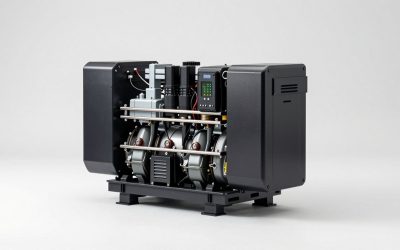
Cantonape 2000W Sump Pump Backup Battery System, Pure Sine Wave
For homeowners who want pure sine wave output without spending over $200, this Cantonape unit delivers the most important spec at a price that undercuts several competitors. The 2000-watt rating comfortably handles most residential submersible and pedestal pumps, and the pure sine waveform protects motor longevity.
- Pro: Pure sine wave output at a notably low price point relative to similar wattage options.
- Pro: Automatic transfer switching included, so no manual intervention during an outage.
- Con: Owner feedback indicates the included battery is adequate but not oversized, meaning runtime may be shorter during prolonged outages.
Skip this if your pump has an unusually high starting surge or you need extended runtime beyond a single storm cycle.
2500W Sump Pump Battery Backup System with 25A Fast Charging
This system targets buyers who have already experienced a dead backup battery hours into a storm and want faster recovery. The 25-amp charger refills a deep-cycle battery noticeably quicker than standard 10-amp chargers, and the LCD remote lets you check status from outside the mechanical room.
- Pro: 25A fast charging reduces the window of vulnerability between storm cycles.
- Pro: LCD remote display provides visibility without opening the enclosure.
- Con: At $319.99, this is a mid-range system, not a budget entry.
Pass on this if your pump draws under 1500 watts; you are paying for headroom you will never use.
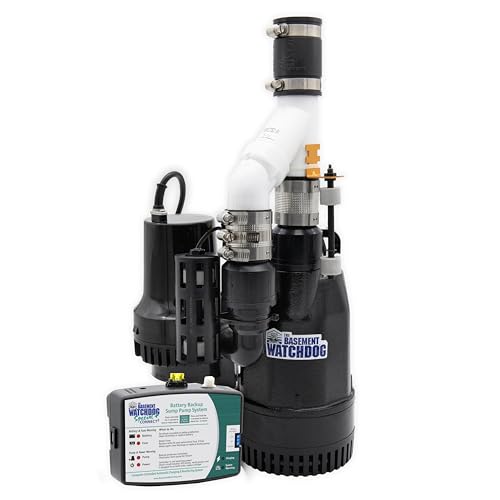
The Basement Watchdog Combo CITS-50 Preassembled Primary and Backup System
This is the buy-once-don’t-worry option. You get a primary pump, a dedicated battery backup pump, and a monitoring controller in one package. The copper-wound PSC motor in the primary is a quality signal, and the WiFi-capable controller (add-on module) adds remote alerts. For new installations or full basement re-pump jobs in 2026, this eliminates compatibility guesswork.
- Pro: Factory-matched system removes sizing and communication risks between components.
- Pro: Monitoring controller logs pump activity and alerts on failures.
- Con: Highest total price at $469, and you are paying for a primary pump you may already own.
Skip if you already have a working primary pump and only need a backup layer.
WAYNE ESP25n 12-Volt Battery Back Up Sump Pump
The ESP25n is not an inverter system; it is a dedicated secondary pump designed to kick in when a primary fails. Up to 2,700 gallons per hour makes it a capable performer on its own. The catch is clear from the listing: no battery included, so real cost lands higher than $349.99 once you add a suitable 12V unit.
- Pro: Purpose-built as a backup pump with a proven track record and high flow rate.
- Pro: Integrates cleanly with existing Basement Watchdog or similar battery systems.
- Con: Battery sold separately, adding $150-$200+ to actual out-the-door cost.
Skip if you are starting from zero; a combo system or inverter-based setup is simpler for a single purchase.
The Basement Watchdog BW-27AGM Maintenance Free Standby Battery
Not a complete backup system but the component that makes one work. AGM chemistry means no topping off with distilled water, a meaningful advantage for owners who ignore their battery between storms until it is too late. At $209 it is competitively priced for the capacity class and pairs well with the ESP25n or inverter-based setups that specify a 12V deep-cycle battery.
- Pro: Maintenance-free AGM chemistry with sealed construction.
- Pro: Form-factor compatibility with most Basement Watchdog and aftermarket backup pump systems.
- Con: A standalone battery; you still need a controller or inverter to make it functional.
Skip if your system already includes a battery and is under warranty.
VEVOR 2500W Sump Pump Battery Backup System
At $179.20 this is the lowest-priced 2500-watt pure sine wave system in the group. The LCD display and automatic switching to battery power mirror features found on units costing $140 more. Battery not included, which keeps the headline price low but means the true cost is roughly $350-$400 once you add a suitable 12V or 24V bank.
- Pro: Highest wattage per dollar among pure sine wave options listed here.
- Pro: Automatic switching with LCD status readout at a budget price.
- Con: No battery included; budget the full system cost before comparing to all-in-one units.
Skip if you want a single-purchase solution and do not want to source a compatible battery separately.
VEVOR 1500W Sump Pump Battery Backup System
The smallest and cheapest entry in this roundup at $121.83. For pedestal pumps or low-draw submersibles under 1,000 running watts, this covers the need without excess capacity. Same pure sine wave and automatic switching architecture as the 2500W sibling. Battery sold separately.
- Pro: Lowest absolute price for a pure sine wave automatic transfer system.
- Pro: Compact form factor fits tight utility closets.
- Con: 1500W headroom is thin for pumps with high starting surge; verify your pump’s locked-rotor amps.
Skip if you run a high-horsepower submersible or are uncertain about your pump’s startup draw.
2500 Watt Sump Pump Backup Battery System with LCD Remote Controller
Functionally similar to the second entry but distinguished by its remote controller with LCD screen, which lets you monitor transfer state and battery health from a distance. The 2500-watt pure sine wave output and automatic switching to battery inverter power make it a serious mid-tier option at $319.99.
- Pro: Remote LCD controller adds convenience and fault visibility outside the basement.
- Pro: Professional-grade transfer system handles high starting surges.
- Con: Competes directly with similar-priced units; differentiation is slim without published runtime data.
Skip if you are comfortable checking the unit in person and want to save $140 with the Cantonape alternative.
Buying Guide
Match Wattage to Your Pump’s Starting Surge, Not Running Load
Sump pumps draw their maximum current at startup — locked-rotor amps can be two to three times the running figure. A 2500-watt inverter handles a half-horsepower submersible with headroom, but a 1500-watt unit may trip on a marginal pump. Check the nameplate for both running and starting watts, then buy at least 30 percent above the starting figure.
Pure Sine Wave Is Non-Negotiable for Motor Loads
Modified sine wave inverters run motors hotter, louder, and with more vibration. Over months and years that thermal stress shortens pump life. Every product in this roundup with a stated waveform is pure sine, and that consistency tells you the market has moved on from the cheaper alternative. Do not go backwards.
Calculate Total System Cost Before Comparing Prices
An inverter at $179 without a battery can cost $400 out the door once you add a 12V deep-cycle unit. An all-in-one system at $181.99 may include a smaller battery that shortens your runtime. Decide what runtime you need (typically 6-12 hours of standby) and price the battery capacity that achieves it before judging sticker prices.
Our Verdict
Top pick: The Cantonape 2000W system offers the best balance of pure sine wave output, automatic transfer, and included battery at $181.99, making it the default recommendation for most residential setups. Budget pick: The VEVOR 2500W at $179.20 gives you the highest rated wattage for under $200 if you already own a compatible deep-cycle battery. Condition for another winner: If you are replacing the entire pump system or building a finished basement and want a single coordinated purchase with monitoring, the Basement Watchdog CITS-50 Combo at $469 is the clear choice despite its premium.
FAQ
Do I need a battery backup if I already have a generator?
A generator is excellent but does not solve the timing problem. If your storm knocks out power for 90 seconds before the generator starts, that gap is exactly when water enters. A battery backup for sump pump systems handles those short interruptions automatically while the generator brings itself online.
How long does a backup battery actually last during an outage?
Runtime depends on how often your pump cycles, which depends on water table and rain intensity. A typical lead-acid or AGM battery paired with a moderate-draw pump can last 5 to 12 hours under average conditions. Fast-charging systems like the 25A unit listed above reduce recovery time between cycles.
Can I use a car battery as a backup?
Technically yes for a single emergency, but car batteries are designed for high-current short bursts, not the repeated deep discharge a sump pump requires. A deep-cycle battery rated for repeated discharges to 50 percent capacity will last years in this role; a car battery will degrade within months.
Is a WiFi monitoring feature worth the extra cost?
If you travel often or your basement is unoccupied during storms, yes. The Basement Watchdog CITS-50’s WiFi module sends alerts if the pump runs excessively or fails to activate, which converts a passive system into an actionable one. For owners who live in the house and check the basement regularly, it adds convenience but not essential protection.