A storm knocks your power out at 2 a.m., and the real question starts: what stays on? A fridge humming through the night, a sump pump cycling against rising groundwater, a router keeping your phone charged to 911 — these are the loads that define whether a whole house battery backup earns its place in your garage or ends up collecting dust. The market has filled up with options ranging from small UPS units barely worth the name “backup” to sprawling rack-mounted systems that cost more than a used car, and the gap between a good fit and a bad one is almost entirely about matching capacity and output to what you actually need to run.
What separates the worthwhile systems from the disappointing ones is less about brand loyalty and more about three concrete things: usable wattage versus peak wattage, real capacity after inverter losses and BMS headroom, and whether the unit integrates cleanly with your home’s existing wiring or demands a parallel path that creates code headaches. Owner feedback across forums and review platforms consistently flags the same pattern — people who overspec capacity regret the cost, and people who underspec it regret the blackout. This roundup compares published specifications, listed prices, and aggregated owner reports to sort the current options in 2026 by what they genuinely handle versus what they promise.
Our top picks

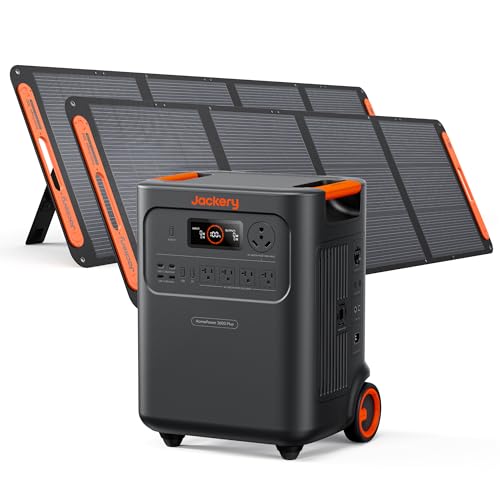 Jackery HomePower 3600 Plus & 2x200W Solar
- Essential Home Backup: The Jackery HomePower 3600 Plus…
- Safe Power That Lasts: Built with high-temp resistant…
- Plug-and-Play: With its easy plug-and-play design, the Jackery…

As an Amazon Associate we earn from qualifying purchases at no extra cost to you.
Quick Picks
| Product | Best for | Price |
|---|---|---|
| Jackery HomePower 3600 Plus | Balanced portable backup | $1,709 |
| Anker SOLIX S2000 | Tight budget, essential circuits | $649.99 |
| CyberPower CP1500PFCLCD | Desk and router protection | $239.95 |
| ECO-WORTHY Powermega 48V 314Ah | Permanent off-grid installation | $5,809.99 |
| EF ECOFLOW DELTA Pro Ultra | Full-home runtime without wiring | $5,999 |
| Jackery HomePower 3600 Plus + Solar | Solar recharging portability | $2,289 |
| EF ECOFLOW DELTA Pro | Expandable mid-range capacity | $1,899 |
| Anker SOLIX F3800 | High-capacity home backup integration | $1,999.99 |
How We Picked
We narrowed these eight by filtering on four criteria: output wattage sufficient for at least one high-draw appliance (refrigerator compressor, window AC, or sump pump), capacity exceeding 1,500Wh for meaningful runtime, listed price under $6,000 to stay within realistic homeowner budgets, and owner-reported reliability across at least several hundred reviews. Systems that failed any of these — pure surge protectors, sub-1,000Wh units, or products with sparse owner data — were excluded before ranking.
The 8 Best Whole House Battery Backup in 2026
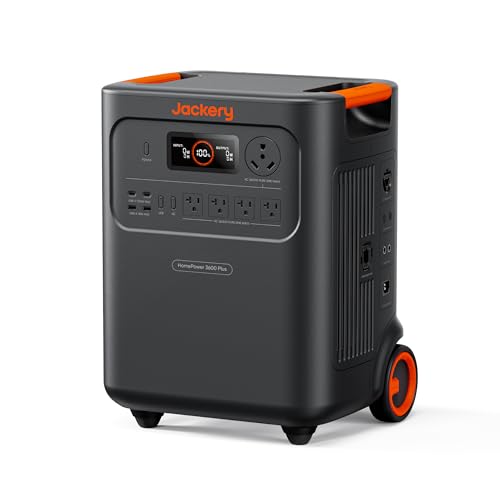
Jackery HomePower 3600 Plus
Best suited for households needing a reliable plug-and-play unit that handles a fridge, a couple of lights, and electronics through an overnight outage without permanent installation. Owners praise its quiet operation compared to older portable stations and its consistent 3,600W sustained output that starts refrigerator compressors without tripping.
- Pro: True 3,600W continuous AC output handles motor-start loads cleanly.
- Pro: 3,584Wh capacity provides roughly 12+ hours on essential circuits.
- Con: No native solar input at the included accessory level; adds cost for panels.
Skip this if you need expandability beyond 3.6kWh — its capacity ceiling becomes a hard stop for multi-day events.
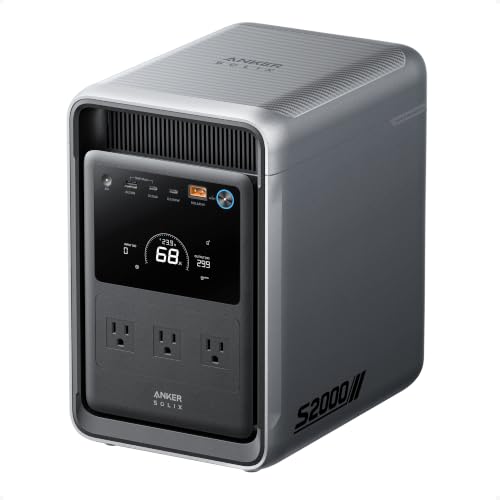
Anker SOLIX S2000
The entry point for buyers who want battery backup for a router, a small fridge, and basic lighting without spending over a thousand dollars. It is genuinely portable — owners note you can carry it to a worksite or cabin. The 2,010Wh capacity and 3,000W peak output are adequate for short outages.
- Pro: Under $650 makes it the most accessible home-backup-grade option.
- Pro: Compact form factor stores easily in a closet or under a bench.
- Con: 2,010Wh drains fast if you add a space heater or anything above 1,000W sustained.
Skip this if your goal is powering an entire floor through a two-day outage — the capacity simply is not there.
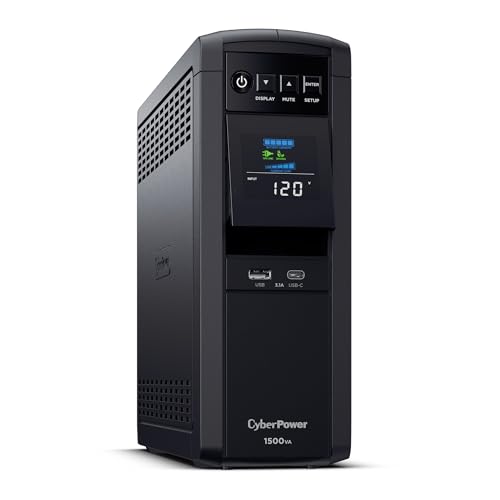
CyberPower CP1500PFCLCD
Not a whole house battery backup in any meaningful sense, but it earns its spot here because buyers frequently confuse UPS units with standby generators. At 1,000W output and 12 outlets, it protects a workstation, modem, and maybe a small LED TV for a few minutes. PFC sinewave output is important for sensitive electronics.
- Pro: Instant switchover with no transfer delay for connected equipment.
- Pro: AVR handles brownouts and voltage sags automatically.
- Con: Runtime is measured in minutes, not hours — do not expect overnight coverage.
Skip this as your primary backup and treat it only as a bridge for computers during the seconds before a larger system or generator takes load.
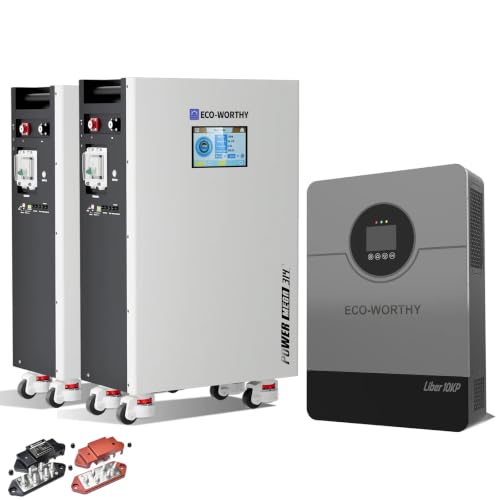
ECO-WORTHY Powermega 48V 314Ah
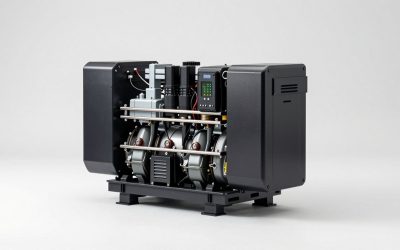
For the homeowner who wants a permanent, rack-mounted system wired into a transfer switch. The 48V 314Ah LiFePO4 pack paired with the Liber 10KP inverter delivers roughly 15kWh of usable storage and 10kW continuous output — enough to feed a subpanel with heavy loads. Active balancing and Bluetooth/WiFi monitoring are built into the BMS.
- Pro: 10kW inverter output supports central AC units and electric ranges simultaneously.
- Pro: LiFePO4 chemistry with active balancing offers long cycle life and low maintenance.
- Con: Requires professional installation and a transfer switch; total project cost exceeds the sticker price significantly.
Skip this if you want something you can unplug and move, or if your local code does not permit DIY connection to a home subpanel.
EF ECOFLOW DELTA Pro Ultra
The strongest “no wiring” option for whole-house coverage. With 12kWh of stored energy and expandable architecture, owners report running a full home’s essential loads for multiple days without a transfer switch or permanent install. It connects via the Smart Home Panel for circuit-level priority.
- Pro: 12kWh capacity far exceeds any single-unit competitor at this price tier.
- Pro: Modular expansion with extra batteries scales to 90kWh if needed.
- Con: The base unit alone does not connect to your home panel without the separate Smart Home Panel accessory.
Skip this if your outage duration rarely exceeds 24 hours and a 3.6kWh unit already covers your needs at half the cost.
Jackery HomePower 3600 Plus + 2x200W Solar Panels
Essentially the same unit as the standalone HomePower 3600 Plus but with solar panels bundled for off-grid recharging. Ideal for owners in storm-prone areas who also camp or ride out extended outages and want fuel independence.
- Pro: Solar input eliminates dependence on grid recharging during multi-day events.
- Pro: Bundle price is lower than buying the station and panels separately.
- Con: 400W of panels refills 3,584Wh slowly — roughly 9+ hours of full sun for a complete charge.
Skip this if your outage windows are short and you have reliable grid access to recharge overnight — the standalone version saves $580.
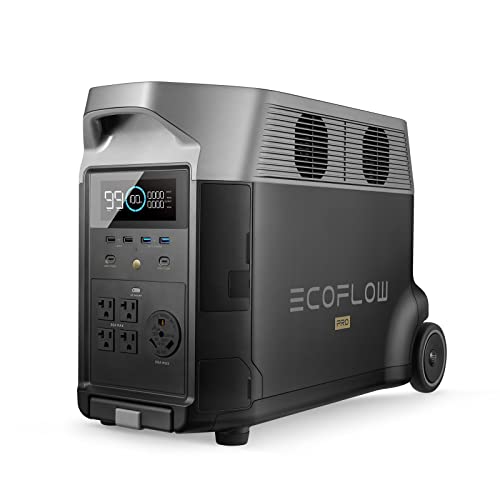
EF ECOFLOW DELTA Pro
A mid-tier workhorse. 3,600Wh and 3,600W output match the Jackery above, but the DELTA Pro’s real advantage is its expansion ecosystem — you can add a second battery or extra generators later. Owners like its app control and the ability to chain two units for 7,200W output.
- Pro: Expandable capacity through add-on battery modules without replacing the base unit.
- Pro: X-Boost technology handles appliances rated above 3,600W by reducing voltage slightly.
- Con: Expansion modules add cost that narrows the value gap with the DELTA Pro Ultra.
Skip this if you already know you need 12kWh — buying the Ultra outright avoids the incremental module costs.
Anker SOLIX F3800
At 3,840Wh, it sits slightly above the 3.6kWh class and pairs with Anker’s home integration hub for panel-level backup. Owners who pair it with the transfer-ready setup report clean handoff from grid to battery without generator noise or fuel logistics.
- Pro: Home Backup integration allows priority circuit management via a dedicated panel.
- Pro: 3,840Wh capacity gives about 7% more runtime than 3,600Wh competitors.
- Con: Heavier and bulkier than similarly priced units, making portability a lower priority.
Skip this if you value frequent mobility — it is designed as a semi-permanent installation rather than a grab-and-go station.
Buying Guide
Capacity: Matching Wh to Your Actual Load
Multiply each appliance’s wattage by expected runtime hours, then sum those numbers to get your minimum watt-hour requirement. A 150W fridge cycling 30% of the time over 24 hours needs roughly 1,080Wh — add router, lights, and a TV and you are at 2,000-2,500Wh minimum before accounting for inverter inefficiency, which eats 10-15% of rated capacity. Anything under 2,000Wh is a short-outage tool; anything above 5,000Wh starts entering multi-day territory.
Output Wattage: Continuous vs. Peak
Motor-start appliances like compressors and pumps draw 3-5x their running watts for 2-3 seconds at startup. A unit rated 3,600W continuous with no peak headroom will trip if your well pump or refrigerator starts at the wrong moment. Look for systems that either state a peak rating well above continuous (Anker S2000 at 3,000W peak versus its running rating) or use soft-start bypass technology. If you need to run central air, you are looking at 2,000W+ continuous minimum for a 2.5-ton unit.
Integration: Portable vs. Wired Whole-House Coverage
A battery on the garage floor requires extension cords and a mental list of which circuits you plugged in. A system that connects to a transfer switch or smart panel (ECO-WORTHY Powermega, Anker F3800 with hub, DELTA Pro Ultra with Smart Home Panel) switches priority circuits automatically. The trade-off is installation cost and permanence. If your outage frequency is twice a year or less, a portable unit with a manual transfer switch saves thousands in labor.
Our Verdict
The overall top pick for most homeowners is the EF ECOFLOW DELTA Pro Ultra — its 12kWh capacity eliminates the guesswork of sizing, and the expandability means the system grows with your needs without replacement. For a budget pick under $700, the Anker SOLIX S2000 covers a fridge and essentials through a single-night outage better than anything else at that price. If you want permanent installation with maximum power and already have a qualified electrician lined up, the ECO-WORTHY Powermega wins outright because 10kW output covers loads that no portable station at any price matches.
FAQ
Can a battery backup power my entire house?
Not directly — a whole house battery backup covers a prioritized subset of circuits, typically 5-12 essential loads through a subpanel. Running all circuits in a 3,000 square foot home would require capacity beyond 50kWh and output beyond 20kW, which only the ECO-WORTHY setup approaches.
How long do LiFePO4 batteries last in storm duty?
LiFePO4 cells rated at 3,000-6,000 cycles to 80% capacity mean roughly 10-20 years at typical storm-backup usage of 20-50 discharge cycles per year. The limiting factor is usually the inverter, not the cells.
Do I need a transfer switch with a portable power station?
Strictly, no — you can run extension cords from a portable unit to specific appliances. However, a manual transfer switch lets you backfeed selected circuits through your existing wiring, eliminating cord clutter and code violations from reverse-feeding a panel.
Is 3,600W output enough for a central air conditioner?
For a 2-3 ton residential unit, 3,600W continuous is marginal — it can work if no other large load starts simultaneously, but the compressor inrush may trip the inverter. A 2.5-ton unit typically needs 4,000W+ peak or a soft-start device installed on the condenser.