Key takeaways
- Pro: Meets DOT and OSHA standards in one package, eliminating the need to cross-reference separate components.
- Pro: USA-made construction with a mounting shield that holds firm on rough roads.
- Con: The price is significantly higher than buying an extinguisher and bracket separately.
Meeting OSHA fire extinguisher requirements is rarely a single-purchase problem. A safety manager outfitting a fleet of commercial trucks needs a different setup than someone maintaining a small warehouse floor, and both differ again from a home garage owner who simply wants to check a box. The frustration most buyers express in owner feedback is not about price but about confusion—unclear ratings, signs that peel in six months, extinguishers that do not match the hazard class of the workspace, and tags that fail long before the next inspection cycle.
The good products in this space share three traits: they match a specific use case with precision, they use materials rated for the conditions they will face, and they make compliance obvious to whoever is responsible for maintaining the program. The weak ones cut corners on legibility, durability, or compatibility with the extinguisher they are supposed to accompany. This roundup compares eight products across those lines to help you assemble a compliant setup without guessing.
Our top picks




As an Amazon Associate we earn from qualifying purchases at no extra cost to you.
Quick Picks
| Product | Best for | Price |
|---|---|---|
| USKITS DOT/OSHA Kit | Commercial truck fleets | $149.95 |
| First Alert Heavy Duty | Home and light commercial | $42.98 |
| Emergency Safety Sticker Full Set | Multi-hazard workplace signage | $18.99 |
| Kidde FA110G 2-Pack | Home kitchen or garage | $35.95 |
| iSYFIX Fire Extinguisher Signs | Budget wall labeling | $9.95 |
| OSHA Compliance Fire Safety Poster | Training and visual guides | $23.95 |
| OLANZU 12-Pack Sign Stickers | Multi-location bulk labeling | $9.39 |
| Fire Extinguisher Inspection Tags | Maintenance record keeping | $9.99 |
How We Picked
We evaluated each product against four criteria that recur in owner feedback and compliance discussions. First, regulatory clarity: does the product explicitly align with OSHA fire extinguisher requirements and relevant DOT or ANSI standards where applicable? Second, material durability under expected conditions—outdoor truck exposure, humid kitchens, high-traffic walls. Third, value relative to the specific use case rather than raw price. Fourth, ease of deployment and maintenance, because a sign nobody mounts correctly or a tag that fades before next inspection fails its purpose regardless of how well it was manufactured.
The 8 Best Osha Fire Extinguisher Requirements in 2026
USKITS DOT OSHA ANSI Compliant Kit
This is a complete solution for anyone running commercial vehicles that fall under DOT and OSHA fire extinguisher requirements simultaneously. The 2.5-pound 1A10BC extinguisher paired with a mounting shield addresses the common complaint of units sliding around in truck cabs. The included shield keeps the extinguisher visible and accessible without obstructing driver movement.
- Pro: Meets DOT and OSHA standards in one package, eliminating the need to cross-reference separate components.
- Pro: USA-made construction with a mounting shield that holds firm on rough roads.
- Con: The price is significantly higher than buying an extinguisher and bracket separately.
Skip this if your vehicles are not subject to DOT regulations or if you already have compliant mounts and only need the extinguisher itself.
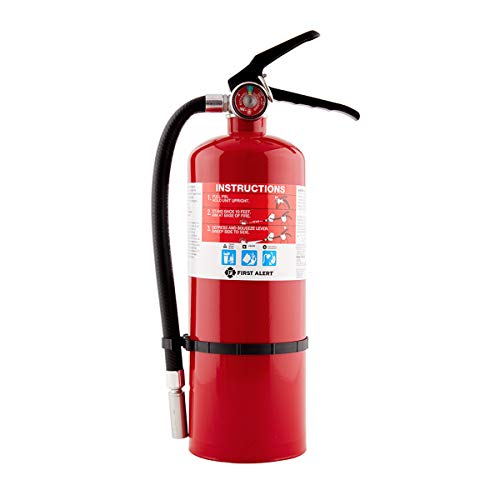
First Alert Fire Extinguisher, Heavy Duty
First Alert occupies the middle ground between basic home units and commercial-grade equipment. This heavy-duty model suits small workshops, retail spaces, or home garages where you want more capacity than a kitchen extinguisher but do not need a fleet solution.
- Pro: Versatile across Class A, B, and C fires with a recognizable brand that inspectors and owners trust.
- Pro: Moderate price point with widely available replacement parts and refilling services.
- Con: No included mounting bracket or protective shield, adding a small extra cost.
Skip this if you need a single unit for a specific high-hazard application like a commercial kitchen or if you require DOT certification for vehicles.
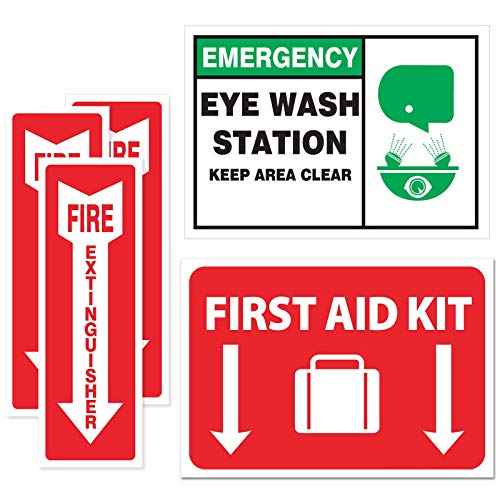
Emergency Safety Sticker Sign Full Set
OSHA fire extinguisher requirements do not end at the extinguisher itself—visible signage pointing to locations is part of a compliant program. This five-pack covers fire extinguisher arrows, eye wash stations, and first aid markers, which makes it efficient for a small facility that needs multiple hazard signs at once.
- Pro: Covers three separate sign types in one purchase, saving time over sourcing individually.
- Pro: Clear, high-contrast graphics readable from a reasonable distance in typical indoor lighting.
- Con: Adhesive quality is rated for smooth indoor surfaces only; it will not survive outdoor or textured wall exposure.
Skip this if your signage needs to withstand weather, UV exposure, or rough industrial surfaces where the adhesive will fail.
Kidde Basic 110 Fire Extinguisher 2-Pack
The Kidde FA110G is one of the most commonly recommended units in home safety guides, and the two-pack format addresses the OSHA-adjacent need to place extinguishers in multiple rooms. Its 1-A:10-B:C rating covers the most frequent residential fire types.
- Pro: Lightweight and easy to operate, which matters for users who may have limited strength or mobility.
- Pro: Buying two units together costs less than a single heavier-duty option while covering two zones.
- Con: Lower total agent capacity than heavier commercial units, so it suits lighter hazards only.
Skip this if the installation environment involves flammable liquid storage or electrical panels with significant load, where a larger B:C rating is prudent.
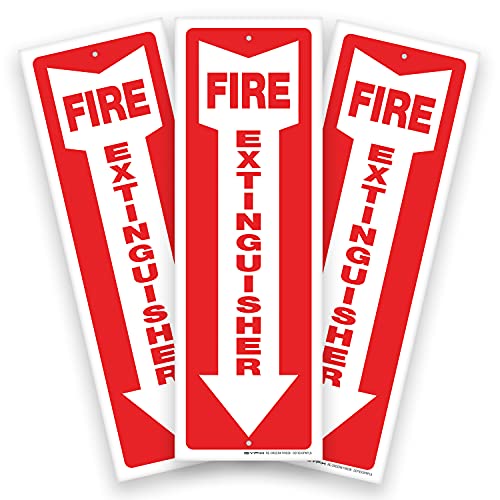
iSYFIX Fire Extinguisher Signs 3-Pack
These 4×12 inch signs serve the narrow purpose of labeling extinguisher locations on smooth walls. At under ten dollars for three, they offer the lowest per-sign cost in this roundup and work well for small offices or classrooms with limited signage budgets.
- Pro: Extremely affordable for the quantity and standard dimensions that fit most door-frame areas.
- Pro: Simple, unambiguous design with no cluttered text that might cause confusion during an emergency.
- Con: Material is thin and the adhesive is not rated for long-term outdoor use or repeated cleaning.
Skip this if you need signs that will survive weekly mopping, direct sunlight, or industrial solvent exposure near the mounting surface.
Fire Safety Poster OSHA Compliance Guide
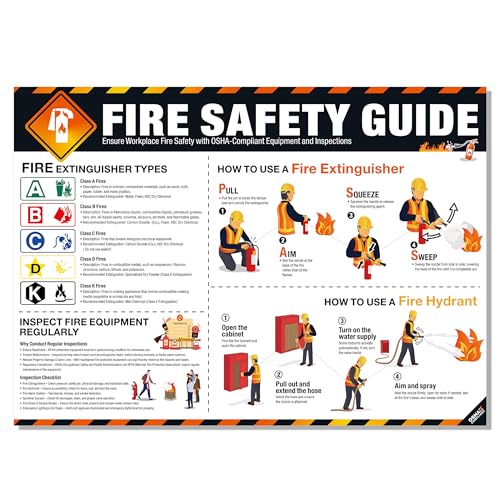
This laminated 18×24 chart addresses the training and awareness side of OSHA fire extinguisher requirements. It combines a fire-type classification chart with step-by-step extinguisher and hydrant use instructions, which is the kind of reference that helps a workplace pass inspection and helps an employee act correctly under pressure.
- Pro: Laminate resists smudging and moisture, extending readability in kitchens or break rooms.
- Pro: Dual-topic coverage (extinguisher and hydrant) reduces the number of separate posters needed on one wall.
- Con: The 18×24 size may feel too large for tight spaces like utility closets or narrow corridors.
Skip this if your compliance need is purely signage-based and your training is already handled through digital modules or printed manuals.
OLANZU 12-Pack Fire Extinguisher Sign Stickers
For property managers or safety coordinators labeling multiple floors or buildings, a twelve-pack of 4×12 stickers at this price point reduces per-location cost below almost any alternative. The uniform design makes signage look consistent across a portfolio.
- Pro: Lowest per-unit cost of any sign product here, ideal when you need many copies.
- Pro: Consistent color and layout make it easy to audit whether every location is labeled.
- Con: The sticker material is not described as weatherproof or UV-resistant, limiting it to indoor flat surfaces.
Skip this if your mounting surfaces are rough, painted with low-sheen finishes, or exposed to temperature swings that degrade adhesive.
Fire Extinguisher Inspection Tags 2026-2029
OSHA fire extinguisher requirements include a documented inspection record. These yearly and monthly tags provide that trail in a waterproof, tearproof format that survives handling in mechanical rooms, trucks, and warehouses. The multi-year range (through 2029) means one purchase covers several inspection cycles.
- Pro: Waterproof and tearproof material outlasts paper-based tags, reducing re-printing costs.
- Pro: 25-pack supplies multiple extinguishers across a facility for a full year of monthly checks.
- Con: No included fasteners or wire ties, so you must source attachment hardware separately.
Skip this if your existing inspection software already logs records digitally and your jurisdiction accepts electronic documentation without physical tags.
Buying Guide
Match the Rating to the Hazard
OSHA fire extinguisher requirements classify extinguishers by fire type, and selecting the wrong one is the most common compliance failure. A 1A:10BC rating covers ordinary combustibles, flammable liquids, and energized electrical equipment—the three most frequent hazards in mixed-use commercial and residential settings. If your space involves cooking oils or deep-fat fryers, you need a Class K unit, which none in this roundup provides. If your hazard is limited to a single electrical panel, a smaller CO2 unit may be more appropriate than a multipurpose dry-chemical model.
Check Mounting and Visibility Rules
The extinguisher itself is only half the requirement. OSHA mandates that units be mounted at accessible heights, visible from travel paths, and protected from damage. A vehicle kit with a shield addresses the DOT-specific mounting concern. In a fixed facility, you need brackets rated for the wall type plus signage that points to the unit from a distance. Many buyers overlook that a sign must be legible under the lighting conditions present at that location, not just under a flashlight in the aisle.
Plan for the Inspection Cycle
A compliant program requires monthly visual checks and annual professional inspections. Tags are the simplest physical record, but you need enough of them and a reliable attachment method. When choosing products, factor in how many units you have multiplied by twelve monthly checks per year, and verify whether your local authority accepts tag-based records or requires a supplemental log. Buying a multi-year tag pack like the 2026 through 2029 set here removes one procurement step from each planning cycle.
Our Verdict
The top pick for a complete, ready-to-deploy solution is the USKITS DOT/OSHA Kit. It bundles the extinguisher, the mount, and the compliance documentation into one product, which eliminates the assembly errors that cause most fleet inspection failures. For a budget entry, the Fire Extinguisher Inspection Tags at $9.99 are the highest-value purchase because they serve a legal documentation requirement that nothing else in this list covers. If you operate a small office rather than a vehicle fleet, the Kidde FA110G 2-Pack wins on the condition that your OSHA fire extinguisher requirements call for multiple small units rather than one large one per zone.
FAQ
What rating do I need for a home garage with stored gasoline?
Gasoline is a Class B hazard, so your extinguisher must carry a B rating. The 1A:10BC rating found on the Kidde and First Alert units covers that scenario with margin. A single 2A:10BC or higher is the minimum most safety guides recommend for a garage storing flammable liquids.
How often must OSHA fire extinguisher inspections occur?
OSHA requires a monthly visual inspection by the responsible person and an annual maintenance check by a certified technician. The inspection tags in this roundup exist to create a paper trail for the monthly visual check, while the annual service requires a professional.
Can I use printed signs instead of manufactured placards?
OSHA does not specify a material for signage but does require that it be legible, durable, and permanently displayed. In practice, printed paper deteriorates quickly in commercial environments and may not survive an inspector’s scrutiny during an unannounced walk-through, which is why laminated or rigid signs are the safer choice.
Do vehicle-mounted extinguishers have different requirements than building units?
Yes. DOT regulations govern vehicle placement, securing method, and accessibility in addition to the extinguisher rating itself. The USKITS product in this list addresses both standards together, whereas a standalone extinguisher mounted in a truck cab may satisfy OSHA but not DOT if it is not secured against shifting or shielded from damage.