A radio scanner is one of the most practical emergency-preparedness tools you can own, but the market makes buying one genuinely confusing. Prices range from fifteen dollars to nearly a thousand, and the feature lists blur together when you are trying to decide which band coverage, channel count, and decode technology actually matter for monitoring police, fire, aviation, or National Weather Service broadcasts during a tornado warning or hurricane.
What separates a worthwhile scanner from a frustrating toy is how well it handles your specific local signal environment. A device that performs flawlessly in rural areas may drop calls in a city with simulcast trunking. A budget handheld may lock onto strong signals easily yet struggle with the weak, distant transmissions you need most when a storm cell moves across your county. This roundup compares the published specifications, listed prices, and owner-reported experiences across eight widely available models to help you match a scanner to your situation before the next severe weather event hits.
Our top picks



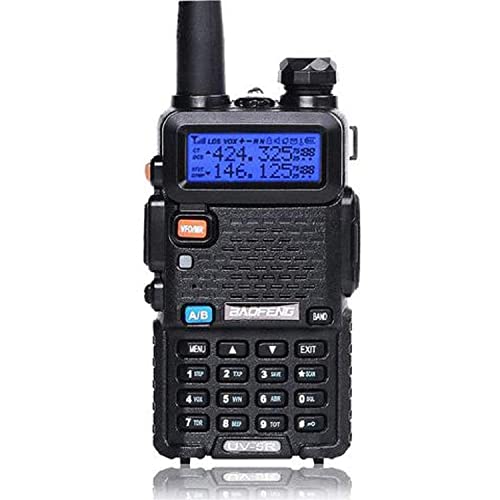 Baofeng UV-5R Ham Radio Handheld
- Frequency Range: 144-148MHz, 420-450MHz
- 128 Channels 50 CTCSS and 104 CDCSS Dual-Band…
- High/Low TX power selectable: Busy channel lock-out(BCLO),128 Channels…


As an Amazon Associate we earn from qualifying purchases at no extra cost to you.
Quick Picks
| Product | Best for | Price |
|---|---|---|
| Uniden BC125AT | All-around handheld on a moderate budget | $139.99 |
| Uniden SDS150 | Digital and simulcast-heavy metro areas | $949.99 |
| Uniden BC365CRS | Bedside weather alert and basic scanning | $119.58 |
| Uniden SDS200 | Base-station digital decode with trunking | $739.71 |
| Baofeng UV-5R | Entry-level two-way radio at a dirt-cheap price | $15.97 |
| Uniden Bearcat SR30C | Compact handheld for racing and aviation | $128.87 |
| Whistler WS1025 | Simple desktop scanning without a computer | $145.95 |
| Whistler WS1010 | Handheld with spectrum sweeping and weather alerts | $124.72 |
How We Picked
We evaluated each scanner against four criteria that owners consistently cite in feedback. First, band and protocol coverage: a device that cannot decode the modulation your local public-safety agencies actually use is useless regardless of its price. Second, channel capacity and ease of programming, because scanning without stored talkgroups or service banks forces tedious manual searching. Third, reception quality in challenging environments, specifically simulcast overlap and weak-signal sensitivity, which is where the software-defined radio models separate themselves from conventional designs. Fourth, price-to-feature value, weighing what you gain at each tier against the marginal cost.
The 8 Best Radio Scanner in 2026
Uniden BC125AT
This handheld covers aviation, marine, railroad, NASCAR, and non-digital police, fire, and public-safety bands with 500 alpha-tagged channels and Close Call technology that instantly jumps to a strong signal outside your programmed banks. Owners praise its versatility and the ability to PC-program via free software, which saves hours of menu-crawling. The main drawbacks are its plastic build, which some users find less rugged than pricier alternatives, and its inability to decode digital formats. Skip it if your county has migrated to P25 or DMR trunking, because you will hear only static on those channels.
- Pro: Close Call RF capture quickly detects nearby transmissions outside programmed banks.
- Pro: PC-programmable with a large library of user-contributed frequency databases.
- Con: No digital decode, limiting usefulness in trunked-system areas.
Uniden SDS150
For anyone living in a simulcast metro area, this handheld is the definitive answer. Its software-defined radio front end handles overlapping digital signals and weak transmissions far better than conventional scanners, and the built-in GPS enables location-based trunking so you hear the system nearest you as you travel. Owners describe it as the best-performing handheld they have owned. The price is its only real barrier. Skip it if your budget is under $500 or if you only need analog scanning for weather alerts.
- Pro: Simulcast and weak-signal performance unmatched by any other handheld here.
- Pro: Built-in GPS supports location-aware trunked-system scanning.
- Con: Premium price puts it out of reach for casual listeners.
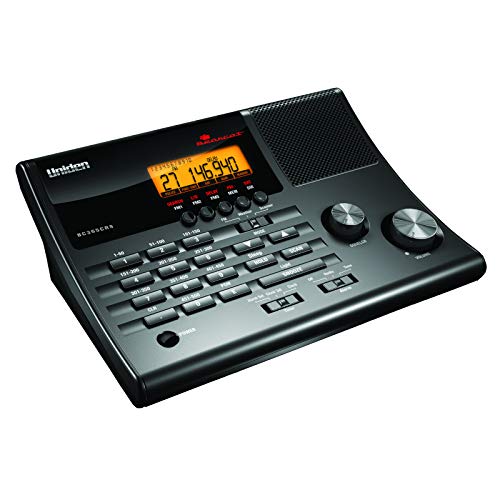
Uniden BC365CRS
Part scanner, part alarm clock, this base-station unit adds FM radio and weather alerts to 500 channels of scanning across aviation, railroad, marine, and non-digital public-safety frequencies. Owners like its simplicity and the fact that it doubles as a nightstand radio with a snooze function. It is ideal for someone who wants a set-and-forget weather alert device rather than a hobbyist-grade scanner. Skip it if you need portability, digital decoding, or PC programming, since those features are absent.
- Pro: Weather alerts and alarm clock make it practical as a bedside unit.
- Pro: Straightforward operation without needing a computer.
- Con: Analog only, no PC programming, limited to static location.
Uniden SDS200
This base and mobile unit pairs True I-Q software-defined radio with TrunkTracker X, which owners and community forums consistently rank as the best digital decode in the scanner industry. It handles Phase 1 and Phase 2 simulcast systems that choke lesser units, and its rear-panel outputs let you connect an external antenna for long-range reception. The trade-off is size and cost. Skip it if you need something portable or if your local agencies still broadcast analog, where a far cheaper unit will serve equally well.
- Pro: Industry-leading digital trunking and simulcast decode performance.
- Pro: External antenna connectivity for serious reception improvements.
- Con: Large footprint and high price limit it to dedicated setups.
Baofeng UV-5R
At under sixteen dollars this is not a scanner in the traditional sense but a dual-band amateur radio that can receive across two frequency ranges. Ham operators use it as a cheap backup monitor and for repeater access, and storm-spotting groups favor it for interoperability with amateur repeaters during emergencies. It requires an FCC Technician license to transmit and offers no alpha tagging, Close Call, or dedicated scanning banks. Skip it entirely if you want a plug-and-play public-safety monitor without licensing.
- Pro: Lowest entry cost of any device on this list by a wide margin.
- Pro: Compatible with amateur radio repeaters during emergency communications.
- Con: No scanner features, requires a ham license to transmit, poor stock audio.
Uniden Bearcat SR30C
A compact, lightweight handheld that packs 500 channels, Close Call RF capture, Turbo Search, and PC programmability into a slim body. Owners who take it to NASCAR events and air shows appreciate its portability and fast scanning speed. It covers the same analog bands as the BC125AT but in a smaller, lighter package. The downside mirrors its sibling: no digital decode. Skip it if you need simulcast capability or plan to monitor trunked systems in the near future.
- Pro: Compact and light enough for extended handheld use at events.
- Pro: Turbo Search scans programmed banks rapidly.
- Con: Analog only, same digital limitation as the BC125AT.
Whistler WS1025
This analog desktop scanner targets users who want police, fire, and weather monitoring without connecting a computer for programming. It holds 200 channels in a backlit desktop form factor and supports a limited set of service banks out of the box. Owners call it easy to set up and reliable for its price band. It lacks digital trunking and advanced features, so experienced operators may find it too basic. Skip it if you need more than 200 channels or want PC-based frequency management.
- Pro: Simple standalone programming with no computer required.
- Pro: Backlit display and desktop form factor suit a fixed monitoring station.
- Con: Limited channel count and no digital decode for modern systems.
Whistler WS1010
A handheld that adds a spectrum sweeper, Skywarn and SAME weather alerts, and PC programmability to 400 channels across police, fire, marine, air, and ham bands. Owners like the spectrum sweep feature for visually identifying active frequencies and the built-in weather-alert logic that wakes the unit on NOAA SAME codes. It remains analog-only, which caps its future relevance. Skip it if your area has moved to digital trunking or if you prefer a larger channel capacity.
- Pro: Spectrum sweeper helps visually locate active signals.
- Pro: SAME weather alerts with Skywarn support add emergency value.
- Con: Analog only, no path to upgrade for digital trunking.
Buying Guide
Digital Trunking and Simulcast Decode
Many metropolitan public-safety systems have migrated to Phase 1 or Phase 2 trunking delivered via simulcast, where multiple towers broadcast the same signal on the same frequency. Conventional scanners lock onto the strongest tower and suffer audio dropout from phase interference. Software-defined radio scanners like the SDS150 and SDS200 use I-Q demodulation to combine all tower signals, producing clean audio where older designs fail. If your county uses P25 digital trunking, this is the single most important spec to check before spending money on any other feature.
Channel Capacity and Programming Method
A scanner with 200 channels may suffice if you only monitor weather and two or three local dispatch frequencies, but anyone following a trunked system with dozens of talkgroups will feel the ceiling quickly. More important than raw count is whether the unit supports PC programming and database downloads, which let you import entire system structures without manually entering each frequency. The BC125AT and SDS150 both benefit from this ecosystem; the WS1025 and BC365CRS do not offer it at all.
Form Factor and Antenna Options
Handhelds prioritize portability and use short stubby antennas that sacrifice sensitivity for size. Desktop and base units accept external antennas, which can dramatically improve weak-signal reception on VHF and UHF bands, especially in rural or multi-story environments. If your primary use case is bedside weather alerting, a base unit with a mains adapter makes sense. If you are monitoring mobile during storm chasing or at events, a handheld with a high-gain whip or telescoping antenna is the better compromise between size and range.
Our Verdict
The Uniden SDS150 is the top pick for anyone in or near a digital trunked system who wants the best handheld performance available without compromise. For a budget-conscious buyer who needs reliable analog scanning across public-safety, aviation, and weather bands, the Uniden BC125AT delivers the most features per dollar on this list. However, if your primary need is a dedicated base-station unit for continuous 24/7 monitoring and you want the absolute strongest digital decode with external antenna flexibility, the SDS200 wins that specific use case despite its larger footprint and higher price.
FAQ
Can a radio scanner listen to cell phone calls?
No. Modern cellular transmissions use encrypted digital protocols that are outside the frequency bands and modulation schemes any consumer scanner supports. This is true regardless of price tier or technology.
Do I need a license to own or use a radio scanner?
Owning and monitoring public-safety and weather broadcasts is legal without a license. The Baofeng UV-5R on this list can transmit, which does require an FCC amateur radio license, but all other scanners here are receive-only devices.
Will a scanner alert me before a tornado warning is issued?
A scanner with weather bands can receive NOAA All-Hazards broadcasts, and units supporting SAME codes will sound an alert when a warning is issued for your specific county. This gives you the official warning tone without needing a separate weather radio, though dedicated weather radios with tone alerts are also widely available.
Is software-defined radio worth the premium over a conventional scanner?
If your local systems use simulcast digital trunking, the answer is a clear yes, because conventional scanners will produce unintelligible audio regardless of how many channels they hold. If you only need analog scanning in a rural area, the conventional hardware will perform well enough and the savings are substantial.