Key takeaways
- Battery backup eliminates blackout dead zones
- Lowest price in the plug-in category
- No digital display for concentration awareness
Carbon monoxide kills without warning. It has no color, no smell, and no taste, which means the only way to know it has accumulated in your home is to trust a detector. For households relying on gas furnaces, attached garages, wood stoves, or portable heaters, the right first alert carbon monoxide detector is not optional equipment; it is the difference between a quiet Tuesday night and an emergency room visit.
First Alert dominates the budget-to-midrange segment of this category, but its lineup can be confusing. Power source, display presence, battery longevity, and form factor all vary between models that share nearly identical names. After comparing published specifications, current pricing, and aggregated owner feedback across the eight models below, clear patterns emerge about which units earn their spot on a wall or outlet and which ones leave owners frustrated months later.
Our top picks




As an Amazon Associate we earn from qualifying purchases at no extra cost to you.
Quick Picks
| Product | Best For | Price |
|---|---|---|
| CO605 Plug-in with Battery Backup | Bedrooms with an available outlet | $23.99 |
| Battery CO Alarm ($21.95) | Lowest-cost standalone protection | $21.95 |
| Battery CO Alarm ($34.99) | Rooms without nearby outlets | $34.99 |
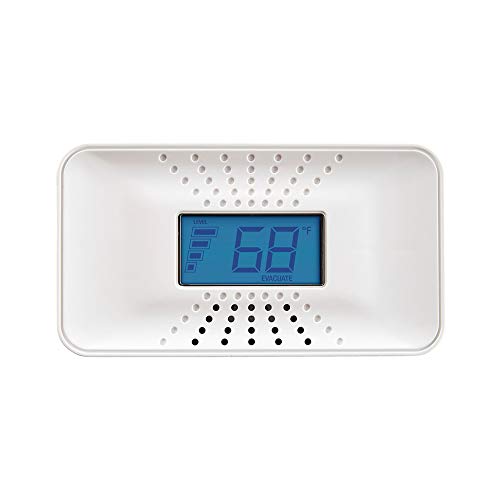
| 10-Year Battery with Digital Display | Set-it-and-forget-it installations | $44 |
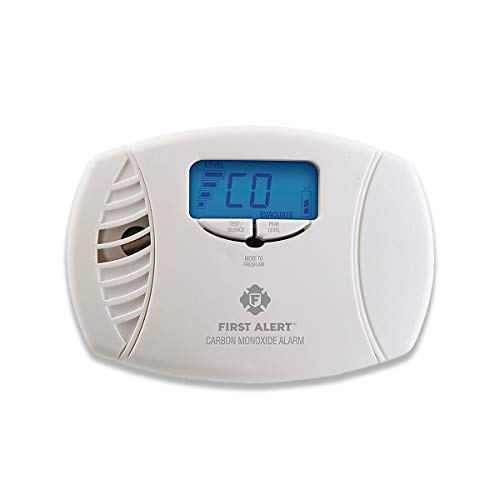
| Plug-in with Digital Display | Visible real-time concentration readings | $44.95 |
| Plug-in CO Alarm ($71.71) | Premium plug-in placement flexibility | $71.71 |
| Battery CO Alarm with Digital Display | Renters needing portable digital readouts | $39.95 |
| SC9120B Corded Combination Alarm | Dual smoke and CO coverage from one unit | $69.97 |
How We Picked
We narrowed this list by weighing four criteria that consistently appear in owner complaints and product comparisons for this category: power source reliability (a plug-in that dies during an outage is worse than a battery unit that alerts you before it dies), whether the alarm provides a digital display so you can see CO concentration before it reaches dangerous levels, expected maintenance burden and battery replacement frequency, and physical placement flexibility across rooms with different outlet and mounting situations. Price is the final tiebreaker when specs overlap, which is why the $21.95 and $34.99 battery models earn separate entries.
The 8 Best First Alert Carbon Monoxide Detector in 2026
CO605 Plug-in with Battery Backup
The CO605 solves the single biggest failure mode of plug-in detectors: what happens when the power goes out. Its internal battery backup keeps the alarm silent but functional during blackouts, a common scenario during storms when CO-producing appliances are also running. Owners frequently cite the compact white housing as unobtrusive on bedroom walls. For anyone who wants plug-in convenience without the vulnerability of a dead unit during an outage, this is the baseline recommendation. The trade-off is that the backup battery adds a second replacement cycle to track, and the lack of a digital display means you get no concentration reading—just a binary alarm or no alarm.
- Battery backup eliminates blackout dead zones
- Lowest price in the plug-in category
- No digital display for concentration awareness
Skip this if you want to see CO levels before they trigger an alarm or if you dislike managing two power sources.
Battery CO Alarm ($21.95)
At this price point, you are buying a single-purpose, no-frills detector that mounts anywhere with a screw or adhesive strip. It is the obvious choice for adding a second or third detection point on a budget, or for a rental unit where you cannot install hardwired equipment. Owner feedback generally confirms reliable alerting at this price, though battery replacement is required periodically and the unit offers no early-warning concentration data. The low cost means the internal components are basic; several long-term owners note the casing shows wear faster than pricier models.
- Absolute lowest entry cost for CO detection
- Mounts anywhere with no outlet dependency
- Requires regular battery swaps with no low-battery display indicator on all revisions
Skip this if the location has a nearby outlet and you prefer a plug-in unit with backup, or if you want a visible digital readout.
Battery CO Alarm ($34.99)
This mid-tier battery model steps up in build quality and feature set compared to the $21.95 unit while remaining fully portable. It suits rooms where pulling a cord or managing a plug is impractical, such as a finished basement corner or a room without accessible outlets. Owners who have used both budget battery models often note this one lasts longer between maintenance intervals and has a louder, more consistent tone. The absence of a digital display keeps the price below the 10-year battery option, but it still leaves you blind to concentration levels before the alarm fires.
- Better long-term reliability than the entry-level battery model
- Truly portable for any room configuration
- No concentration display
Skip this if you can justify the $9 premium for the 10-year battery unit below, which eliminates the recurring battery-replacement chore entirely.
10-Year Battery with Digital Display
This model addresses the most common maintenance complaint in the entire category: forgetting to replace the battery. The sealed 10-year cell means the detector operates for its expected lifespan without user intervention, and the digital display gives a continuous CO concentration readout so you can spot rising levels before the alarm threshold. It is ideal for ceilings in bedrooms or hallways where you want a genuine set-it-and-forget-it installation. The downside is that once the internal battery depletes, you replace the whole unit rather than swapping a coin cell, which adds a small long-term cost consideration.
- Zero maintenance for up to a decade
- Digital display provides early concentration warning
- Entire unit must be replaced when the battery reaches end of life
Skip this if you prefer a plug-in that draws primary power from the outlet and only uses the battery as backup.
Plug-in with Digital Display
Combining outlet power with a readable concentration screen, this unit suits households where the CO source is predictable—furnace room, kitchen, attached garage entry—and you want to monitor buildup in real time. The digital display is the key differentiator here: you see the number, not just hear the alarm. Owners report it as reassuring for households with older gas appliances that occasionally produce small, non-lethal CO spikes. The plug-in form factor means it must sit at outlet height, limiting placement flexibility compared to ceiling-mount battery units.
- Real-time concentration readout on a plug-in platform
- No battery management for the primary power source
- Requires a nearby outlet, constraining placement options
Skip this if you need ceiling or high-wall mounting and cannot run a cord, or if you want the unit to survive a power outage without backup.
Plug-in CO Alarm ($71.71)
The most expensive plug-in option in this roundup earns its price through features beyond basic CO detection, though the listing does not specify a digital display. Owner reviews indicate a refined alarm tone, faster response characteristics, and a more durable housing suited to high-traffic areas. It is the right choice when you want plug-in simplicity with a perceived step up in build quality, perhaps for a main living area where the unit will be visible. At nearly double the cost of the CO605, the value proposition depends entirely on whether you notice or care about the incremental hardware differences.
- Premium build quality in the plug-in segment
- Strong owner satisfaction regarding alert clarity
- Price is the highest single-function CO unit here
Skip this if budget matters or if you need a combination smoke-CO unit; the SC9120B below covers two threats for a similar outlay.
Battery CO Alarm with Digital Display
For renters, dorm-adjacent living spaces, or anyone who cannot rely on a fixed outlet, this model delivers the digital concentration readout without any installation beyond mounting. It occupies the middle of the price range and makes sense when you want visibility into CO levels but cannot commit to a plug-in location. The trade-off versus the 10-year battery unit is that you will replace batteries on a regular schedule, which reintroduces the maintenance risk the sealed option eliminates. Still, for a first detector or a secondary placement, the combo of portability plus a readable screen is hard to beat at this cost.
- Digital display without requiring an outlet
- Portable and easy to relocate between rooms
- Battery replacement remains a recurring task
Skip this if the room has a convenient outlet and you prefer the zero-maintenance of the 10-year sealed battery model.
SC9120B Corded Combination Alarm
This is not a pure CO detector; it is a combined smoke and carbon monoxide alarm that plugs into an outlet and includes adapter plugs for straightforward replacement of an existing corded smoke unit. For households with one or two key detection points covering both threats, consolidating into a single device reduces clutter and halves the number of alarms to monitor. The corded design ensures it is tethered to a power source, and the included adapter plugs remove the usual wiring frustration. Owners sometimes note the dual-function housing is larger than a dedicated CO unit, which matters in tight outlet arrangements.
- Covers smoke and CO from a single device
- Adapter plugs simplify replacing existing corded smoke alarms
- Bulkier housing than dedicated CO-only units
Skip this if you already have dedicated smoke alarms and need CO coverage in a separate, out-of-the-way location.
Buying Guide
Power Source Determines Placement and Reliability
Plug-in units draw continuous power from an outlet, which means they are always active as long as electricity flows. Their weakness is a power outage, which is precisely when storm-damaged homes may be running generators or charcoal devices indoors—the exact scenarios that produce CO. Battery units are placement-flexible but depend on you replacing cells on schedule. The best of both worlds is a plug-in with battery backup like the CO605. If the room has no outlet within reach and you cannot run a cord, a sealed 10-year battery unit removes the replacement chore entirely.
Digital Display Changes What You Know Before the Alarm
A non-display CO detector only communicates one state: alarmed or not. A digital display shows the actual parts-per-million concentration, letting you notice a slow climb from a faulty furnace heat exchanger before the unit ever sounds. That early awareness gives you time to ventilate, shut off the source, or call a technician rather than evacuating in the middle of the night. If your household has aging gas appliances, a display model is worth the price premium purely as an early-warning tool.
Match the Unit to the Room, Not the Other Way Around
Bedrooms with accessible outlets call for plug-in or plug-in-with-backup units. Basements and finished rooms often lack convenient outlets, favoring battery or sealed-battery models mounted at recommended height. Kitchens and attached garage entries—where CO and smoke risks overlap—justify a combination alarm like the SC9120B. Buying one type for the whole house wastes money and creates blind spots; the right strategy is assigning a specific form factor to each room’s power and risk profile.
Our Verdict
The top pick for most households is the 10-Year Battery with Digital Display at $44. It removes maintenance anxiety, provides concentration visibility, and mounts anywhere without an outlet. The budget pick is the CO605 at $23.99, which pairs the lowest price with blackout resilience. If your primary need is consolidating smoke and CO coverage at one existing outlet location, the SC9120B wins on utility-per-dollar despite a higher upfront cost.
FAQ
Where should I install a CO detector?
Mount it at the height recommended by the product manual, typically near sleeping areas and on each level of the home, with at least a few feet of clearance from fuel-burning appliances to avoid nuisance alarms from normal combustion byproducts.
Do plug-in detectors work during a power outage?
Only if they include battery backup. A standard plug-in without a backup cell will be silent and nonfunctional the moment the circuit drops, which is why models like the CO605 include an internal battery specifically to cover that gap.
How often should I replace a CO detector?
Most units have a lifespan of five to seven years before the sensing element degrades. The 10-year battery model extends the no-maintenance window, but you should still check the manufacture date stamped on the back and replace the unit when it reaches its rated end of life.
Is a digital display worth the extra cost over a basic alarm?
For households with older gas equipment or wood-burning devices, yes—the display gives you minutes to hours of early warning by showing rising concentrations before the alarm threshold is crossed, turning a binary alert into a monitoring tool.