Our Short List of 3

- Best for: Fast-filling pits, deep basements and discharge runs that rise close to ten feet.
- Type: Submersible sump pump, fully automatic
- Motor: 1/2 HP, 115 volt, oil-filled, thermally protected
- Flow: up to 4,320 GPH maximum; about 3,660 GPH at 10 ft of lift
- Maximum head: 23 ft

- Best for: Standard-width pits where you want maximum flow from a 1/3 HP motor and a light unit to install.
- Type: Submersible sump pump, fully automatic
- Motor: 1/3 HP, 120 volt, thermally protected
- Flow: up to 4,600 GPH at 0 ft; 3,060 GPH at 10 ft of lift
- Discharge: 1-1/2 inch NPT
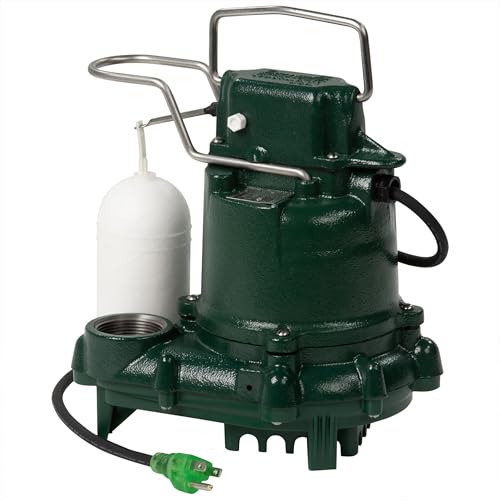
- Best for: Standard 18-inch pits with moderate groundwater and owners who value build over raw flow.
- Type: Submersible sump pump, fully automatic
- Motor: 1/3 HP as titled (3/10 HP on the maker’s data sheet), 115 volt, 9.7 amps, oil-filled
- Flow: 2,580 GPH at 5 ft of lift; 2,040 GPH at 10 ft
- Maximum head: 19.25 ft
All 4 Picks at a Glance
| Product | Specs | Action |
|---|---|---|
| Zoeller M98 Flow-Mate Submersible Sump Pump |
| Check price on Amazon |
| WAYNE CDU790 Submersible Sump Pump |
| Check price on Amazon |
| Zoeller M53 Mighty-Mate Submersible Sump Pump |
| Check price on Amazon |
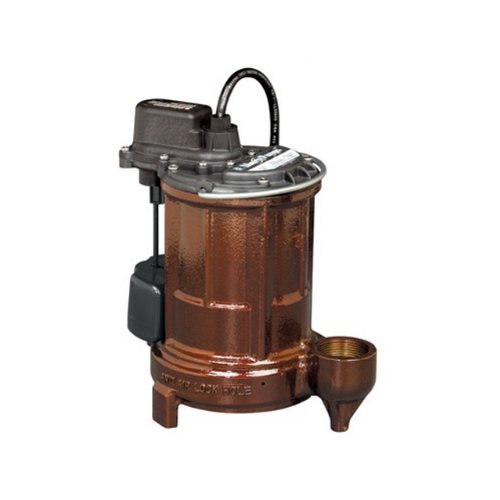 Liberty Pumps 257 Submersible Sump Pump |
| Check price on Amazon |
Our Top Picks
Choosing a submersible pump for storm season is really a decision about trust in a sealed machine you cannot open or inspect. The motor, switch and wiring live underwater inside one housing, which makes the pump quiet and compact, but it also means the float switch (the part that decides whether anything happens at 2 a.m. in a downpour) has to survive years of gritty cycles with no maintenance access. So the real questions are how much water the pump still moves at your discharge height, and which switch design is least likely to hang up in your pit.
This guide suits homeowners replacing a primary pump before storm season, owners of finished basements who need the pump to run quietly under living space, and anyone whose pit fills fast enough that a tired builder-grade unit falls behind. Every model below was selected from its Amazon product title and specification listing, comparing flow at a ten-foot lift, switch type, housing material and the pit dimensions the maker states.
Quick Picks
As an Amazon Associate we earn from qualifying purchases.
| Product | Best for | Key spec from title |
|---|---|---|
| Zoeller M98 Flow-Mate | Fast-filling pits and tall discharge runs | 1/2 HP cast iron, up to 4,320 GPH |
| WAYNE CDU790 | Strong flow in a standard 11-inch basin | 1/3 HP, up to 4,600 GPH, integrated vertical float switch |
| Zoeller M53 Mighty-Mate | Standard pits that see steady groundwater | 1/3 HP cast iron, integral snap-action float switch |
| Liberty Pumps 257 | Narrow pits as small as 10 inches | 1/3 HP cast iron, vertical magnetic float switch |
How to Choose
Rank pumps by flow at ten feet of lift
Headline flow is measured with no lift at all, and it flatters every pump on the shelf. A typical basement discharge rises eight to ten feet, so compare the ten-foot figure instead. In this guide that single change reorders the field: the Zoeller M53 delivers about 2,040 GPH at ten feet, the Liberty 257 about 2,220 GPH, the WAYNE CDU790 about 3,060 GPH and the Zoeller M98 about 3,660 GPH. Match that number against how fast your pit actually fills during the worst storm you remember, then keep some margin.
Pick the switch design your pit can protect
The switch, not the motor, is the usual failure point. An integral snap-action float, as on both Zoeller models, rides a rod on the pump body and works in average-width pits. A vertical magnetic float, like the Liberty 257’s VMF switch, has no rod to bend and fits the narrowest pits, but its on and off levels are fixed by the maker. An integrated vertical float, as on the WAYNE CDU790, also suits slim basins, though that pump needs a taller basin for the float’s travel. Tethered floats need the widest pits and snag most easily, so none appear here.
Understand what cast iron buys you underwater
A submersible motor is cooled by the water around it and, on oil-filled models, by the oil inside the housing. Cast iron housings shed that heat better than thermoplastic and add the weight that keeps a pump seated flat on the pit floor instead of twisting against its discharge pipe each time it starts. All four pumps in this guide use cast iron for the motor housing or volute. The trade is carrying weight: the M98 weighs roughly twice what the CDU790 does.
Measure the pit before you fall for a spec sheet
Pumps state minimum basin dimensions for a reason. The Liberty 257 is built for pits as small as 10 inches in diameter, the CDU790 needs an 11-inch or wider basin at least 22 inches tall for its float travel, and larger bodies like the M98 want a standard wide basin so the float arm swings clear of the wall. Measure diameter at the pump’s height, not the rim, and measure depth too. A pump whose float touches the inlet pipe will fail on the wettest night of the year.
The 4 Best Options
Zoeller M98 Flow-Mate Submersible Sump Pump
- Best for: Fast-filling pits, deep basements and discharge runs that rise close to ten feet.
- Type: Submersible sump pump, fully automatic
- Motor: 1/2 HP, 115 volt, oil-filled, thermally protected
- Flow: up to 4,320 GPH maximum; about 3,660 GPH at 10 ft of lift
- Maximum head: 23 ft
Fast-filling pits, deep basements and discharge runs that rise close to ten feet.
It is a heavy unit at roughly 31 pounds, and its float needs a genuinely roomy basin; measure before ordering.
Reach for the M98 when the pit fills like a bucket under a downspout and the discharge still has a full story to climb. Its half-horsepower oil-filled motor holds about 3,660 GPH at a ten-foot lift, the strongest realistic figure in this guide, and the all-cast-iron build with a non-clogging vortex impeller is made for pits that carry grit and small debris along with the water. The built-in snap-action float turns on at about nine and a half inches, so the pit needs enough depth and width for that swing.
WAYNE CDU790 Submersible Sump Pump
- Best for: Standard-width pits where you want maximum flow from a 1/3 HP motor and a light unit to install.
- Type: Submersible sump pump, fully automatic
- Motor: 1/3 HP, 120 volt, thermally protected
- Flow: up to 4,600 GPH at 0 ft; 3,060 GPH at 10 ft of lift
- Discharge: 1-1/2 inch NPT
Standard-width pits where you want maximum flow from a 1/3 HP motor and a light unit to install.
The required 22-inch basin height rules out shallow pits; measure depth, not just diameter.
The CDU790 is the output surprise of this guide: a 1/3 HP pump whose 3,060 GPH at ten feet of lift beats both other 1/3 HP models here, thanks to a top-suction design that draws water from above the pit floor and reduces clogging from settled debris. Its integrated vertical float is rated by the maker for a million cycles, and the epoxy-coated steel housing with a cast iron volute keeps weight near sixteen pounds, light enough for an easy one-person swap.
Zoeller M53 Mighty-Mate Submersible Sump Pump
- Best for: Standard 18-inch pits with moderate groundwater and owners who value build over raw flow.
- Type: Submersible sump pump, fully automatic
- Motor: 1/3 HP as titled (3/10 HP on the maker’s data sheet), 115 volt, 9.7 amps, oil-filled
- Flow: 2,580 GPH at 5 ft of lift; 2,040 GPH at 10 ft
- Maximum head: 19.25 ft
Standard 18-inch pits with moderate groundwater and owners who value build over raw flow.
The pumping range is short, so the pump cycles more often in a fast pit; it is the wrong pick if inflow is heavy.
The M53 is the conservative pick for an ordinary pit with steady, predictable inflow. Its cast iron switch case, motor housing and pump housing put metal everywhere the water touches, the oil-filled motor runs cool under a vortex impeller that passes half-inch solids, and the integral snap-action float keeps the whole unit compact with no external float to tangle. Flow is the modest part of the package: about 2,580 GPH at five feet and 2,040 GPH at ten. For a pit that has never overwhelmed a 1/3 HP pump, that is a fair trade for the build.
Liberty Pumps 257 Submersible Sump Pump
- Best for: Narrow pits around ten to twelve inches wide where a swinging float would foul the wall.
- Type: Submersible sump pump, fully automatic
- Motor: 1/3 HP, 115 volt, 5.2 amps, hermetically sealed, thermally protected
- Flow: up to 3,000 GPH maximum; about 2,220 GPH at 10 ft of lift
- Discharge: 1-1/2 inch NPT
Narrow pits around ten to twelve inches wide where a swinging float would foul the wall.
The magnetic switch levels cannot be adjusted; if your pit is very shallow, confirm the seven-inch on level sits below the inlet pipe.
The 257 exists for the pit the other pumps cannot enter: Liberty rates it for basins as small as ten inches in diameter, because its vertical magnetic float switch travels straight up the pump body instead of swinging out into the pit. The one-piece cast iron housing removes the lower motor seal ring entirely, the quick-disconnect cord can be replaced without breaking the motor seal, and output of about 2,220 GPH at ten feet is respectable for the size. The fixed switch levels, on at seven inches and off at three and a half, are the price of that compactness.
Which One Fits Your Situation
Your pit is only about ten inches across
Take the Liberty 257. It is the one pump here designed around that constraint, with a magnetic vertical switch that needs no swing room and a compact one-piece body. Everything else in this guide either wants a wider basin or risks its float meeting the pit wall during the exact storm when you need a clean cycle, every cycle.
Storm water arrives faster than your old pump clears it
Take the Zoeller M98. When inflow is the problem, flow at lift is the answer, and roughly 3,660 GPH at ten feet gives you the largest margin in this guide. Pair that capacity with its cast iron build and half-inch solids handling and it suits the pit that receives roof leaders, a high water table and grit all at once.
You want the strongest swap into a standard pit this weekend
Take the WAYNE CDU790. It drops into an 11-inch or wider basin, its ten-foot flow of about 3,060 GPH out-pumps the other 1/3 HP models, and at roughly sixteen pounds it is the easiest unit here to lower into place and plumb alone. Check only that your basin is at least 22 inches deep for the float travel.
Your basement is finished and the pit is under living space
Take the Zoeller M53. Every submersible is quieter than a pedestal because the water muffles it, but the M53 pairs that advantage with the heaviest cast iron build in its class, which settles vibration, and a compact integral switch with nothing loose to rattle or snag. Its moderate flow is fine for the steady groundwater most finished basements actually get.
Common Mistakes
- Comparing pumps by their zero-foot GPH and installing a unit that delivers half that figure at your real discharge height.
- Letting the power cord or discharge pipe drift into the float’s path, so the switch hangs up on the one night the pit fills to the top.
- Skipping the check valve, then listening to the discharge column slam back into the pit and re-trigger the pump after every cycle.
- Never test-running the pump with a bucket of water between storms, so a seized switch is discovered by water on the floor instead.
- Buying a pump whose minimum basin size exceeds the pit, then forcing the install and blaming the pump for short, rapid cycles.
Frequently Asked Questions
Are submersible pumps quieter than pedestal pumps?
Yes, noticeably. The motor runs submerged, and the pit water absorbs most of the hum and vibration that a pedestal motor broadcasts into the room. You will still hear the check valve close and water moving in the discharge pipe. For a pit under a bedroom or living room, that difference alone often decides between the two designs.
How can I check a sealed pump that I cannot open?
Pour water into the pit slowly until the float lifts and the pump cycles, then watch that it shuts off cleanly at its off level and that no water drains back from the discharge. Do this before storm season and after any long dry spell. A pump that hums without moving water, or keeps running after the pit empties, needs replacement, not repair attempts.
Do I need 1/2 HP, or is 1/3 HP enough for storm preparedness?
It depends on inflow and lift, not on the size of the house. A 1/3 HP pump delivering around 2,000 to 3,000 GPH at ten feet covers most pits comfortably. Step up to a 1/2 HP model like the M98 when the pit fills visibly fast during storms, when the discharge rises more than ten feet, or when several water sources converge on one basin.
Can a submersible pump share the pit with a battery backup pump?
Usually yes, and it is a sound storm layout, provided the basin is wide enough for both floats to travel without touching each other, the wall or either discharge pipe. Set the backup pump’s float a few inches above the primary’s on level so it only runs when the primary is overwhelmed or the power is out, and give each pump its own check valve.
More from Amazon
Programs that pair well with the guide above. Offers and eligibility are set by Amazon and may change.
Free shipping on eligible items, Prime Video and more. Eligible new members can start with a free trial.
Start a Prime free trialAudiobooks and podcasts to listen to on the go. Eligible new members can start with a free trial.
Try Audible freeAd-free music streaming. Eligible new subscribers can start with a free trial.
Try Music Unlimited freeA free business account with business pricing and bulk-buying tools for work, shop or home office.
Create a business accountAs an Amazon Associate we earn from qualifying purchases.