Our Short List of 3

- Best for: Daily flashlight users who want a reliable rechargeable AA cell with a very high cycle rating.

- Best for: Emergency kits, car flashlights, and cold-weather use where long storage and reliable power matter most.

- Best for: Households that want high-capacity rechargeable AA cells at a sensible value, with enough cells to rotate.
All 4 Picks at a Glance
| Product | Specs | Action |
|---|---|---|
| Panasonic eneloop AA Rechargeable Batteries, 8-Pack |
| Check price on Amazon |
| Energizer Ultimate Lithium AA Batteries, 8-Pack |
| Check price on Amazon |
| Amazon Basics Rechargeable AA NiMH High-Capacity Batteries, 12-Pack |
| Check price on Amazon |
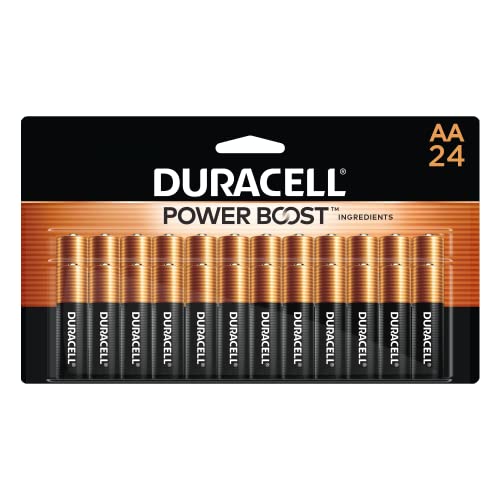 Duracell Coppertop AA Alkaline Batteries, 24-Pack |
| Check price on Amazon |
Key takeaways
- Compare the best batteries for flashlight use, rechargeable, alkaline and lithium AA options, by capacity, shelf life, cold performance and everyday value.
A flashlight is only as reliable as the battery inside it. A bright light with weak cells will dim early, flicker under load, or fail when you need it most during a power outage, a storm, or a late-night walk. Choosing the best batteries for flashlight use is less about chasing one brand and more about matching the chemistry to the job. Rechargeable nickel-metal hydride cells save money over time and work well for daily use, alkaline cells are cheap and easy to find, and lithium cells hold up better in cold weather and in long-term storage.
This guide compares rechargeable, alkaline, and lithium AA batteries for flashlights. AA lights remain the most common choice for emergency kits, glove boxes, and everyday carry because AA cells are widely available. The picks below are all AA batteries, so you can compare them directly. Based on specifications, features, and user feedback, this article covers capacity, shelf life, recharge cycles, cold-weather behaviour, leak risk, and running costs.
Disclosure: As an Amazon Associate, we earn from qualifying purchases.
Quick Picks at a Glance
| Product | Key Spec | Best For |
|---|---|---|
| Panasonic eneloop AA Rechargeable Batteries, 8-Pack | Ni-MH, 2000 mAh, rechargeable up to 2100 times | Daily use and long-term value |
| Energizer Ultimate Lithium AA Batteries, 8-Pack | Lithium, 1.5V, long shelf life | Cold weather and emergency storage |
| Amazon Basics Rechargeable AA NiMH High-Capacity Batteries, 12-Pack | Ni-MH, 2400 mAh, rechargeable up to 400 times | High-capacity rechargeable value |
| Duracell Coppertop AA Alkaline Batteries, 24-Pack | Alkaline, Power Boost ingredients, 24-count pack | Simple spares and household kits |
How to Choose
1. Match the size and voltage to your flashlight
Start with the size printed on your flashlight or in its manual. Most everyday flashlights take AA or AAA cells, while larger models may take C, D, or 18650 cells. Standard lithium and alkaline AA cells are normally 1.5 volt designs, while Ni-MH rechargeable AA cells are rated at 1.2 volts. Many modern AA flashlights are designed for that difference, but some older lights may run slightly dimmer on Ni-MH cells. Never mix chemistries, sizes, or old and new cells in the same light.
2. Understand capacity and runtime
Capacity, measured in milliamp-hours, or mAh, is a useful guide to runtime. A higher mAh rating usually means a longer run at the same brightness, yet the result also depends on the flashlight, the brightness mode, and the chemistry. The Ni-MH AA cells in this guide are rated at 2000 mAh or 2400 mAh. Lithium AA cells are often chosen for steady voltage under load, while alkaline cells can start strong in a low-drain light but drop voltage more quickly under a heavy load.
3. Consider recharge cycles and long-term cost
If you use a flashlight every day, rechargeable cells usually win on cost and waste. A pack rated for 2100 recharge cycles can replace a very large number of disposable cells over its life. A pack rated for 400 cycles still offers good value for regular use. If you only use a flashlight a few times a year, a disposable alkaline or lithium cell may be simpler, because you do not need a charger and you can keep spares ready in a drawer.
4. Check shelf life and self-discharge
Shelf life matters most for emergency lights. A flashlight in a storm kit, car, or bedside drawer may sit for months between uses. Lithium AA cells are known for a very long shelf life, with packaging for the Energizer Ultimate Lithium AA highlighting a 25-year shelf life. Modern low-self-discharge Ni-MH cells, such as eneloop, are designed to hold a charge during storage, and Amazon Basics cells are also described as low self-discharge and pre-charged. Alkaline cells, such as Duracell Coppertop, are commonly listed with a 10-year storage guarantee in retail listings.
5. Think about cold weather and heat
Lithium cells generally cope better with cold than alkaline cells, which is why they are popular for winter camping, vehicles, and outdoor emergency kits. Alkaline cells can lose capacity quickly in freezing conditions and may recover only partly when warmed up. Ni-MH cells sit between the two, performing well indoors and in mild outdoor use but losing some capacity in extreme cold. Do not leave batteries on a hot dashboard, near a heater, or in direct sun.
6. Watch for leaks and storage safety
A leaking battery can damage a flashlight, corrode contacts, and ruin an emergency kit. Alkaline cells are more prone to leaking if they are left in a device for a long time after they are drained, especially in heat. Lithium cells are often described as leak-resistant in normal use, and rechargeable Ni-MH cells also avoid some of the leak risk of old alkaline cells. Remove batteries from a flashlight you will not use for months, and store spares in their original packaging or a battery case.
7. Decide between convenience and performance
There is no single best chemistry for every person. Rechargeable cells are best if you want low running costs and you are willing to keep a charger handy. Lithium cells are best if you want maximum shelf life, strong cold-weather performance, and a light that is ready after months in storage. Alkaline cells are best if you want the simplest, cheapest spare, a cell you can buy almost anywhere. Many households use a mix: rechargeables for the daily flashlight, lithium for the car and storm kit, and alkaline for general spares.
Top Picks
Panasonic eneloop AA Rechargeable Batteries, 8-Pack
- Best for: Daily flashlight users who want a reliable rechargeable AA cell with a very high cycle rating.
Daily flashlight users who want a reliable rechargeable AA cell with a very high cycle rating.
Panasonic eneloop AA Rechargeable Batteries, 8-Pack
The Panasonic eneloop AA 8-pack, model BK-3MCCA8BA, is a well-known rechargeable Ni-MH option for flashlights. Each cell is rated at 2000 mAh, and the pack is described as rechargeable up to 2100 times. The cells are pre-charged and ready to use, with a low self-discharge design intended to hold a charge during storage. The listing recommends the cells for flashlights, remote controls, toys, and game controllers. You can recharge the same cells again and again for daily use, rather than buying new disposables each time, and keep one set in the light and one set charged as a spare.
Pros:
– Rated for up to 2100 recharge cycles, which supports long-term value
– 2000 mAh capacity suits regular flashlight use
– Pre-charged and low self-discharge, so cells are ready after storage
– 8-pack size covers a flashlight plus spares
Cons:
– Rated at 1.2 volts, so some older lights may run slightly dimmer than on 1.5 volt cells
– Needs a separate Ni-MH charger
– Higher upfront cost than a pack of disposable alkaline cells
Energizer Ultimate Lithium AA Batteries, 8-Pack
- Best for: Emergency kits, car flashlights, and cold-weather use where long storage and reliable power matter most.
Emergency kits, car flashlights, and cold-weather use where long storage and reliable power matter most.
Energizer Ultimate Lithium AA Batteries, 8-Pack
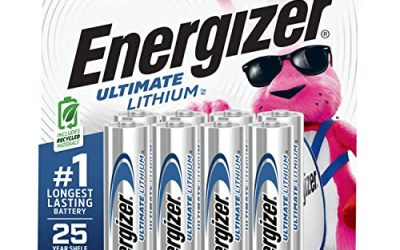
The Energizer Ultimate Lithium AA 8-pack is the lithium pick in this guide, aimed at people who want a disposable cell that lasts in storage and performs in tough conditions. The cells are rated at 1.5 volts, matching a standard alkaline AA, so they fit the same AA flashlights without the voltage difference of Ni-MH rechargeables. The product is marketed as the longest-lasting AA battery in its range, and retail packaging highlights a 25-year shelf life. That is the main reason to choose lithium for a storm kit, a car flashlight, or a light that may sit unused for a year or more. Lithium AA cells are also a strong choice for cold weather, where alkaline cells can fade quickly, and they are described as leak-proof in normal use in related retail material.
Pros:
– 1.5 volt lithium design matches standard AA flashlights
– Very long shelf life, highlighted as 25 years on retail packaging
– Strong cold-weather performance compared with alkaline cells
– Leak-resistant design in normal use, which protects stored flashlights
Cons:
– Disposable, so running costs are higher than rechargeable cells for daily use
– Higher cost per cell than alkaline AA batteries
– Not rechargeable, so you need to keep spares on hand
Amazon Basics Rechargeable AA NiMH High-Capacity Batteries, 12-Pack
- Best for: Households that want high-capacity rechargeable AA cells at a sensible value, with enough cells to rotate.
Households that want high-capacity rechargeable AA cells at a sensible value, with enough cells to rotate.
Amazon Basics Rechargeable AA NiMH High-Capacity Batteries, 12-Pack
The Amazon Basics 12-pack of rechargeable AA Ni-MH high-capacity batteries is a straightforward value option for people who want more capacity per charge without paying for a premium brand. Each cell is rated at 2400 mAh and 1.2 volts, higher than the 2000 mAh rating of the standard eneloop AA in this guide. The pack is described as pre-charged, low self-discharge, and rechargeable up to 400 times. That suits a household with several flashlights, or a single flashlight that gets heavy use, because you can rotate cells and always have a charged set ready. The higher capacity may give longer runtime than a standard 2000 mAh cell, although the actual difference depends on the light and the brightness setting.
Pros:
– 2400 mAh capacity, higher than standard 2000 mAh Ni-MH AA cells
– 12-pack size is useful for multiple flashlights or a rotation system
– Pre-charged and low self-discharge, so cells are ready to use
– Good value for regular rechargeable use
Cons:
– Rated for up to 400 recharge cycles, fewer than the eneloop pack in this guide
– Rated at 1.2 volts, so check compatibility with older flashlights
– Needs a separate Ni-MH charger
Duracell Coppertop AA Alkaline Batteries, 24-Pack
- Best for: Occasional use, household spares, and anyone who wants a large pack of simple AA batteries for flashlights and other devices.
Occasional use, household spares, and anyone who wants a large pack of simple AA batteries for flashlights and other devices.
Duracell Coppertop AA Alkaline Batteries, 24-Pack
The Duracell Coppertop AA 24-pack is the alkaline pick in this guide, and it represents the simplest way to keep flashlights powered. These are single-use alkaline AA batteries with Power Boost ingredients, designed for household and office devices including flashlights, remotes, and toys. The 24-count pack is large enough to stock a drawer or keep as spares for a storm kit. You insert them, use them until they are drained, then recycle them and insert fresh ones. There is no charger to buy and no charging time to wait for. Duracell Coppertop AA cells are commonly listed with a 10-year storage guarantee in retail material. The main limits are familiar: voltage drops under heavy load, cold-weather performance is weaker than lithium, and old cells left in a device can leak.
Pros:
– Simple to use, with no charger or charging time needed
– 24-pack size is ideal for stocking a household or emergency kit
– Power Boost ingredients and a long storage life for a disposable cell
– 1.5 volt design fits standard AA flashlights
Cons:
– Single-use, so long-term costs and waste are higher than rechargeable cells
– Voltage drops more quickly under heavy load than lithium or Ni-MH in some lights
– Higher leak risk if drained cells are left in a flashlight for a long time
Comparison Table
| Product | Chemistry | Size and Voltage | Capacity | Recharge Cycles or Shelf Life | Pack Size |
|---|---|---|---|---|---|
| Panasonic eneloop AA, 8-Pack | Ni-MH rechargeable | AA, 1.2V | 2000 mAh | Up to 2100 cycles | 8 |
| Energizer Ultimate Lithium AA, 8-Pack | Lithium disposable | AA, 1.5V | Steady voltage under load | 25-year shelf life on packaging | 8 |
| Amazon Basics Rechargeable AA NiMH, 12-Pack | Ni-MH rechargeable | AA, 1.2V | 2400 mAh | Up to 400 cycles | 12 |
| Duracell Coppertop AA, 24-Pack | Alkaline disposable | AA, 1.5V | Standard alkaline | 10-year storage guarantee in retail listings | 24 |
The two rechargeable packs differ mainly on capacity and cycle life: Amazon Basics offers more capacity per charge, while eneloop offers far more recharge cycles. The two disposable packs differ on storage: Energizer lithium is built for long shelf life and cold weather, while Duracell alkaline is built for simple, affordable spares.
Buying Guide
Start by checking your flashlight. Look for the battery size, the number of cells, and any notes about supported chemistries. If the manual says the light is designed for Ni-MH rechargeable cells, you can choose either rechargeable pick with confidence. If it says alkaline or lithium only, stick to those types. If you are unsure, a 1.5 volt lithium or alkaline AA is usually the safer replacement.
Next, think about how often the light is used. For a daily walk, a work light, or a bedside light you switch on every night, rechargeable cells make sense. Keep two sets: one in the light and one charged and ready. For a light you use once a month or less, disposable cells may be simpler. Keep the spares in their pack, note the expiry date, and replace them on a schedule.
For a storm kit or car kit, prioritise shelf life and temperature. Lithium AA cells are the strongest choice here because of their long shelf life and cold-weather performance. Store the flashlight with lithium cells installed, plus a spare pack in a sealed bag or case, and check the kit twice a year. Remove alkaline cells from a light you will not check for a long time, because a leak can damage the contacts and the switch.
Do not mix old and new cells, or different chemistries, in the same flashlight, because the weaker cell can drain first and cause poor performance or leaking. Do not try to recharge disposable alkaline or lithium AA cells, because they are not designed for it and can leak or overheat. Do not store loose batteries with keys or coins, because a short circuit can cause heat. Use a battery case, and recycle used batteries through a proper collection point.
Frequently Asked Questions
Are rechargeable batteries good for flashlights?
Yes, rechargeable Ni-MH AA batteries are a good choice for many flashlights, especially for daily use. They can be recharged hundreds or thousands of times, which lowers long-term costs and waste. Check that your flashlight supports Ni-MH cells, because they are rated at 1.2 volts rather than the 1.5 volts of alkaline and lithium AA cells.
Are lithium or alkaline batteries better for a flashlight?
Lithium AA batteries are usually better for long storage, cold weather, and high-drain use, because they hold voltage well and have a very long shelf life. Alkaline AA batteries are usually better for simple, low-cost spares and occasional use, because they are cheap and widely available.
Can I use rechargeable AA batteries in any AA flashlight?
Most modern AA flashlights accept Ni-MH rechargeable AA cells, but not every light does. Check the manual for supported chemistries and voltage. Do not use a rechargeable cell in a light that specifically warns against it, and do not mix rechargeable and disposable cells in the same light. If your light is very old, a 1.5 volt lithium or alkaline AA may be a safer match.
How long do flashlight batteries last in storage?
It depends on the chemistry. Lithium AA cells are known for a very long shelf life, with retail packaging for Energizer Ultimate Lithium highlighting 25 years. Alkaline AA cells are commonly listed with a 10-year storage guarantee in retail material. Modern low-self-discharge Ni-MH cells, such as eneloop, hold a charge for a long time after charging, but they will still lose charge slowly over months.
Why does my flashlight dim quickly with alkaline batteries?
Alkaline cells can start with good voltage, but their voltage drops more quickly under a heavy load, especially in a bright flashlight on high mode. Cold weather can make this worse. If your light dims quickly, try a fresh set of lithium AA cells or a fully charged set of high-capacity Ni-MH cells.
Should I leave batteries in a flashlight I rarely use?
It is safer to remove batteries from a flashlight you will not use for months, especially alkaline cells, because drained cells can leak and damage contacts. If you want the light ready for an emergency, use lithium cells, which are more leak-resistant in normal use and hold a charge for a long time, and check the light twice a year. Store spare cells in their original packaging or a battery case.
Conclusion
The best batteries for flashlight use depend on how you use the light, not on a single brand or chemistry. For daily use, the Panasonic eneloop AA 8-pack is a strong rechargeable choice, with 2000 mAh capacity and up to 2100 recharge cycles. For cold weather and long-term storage, the Energizer Ultimate Lithium AA 8-pack is the standout, with a 1.5 volt design and a 25-year shelf life highlighted on its packaging. For high-capacity rechargeable value, the Amazon Basics 12-pack offers 2400 mAh cells, with up to 400 recharge cycles. For simple household spares, the Duracell Coppertop AA 24-pack offers an affordable alkaline option with Power Boost ingredients. Match the pack to your main use, or keep a mix, and check stored flashlights twice a year.
More from Amazon
Programs that pair well with the guide above. Offers and eligibility are set by Amazon and may change.
Free shipping on eligible items, Prime Video and more. Eligible new members can start with a free trial.
Start a Prime free trialAudiobooks and podcasts to listen to on the go. Eligible new members can start with a free trial.
Try Audible freeAd-free music streaming. Eligible new subscribers can start with a free trial.
Try Music Unlimited freeA free business account with business pricing and bulk-buying tools for work, shop or home office.
Create a business accountAs an Amazon Associate we earn from qualifying purchases.