Our Short List of 3

- Best for: High-inflow pits where the second pump must help during the storm, not only after an outage.
- Primary pump: 1/2 HP with 7-amp split capacitor motor
- Primary flow: up to 4,320 GPH; 3,780 GPH at 10 ft of lift; maximum lift 30 ft
- Backup pump: 12V, up to 3,600 GPH; 2,400 GPH at 10 ft of lift
- Switches: pump switches rated at 1 million cycles; dual switches on the backup pump

- Best for: Finished basements where monitored, alarmed redundancy matters as much as raw flow.
- Primary pump: 1/2 HP, cast iron construction
- Maximum flow rate: 73.3 gallons per minute (4,400 GPH)
- Maximum lifting height: 25 ft
- Backup pump: 12V battery backup pump, plastic construction
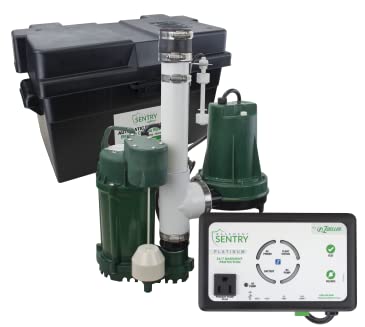
- Best for: Homeowners who want a self-checking dual setup without depending on an app or Wi-Fi.
- Primary pump: 1/2 HP sump pump
- Backup pump: 12V back-up sump pump
- Configuration: pre-assembled combination system, two pumps in one pit
- Monitoring: automatic self-testing with real-time monitoring of the primary pump
All 3 Picks at a Glance
| Product | Specs | Action |
|---|---|---|
| PumpSpy PS2000C SmartPump Combination System |
| Check price on Amazon |
| Basement Watchdog Big Combo CONNECT CITS-50 |
| Check price on Amazon |
| Basement Sentry STBC301 Combo System |
| Check price on Amazon |
Key takeaways
- Dual pump sump systems put a second full pump in the same pit, ready when the first fails mid-storm. Compare three preassembled two-pump systems here.
A sump pump rarely fails on a dry Tuesday. It fails during the worst hour of a storm, when inflow peaks, the float switch sticks or the motor quits, and a single-pump pit has no answer. A dual pump system changes that math: two pumps share one pit, so the second pump is already plumbed in and ready to take over or help the first instead of sitting in a box in the garage.
This guide is for homeowners whose basements have flooded once and cannot flood again, for anyone whose pit fills fast during heavy rain, and for storm-belt households that want pump-failure protection, not just outage protection. Every system below was chosen from its Amazon product page, using the pump configuration, flow figures and switch details stated in the listing title and bullets.
Quick Picks
As an Amazon Associate we earn from qualifying purchases.
| Product | Best for | Key spec from title |
|---|---|---|
| PumpSpy PS2000C SmartPump Combination System | Pits where inflow can overrun one pump | 1/2 HP primary, 4,320 GPH, backup assists the primary |
| Basement Watchdog Big Combo CONNECT CITS-50 | Buyers who want monitoring on both pumps | 1/2 HP primary, 4,400 GPH, 24-hour monitoring controller |
| Basement Sentry STBC301 Combo System | A self-testing dual setup from the Zoeller family | 1/2 HP primary with 12V backup pump, pre-assembled |
How to Choose
Read flow at 10 feet of lift, not the headline number
Every listing leads with its zero-foot flow figure, but your discharge pipe lifts water roughly 8 to 10 feet before it leaves the house, and output falls as lift rises. Compare the gallons per hour at 10 feet instead: the PumpSpy primary, for example, is listed at 4,320 gallons per hour maximum and 3,780 at 10 feet. If your pit gains water faster than that during a storm, no single pump in the pair keeps up alone, and the second pump’s assist capacity becomes the number that matters.
Decide how the second pump should join in
Dual systems differ in what triggers pump two. Some start the backup only when power fails. Better storm setups also bring the second pump in when the primary cannot keep up or stops working, so a mechanical failure during a downpour does not end with water on the floor. PumpSpy states this assist behavior directly in its listing. Check the trigger logic before buying, because a backup that only wakes up for outages leaves the most common storm failure, a dead primary, uncovered.
Look at the switch arrangement on both pumps
Float switches cause more sump failures than motors do, so a dual system is only as strong as its switching. Listings worth shortlisting say how each pump is switched: PumpSpy rates its pump switches at one million cycles and fits dual switches on the backup pump, while the Watchdog combo uses a monitoring controller that watches pump activity around the clock. Solid-state or dual-switch designs reduce the stuck-float scenario that floods basements while a perfectly good second pump sits idle.
Confirm the pair actually fits your pit
Two pumps, two discharge legs and a shared tee need room to sit level without floats catching the pit wall or each other. Preassembled systems like the three in this guide arrive plumbed as one unit, which removes most of the guesswork, but you still need to measure your pit diameter and depth against the listing dimensions. A system designed around a standard pit can bind in a narrow basin, and a float that cannot rise freely turns a dual system into a single point of failure.
The 3 Best Options
PumpSpy PS2000C SmartPump Combination System
- Best for: High-inflow pits where the second pump must help during the storm, not only after an outage.
- Primary pump: 1/2 HP with 7-amp split capacitor motor
- Primary flow: up to 4,320 GPH; 3,780 GPH at 10 ft of lift; maximum lift 30 ft
- Backup pump: 12V, up to 3,600 GPH; 2,400 GPH at 10 ft of lift
- Switches: pump switches rated at 1 million cycles; dual switches on the backup pump
High-inflow pits where the second pump must help during the storm, not only after an outage.
Budget for the 75 amp-hour battery separately, and confirm your Wi-Fi signal actually reaches the basement.
PumpSpy builds this preassembled pair around a job most dual systems skip: the backup pump does not wait for a blackout. Its listing states the 12-volt pump also activates when the primary needs assistance, which is exactly the storm scenario where inflow doubles in twenty minutes. Add Wi-Fi monitoring with automatic system and battery tests, and it suits homeowners who travel during storm season and want the pit supervised while they are away from home.
Basement Watchdog Big Combo CONNECT CITS-50
- Best for: Finished basements where monitored, alarmed redundancy matters as much as raw flow.
- Primary pump: 1/2 HP, cast iron construction
- Maximum flow rate: 73.3 gallons per minute (4,400 GPH)
- Maximum lifting height: 25 ft
- Backup pump: 12V battery backup pump, plastic construction
Finished basements where monitored, alarmed redundancy matters as much as raw flow.
Wi-Fi alerts need the add-on module, and the battery is a separate purchase sized to the controller’s requirements.
The Big Combo pairs a cast iron primary with a battery backup pump under one controller that monitors the system 24 hours a day, so a weakening pump or a battery problem surfaces before the storm does. Its primary is the strongest daily driver in this group, and the controller’s monitoring is the reason to pick it over simpler pairs: for a finished basement, knowing the second pump and its battery are healthy is worth as much as the hardware itself.
Basement Sentry STBC301 Combo System
- Best for: Homeowners who want a self-checking dual setup without depending on an app or Wi-Fi.
- Primary pump: 1/2 HP sump pump
- Backup pump: 12V back-up sump pump
- Configuration: pre-assembled combination system, two pumps in one pit
- Monitoring: automatic self-testing with real-time monitoring of the primary pump
Homeowners who want a self-checking dual setup without depending on an app or Wi-Fi.
The listing’s rapid-charger and maintenance-free claims apply when using a Basement Sentry battery, so check battery compatibility before substituting another brand.
From Zoeller’s Basement Sentry line, the STBC301 leans on verification instead of apps: the listing highlights automatic self-testing and real-time monitoring of the primary pump, so the system checks its own readiness on a schedule rather than waiting for you to pour water in the pit. It arrives pre-assembled with its controller, alarm, charger and discharge plumbing in the box, which makes it the most straightforward swap for an existing single pump.
Which One Fits Your Situation
Your pit fills faster than one pump can empty it
Choose the PumpSpy PS2000C. It is the only system here whose listing promises the second pump joins in when the primary falls behind, and its backup still moves 2,400 gallons per hour at 10 feet of lift. That assist behavior, plus the strongest backup flow in this group, is built for pits fed by a high water table or a downspout-heavy lot.
The basement is finished and a flood would be expensive
Choose the Basement Watchdog Big Combo CONNECT CITS-50. The cast iron primary handles daily duty, while the monitoring controller watches both pumps and the battery around the clock and can add Wi-Fi alerts. When carpet, drywall and stored belongings sit a few feet from the pit, early warning of a failing pump is the feature that pays.
You want the system to test itself between storms
Choose the Basement Sentry STBC301. Its automatic self-testing and real-time primary monitoring mean the pair is exercised and checked without you remembering a monthly bucket test. It is also the simplest install story here, arriving pre-assembled with charger, alarm and plumbing included, so a same-day swap before storm season is realistic.
Nobody is home when storms usually hit
Choose the PumpSpy PS2000C for its Wi-Fi monitoring and scheduled automatic tests, which report system and battery status while you are away. The Watchdog CITS-50 is the fallback if you prefer its controller and add the Wi-Fi module. Either way, pick monitored redundancy over raw horsepower when the house sits empty during hurricane or thunderstorm season.
Common Mistakes
- Buying a dual system for outage protection only, then discovering the second pump never assists during a high-inflow storm while power is still on.
- Comparing headline flow at zero feet instead of flow at 10 feet of lift, where every system in this guide loses a meaningful share of its output.
- Forgetting the battery is sold separately on all three systems, and sizing it below what the listing specifies.
- Cramming a preassembled two-pump unit into a narrow pit where a float can hang up on the wall or the other pump.
- Never testing the backup pump’s trigger after installation, so a wiring or switch fault stays hidden until the primary fails.
Frequently Asked Questions
How is a dual pump system different from a battery backup pump?
A battery backup adds one smaller DC pump beside your existing primary. A dual pump system installs two pumps as one planned pair in the same pit, with switching and plumbing designed so the second pump covers primary failure, extreme inflow or an outage. The systems in this guide are preassembled pairs, not a primary with an afterthought bolted on later.
Will the second pump run if the power stays on but the primary dies?
On the PumpSpy PS2000C, yes: its listing states the backup activates when the primary requires assistance, not only during outages. That distinction is the core of dual pump protection. On other systems, read the trigger description carefully, because some backups wake only for power loss or high water, and the wording on the product page tells you which behavior you are buying.
Do dual pump systems need a bigger sump pit?
Usually a standard pit works, because these three systems are preassembled to sit as one unit, but you must confirm your pit’s diameter and depth against the listing dimensions. Two pumps and their floats need clearance to move. If a float can catch on the pit wall, the liner seam or the other pump, the redundancy you paid for disappears at the worst moment.
How long will the backup pump run during an outage?
It depends on battery size and how often water enters the pit. PumpSpy rates its system at up to 13,000 gallons removed on a single 75 amp-hour battery under typical cycling, not continuous running. A pit filling nonstop drains any battery far faster than the headline figure suggests, so size the battery to the listing’s specification and treat runtime claims as best-case cycling numbers.
More from Amazon
Programs that pair well with the guide above. Offers and eligibility are set by Amazon and may change.
Free shipping on eligible items, Prime Video and more. Eligible new members can start with a free trial.
Start a Prime free trialAudiobooks and podcasts to listen to on the go. Eligible new members can start with a free trial.
Try Audible freeAd-free music streaming. Eligible new subscribers can start with a free trial.
Try Music Unlimited freeA free business account with business pricing and bulk-buying tools for work, shop or home office.
Create a business accountAs an Amazon Associate we earn from qualifying purchases.