Key takeaways
- Place the camera at eye level, slightly off-axis from the guest, and frame with some headroom.
- Use soft, diffused light from the side or a large softbox, and avoid mixed color temperatures.
- Record separate audio where possible, and keep microphones a hand-width from each speaker’s mouth.
- Start recording early to capture a sound check, and do a short test before the real conversation.
- Use stable tripods, and secure cables to prevent trips.
- Keep power cords safe and follow the manufacturer’s guidance for any lighting equipment, especially around heat.
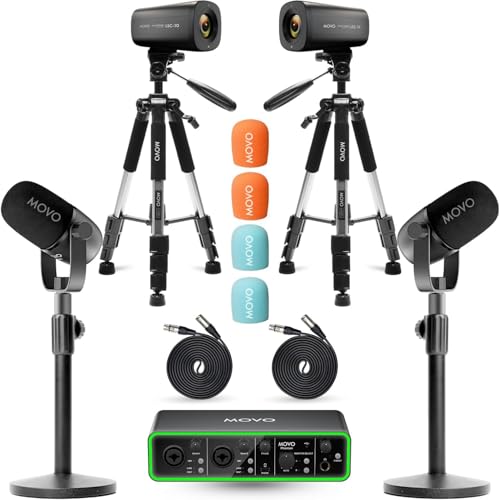
For most interview setups, a mirrorless camera such as the Sony ZV-E10 II, Sony ZV-E1 or Canon EOS R50 gives the best picture for the price, while a compact like the Sony ZV-1 or an action-style camera such as the DJI Osmo Pocket 3 suits solo creators who value portability, and a dedicated webcam like the Logitech Brio or Elgato Facecam suits remote-only interviews. For a two-person, in-person interview, plan on two cameras and separate microphones.
Our top picks


As an Amazon Associate we earn from qualifying purchases at no extra cost to you.
Cameras at a Glance
| Camera | Best for | Key stated specs | Limits |
|---|---|---|---|
| Sony ZV-E10 II | Budget to mid-range interviews with interchangeable lenses | The maker lists an APS-C sensor and 4K video | Lens choice drives results; no built-in viewfinder |
| Sony ZV-E1 | Premium low-light work | The maker lists a full-frame sensor and 4K video with strong autofocus | Premium tier; heavier lens options |
| Canon EOS R50 / R10 | Entry-level mirrorless with reliable autofocus | The maker lists APS-C sensors and 4K video | Recording time and heat depend on settings |
| Panasonic Lumix G7 / S5 IIX | Long recording sessions | The maker lists Micro Four Thirds (G-series) or full-frame (S5 II) options; the S5 II line is known for video features | Autofocus feel varies by model |
| Sony ZV-1 / ZV-1 II | Compact vlogging and solo interviews | The maker lists a one-inch sensor and a built-in lens | Fixed lens, limited background blur |
| DJI Osmo Pocket 3 | Portable, stabilized shooting | The maker lists a one-inch sensor and a small gimbal body | Small screen, limited lens flexibility |
| Logitech Brio / Elgato Facecam | Remote interviews | The makers list 4K (Brio) or 1080p60 (Facecam) webcam video | Fixed lens; limited low-light performance |
What Matters for Interviews
Sensor size and low light
Interviews often happen in offices, studios or homes with mixed light. Larger sensors, such as APS-C and full-frame, generally handle low light with less noise, according to reviewers. Smaller sensors can work well if you control the lighting.
Autofocus
Face and eye-tracking autofocus keeps the subject sharp as they move. Sony and Canon are widely praised for this, though results vary with lighting and lens choice.
Recording limits and heat
Interviews can run long. Check the maker’s stated recording-time limit and any reported overheating. Some entry-level cameras stop after a set duration, so plan breaks, use external power or choose a model built for long takes.
Audio inputs
Interview quality depends heavily on sound. Look for a 3.5 mm microphone input, and ideally a headphone jack for monitoring. Lavalier or shotgun mics usually matter more than camera upgrades. Cameras with a multi-interface shoe may accept digital audio accessories directly.
Screen and framing
A flip-out screen helps solo creators check framing. For two-person interviews, a wide lens or a second camera creates a cleaner cut between speakers.
Lenses
A fast prime lens in the 24 to 50 mm equivalent range suits interview framing and offers pleasing background blur. A wide kit zoom works for tight spaces.
Power and storage
Plan on batteries or a dummy-battery power adapter for long sessions, plus fast memory cards that match the camera’s stated requirements for your recording format.
Picks by Setup
Best for most creators: Sony ZV-E10 II
It sits in the mid-range tier, with a large-sensor image, interchangeable lenses and creator-friendly features, according to reviewers. Pair it with a fast prime and an external microphone.
Best for low-light interviews: Sony ZV-E1
The full-frame sensor suits dim locations, at a premium tier cost. It suits professionals who need clean images with minimal lighting.
Best entry option: Canon EOS R50
Canon’s color and autofocus draw praise, and the body is small and light. Review the recording-limit notes in the manual before long interviews.
Best for long recordings: Panasonic Lumix
Panasonic’s video-focused bodies are favored by those who record long sessions. Their autofocus has historically trailed rivals, though newer models have improved.
Best for solo and on-the-go: Sony ZV-1 or DJI Osmo Pocket 3
These pocketable cameras are quick to set up and easy to carry. The fixed lens limits background blur, but they work well for run-and-gun interviews.
Best for remote calls: Logitech Brio or Elgato Facecam
A webcam is the simplest way to improve video-call interviews, though image quality trails a proper camera.
Pick X If You Want…
| Pick | If you want |
|---|---|
| Sony ZV-E10 II | A balanced, creator-friendly mirrorless camera |
| Sony ZV-E1 | Premium low-light quality |
| Canon EOS R50 | Compact, entry-level, reliable autofocus |
| Panasonic Lumix | Longer recording sessions |
| Sony ZV-1 / DJI Osmo Pocket 3 | Portability and quick setup |
| Logitech Brio / Elgato Facecam | Remote interviews with minimal gear |
Setup Tips
- Place the camera at eye level, slightly off-axis from the guest, and frame with some headroom.
- Use soft, diffused light from the side or a large softbox, and avoid mixed color temperatures.
- Record separate audio where possible, and keep microphones a hand-width from each speaker’s mouth.
- Start recording early to capture a sound check, and do a short test before the real conversation.
- Use stable tripods, and secure cables to prevent trips.
- Keep power cords safe and follow the manufacturer’s guidance for any lighting equipment, especially around heat.
Alternatives
- Smartphone on a tripod: Modern phones shoot excellent video and are the cheapest starting point, particularly with an external mic.
- Used mirrorless bodies: Older models such as the Sony a6400 or Canon M50 line can offer strong value if you accept older features.
- Camcorders: Dedicated camcorders suit long events with no recording limits, though image quality depends on the model.
Budget Tiers Explained
Budget tier
Webcams such as the Logitech Brio and Elgato Facecam, and entry-level mirrorless cameras like the Canon EOS R50, make a clear step up from laptop cameras. Phones on tripods also belong here and are often the most cost-effective starting point.
Mid-range tier
The Sony ZV-E10 II, Panasonic Lumix G7 and similar bodies, paired with a good prime lens and a decent microphone, deliver most of what an interview channel needs.
Premium tier
Full-frame options such as the Sony ZV-E1 and Panasonic Lumix S5 II class bodies add low-light strength, richer color options and more robust recording features for professional work.
Lighting, Sound and Room Choices
Camera choice matters less than the room. Soft window light or a large diffused lamp makes any camera look better. Avoid mixed light sources with different color temperatures, and keep the subject away from the wall to create depth. A simple, tidy background keeps attention on the guest.
Sound deserves equal care. Hard rooms with bare walls cause echo, so add rugs, curtains or foam panels where possible, and turn off fans and appliances. Lavalier microphones on each guest give consistent levels as people move, and a shotgun mic on a boom works for a cleaner look. Monitor with headphones, and record a short test clip before you begin.
Think about workflow too. If you are editing multi-camera footage, set all cameras to the same frame rate, resolution and color profile, and use a clap or sync tone to align clips. Label media cards, back up footage the same day and keep spare batteries charged. Finally, brief your guest on what to expect, set their comfort first and keep the camera unobtrusive so the conversation flows naturally.
Frequently Asked Questions
Do I need a mirrorless camera for interviews?
Not necessarily. A phone with a good microphone can work well. A mirrorless camera adds better low-light performance, background blur and lens choice, which many professionals find worthwhile.
How many cameras do I need for a two-person interview?
One camera can work if you switch angles, but two let you capture each speaker continuously and cut between them in editing. A third wide shot can act as a safety.
What matters more, camera or microphone?
Many reviewers and producers argue audio matters more, since viewers tolerate imperfect video far more than poor sound. Invest in lavalier or shotgun microphones early.
Is 4K necessary?
Not always. 1080p is enough for many online interviews, while 4K gives room to crop and reframe in editing. Pick based on delivery needs and storage.
How do I avoid camera overheating?
Check the maker’s stated recording limits, use shaded settings, turn off unused features like the screen when possible, and consider models known for long-take support. Taking short breaks between segments also helps.
Which lens should I use for interviews?
A 24 to 50 mm equivalent prime lens with a wide aperture is a common choice, giving pleasing background blur and flexible framing. A kit zoom is acceptable in tight rooms.
More from Amazon
Programs that pair well with the guide above. Offers and eligibility are set by Amazon and may change.
Free shipping on eligible items, Prime Video and more. Eligible new members can start with a free trial.
Start a Prime free trialAudiobooks and podcasts to listen to on the go. Eligible new members can start with a free trial.
Try Audible freeAd-free music streaming. Eligible new subscribers can start with a free trial.
Try Music Unlimited freeA free business account with business pricing and bulk-buying tools for work, shop or home office.
Create a business accountAs an Amazon Associate we earn from qualifying purchases.