Key takeaways
- Ten portable power stations for CPAP during power outages, sorted by stated watt-hours and AC output, with an overnight runtime worksheet to size your pick.
The best portable power station for a CPAP during an outage, based on the listings, depends mostly on watt-hours. The 288Wh to 296Wh class (DARAN, DaranEner, ENOFLO, EnginStar) suits one night for a modest-draw machine, and the EcoFlow Delta 3 Classic at 1024Wh covers several nights or extra devices. This guide uses only what the titles say and is not medical advice; confirm power needs with your device maker or supplier.
Short list by need
Our top picks





As an Amazon Associate we earn from qualifying purchases at no extra cost to you.
- Multi-night runtime: EcoFlow Delta 3 Classic, 1024Wh
- One-night, mid-size: ENOFLO 296Wh, EnginStar 296Wh, DARAN 288Wh, DaranEner 288Wh
- Panel in the box: MARBERO 111Wh and 172Wh kits
- Small backups, check draw carefully: 89.6Wh, 97.68Wh, 192Wh models
Ten listings compared
| Model | Key point from the title | Best for |
|---|---|---|
| Daran 89.6Wh | 100W AC, LiFePO4 | Lightest-draw devices |
| DARAN 288Wh | 350W AC, 600W peak | One-night backup |
| ENOFLO 296Wh | 600W, pure sine wave | Clean-power seekers |
| DaranEner 288Wh | 600W, 1200W surge, LiFePO4 | Higher AC headroom |
| MARBERO 111Wh | 30W panel included | Small solar kit |
| ENOFLO 97.68Wh | 120W peak AC | Short outages |
| EnginStar 296Wh | 300W AC, pure sine wave | Budget one-night pick |
| EcoFlow Delta 3 Classic | 1024Wh, 1800W, 10ms UPS | Multi-night use |
| MARBERO 172Wh | 40W panel, CPAP in title | Mid-size kit |
| 192Wh with bag | 300W, 2 AC outlets | Portable mid-size |
Model-by-model notes
Daran Portable Power Station 89.6Wh
The title lists 89.6Wh, a LiFePO4 battery, 100W AC with a 200W peak, PD fast charging and optional solar. That is a small tank, enough only if your device draws very little and you only need a short bridge. Compare the AC watts on this listing with the wattage on your device label first; if the label is close to 100W, move on. A 200W peak figure refers to brief spikes, not a continuous rating. Its best use may be as a second unit that keeps phones and a lamp running, leaving a larger station for the machine itself.
Pros
- LiFePO4 chemistry named
- PD fast charging noted
Cons
- Smallest capacity on the list
- 100W AC ceiling leaves little headroom
Who it’s for: short outages and low-draw devices only.
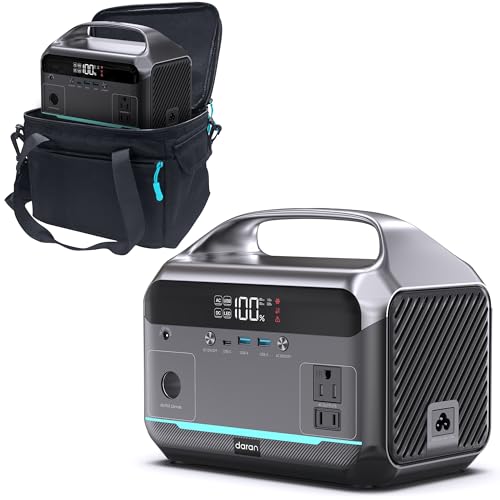
DARAN Portable Power Station 288Wh
Listed at 288Wh, LiFePO4, 350W with a 600W peak and a seven-port design, with a claimed 2.1-hour fast charge. For many setups that is enough for a single night, as long as your device and any humidifier stay well under 350W. The title does not mention pure sine wave, so confirm waveform and your manual’s requirements before depending on the AC outlet. The 2.1-hour charge claim is useful before a forecast storm, since a full top-up can happen on short notice. Seven ports leave room for a phone and a light, but every extra load shortens the night, so add it all up.
Pros
- 288Wh with LiFePO4
- Seven-port layout
Cons
- Pure sine wave not mentioned
- Solar panel sold separately
Who it’s for: one-night outage planning on a tight budget.
ENOFLO Portable Power Station 600W, 296Wh
This one lists 600W, 296Wh, a lithium battery, pure sine wave output and USB, DC and AC outlets. Pure sine wave appears in the title, which makes it one of two listings here that say so. The title says “lithium”, not LiFePO4, so do not assume the longer-life chemistry. Check the manual for how to power the machine safely. The seller frames it for outdoor emergency use. As a 600W-class unit with 296Wh, it has more output than energy, so the limit you will hit first is runtime, not wattage.
Pros
- Pure sine wave named
- 600W AC for extra headroom
Cons
- Chemistry listed only as lithium
- Solar panel not mentioned in the title
Who it’s for: buyers who put clean-power wording first.
DaranEner Portable Power Station 600W, 288Wh
The title gives 600W with a 1200W surge, 288Wh, LiFePO4, AC and DC outlets, and an 8.3lb weight. That weight is useful for moving between rooms. Compared with the 350W DARAN, the extra AC headroom matters if you add a humidifier or a second device. Waveform is not stated, so verify it. Extra AC headroom does not add energy: 288Wh is still 288Wh, and heavier loads drain it faster. Think of the 600W rating as protection against startup spikes or a second device, not a longer night.
Pros
- 600W continuous, 1200W surge
- Weight stated in the title
Cons
- Waveform not specified
- Same 288Wh as the cheaper DARAN
Who it’s for: households wanting more output at the same capacity.
MARBERO 111Wh Solar Generator with 30W Panel
A 111Wh unit bundled with a 30W solar panel kit, a 120W surge rating and eight output ports. The listing mentions home outages. At 111Wh, a night is only realistic for a very low-draw setup, and a 30W panel adds a slow trickle in good sun. Treat it as a bridge, not a primary plan. Eight ports is plenty for phones and lights, yet each added load eats into 111Wh. The 120W surge rating is also low, so confirm your device’s peak draw on its label. A 30W panel is slow, so do not count on it overnight.
Pros
- Panel included
- Eight output ports
Cons
- Small capacity
- Low surge rating
Who it’s for: short outages where a panel helps top up.
ENOFLO Portable Power Station 97.68Wh
This unit lists 97.68Wh with a 110V AC outlet and a 120W peak. It suits phones, lights and similar light loads, and it is a stretch for anything that must run for hours. The title does not mention chemistry or waveform. Panel is optional. Compare the watt-hours with the worksheet below before choosing it. At this size, one night for even a modest-draw machine is unlikely, so do the arithmetic first. It may be better kept for phones, a radio and a lamp, with a bigger station reserved for the essential device.
Pros
- 110V AC outlet included
- Panel optional, per the title
Cons
- Capacity close to the smallest here
- Waveform and chemistry unstated
Who it’s for: light loads and short interruptions.
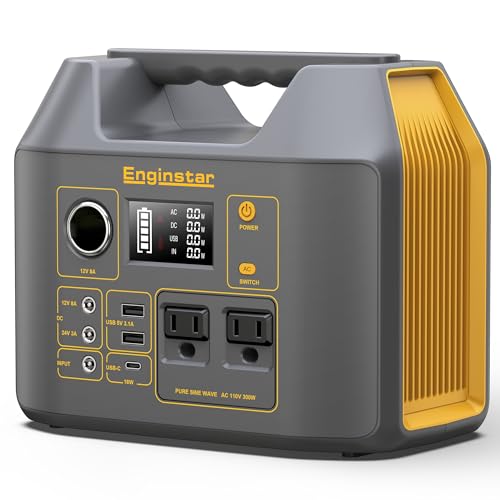
EnginStar 296Wh Portable Solar Generator
The title says 296Wh, pure sine wave, a 300W AC outlet and an 80000mAh battery pack. The 80000mAh figure is a power-bank style number; the 296Wh figure is the more useful one. At 300W it handles a typical CPAP-class load with headroom, but a heated humidifier needs checking against your manual. The 300W ceiling is lower than the 600W units, which matters mostly if you add a humidifier or second device. Pure sine wave and a compact format make it a straightforward one-night option, subject to your device’s draw.
Pros
- Pure sine wave named
- 296Wh in the mid-size band
Cons
- 300W AC ceiling
- Chemistry not named
Who it’s for: one-night backup with clean-power wording.
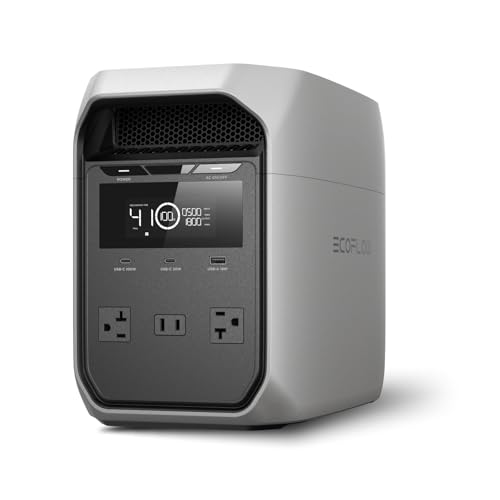
EF ECOFLOW Delta 3 Classic
The largest here: 1024Wh, 1800W AC with a 3600W surge, a one-hour fast charge, 100W USB-C output, LiFePO4 and a 10ms UPS function. That much energy can bridge multiple nights for a modest device or run other household items alongside. The title says UPS; whether that suits your equipment is a question for your device maker. Its 100W USB-C output can charge a laptop or phone quickly, and the 1800W AC output leaves room for household items beyond the main device. Capacity and weight both rise, so check dimensions before you plan where it lives.
Pros
- 1024Wh covers multi-night planning
- 10ms UPS function named
Cons
- Highest outlay of the ten
- Heavier to move than small units
Who it’s for: longer outages and mixed loads.
MARBERO 172Wh Solar Generator with 40W Panel
A 172Wh unit with a 40W panel kit, 270W surge and eight outputs. The title includes CPAP among its uses, but that is the seller’s wording and not a statement of compatibility. At 172Wh the runtime depends heavily on your device’s draw, so use the worksheet and read the manual. Expect a slow trickle from sunlight, so treat the panel as a way to stretch the battery over a day or two, not a replacement for a full recharge from the wall. Check the manual for how to connect the panel.
Pros
- Panel included
- CPAP appears in the title
Cons
- Modest capacity
- Chemistry and waveform not stated
Who it’s for: low-draw setups wanting an all-in-one kit.
192Wh Power Station with Bag (listed under DaranEner)
Listed at 192Wh (60,000mAh), 300W with a 600W surge, LiFePO4, six ports with two AC outlets and a carry bag. The title does not name the brand, though the listing shows DaranEner. The bag helps keep it with your outage kit. Two AC outlets are handy only if the combined load stays under 300W. At 192Wh it sits between the small and mid-size classes, so the worksheet decides whether it fits. The 60,000mAh figure is a power-bank number; plan with watt-hours and check the listing for what else is included.
Pros
- Two AC outlets and a bag
- LiFePO4 named
Cons
- Brand missing from the title
- Waveform not stated
Who it’s for: buyers who want a compact kit with a carry case.
Sizing for a night without grid power
The overnight worksheet
Take your device’s watts, multiply by hours slept, then add about 15 percent for conversion losses. The numbers below are examples only; use the wattage on your own device label.
| Device draw | 8 hours | With 15% reserve |
|---|---|---|
| 30W | 240Wh | about 282Wh |
| 50W | 400Wh | about 470Wh |
| 80W | 640Wh | about 753Wh |
At 30W, the 288Wh and 296Wh units just clear one night. At 50W, they fall short, and only the 1024Wh EcoFlow clears one night, with room left for a second night at 30W.
Humidifiers and heated hoses
Heated accessories can multiply the draw, sometimes several times over a bare machine. Check the manual for the highest-draw setting and size the station for that, or ask your supplier whether a lower-power setting is acceptable during an outage.
Waveform and DC options
Only two titles state pure sine wave. The others may still be fine, but the title cannot tell you. If your manual lists a DC cable, that path may skip the inverter and stretch the battery, so check which cable your maker sells.
Low-load shutoff and ventilation
Some stations switch the AC outlet off at very low loads. Read the unit’s manual for that behavior. Keep vents clear, place the station on a hard surface away from heat and bedding, and never run it where it can get wet.
Recharging between outages
Wall charging speed matters when outages stack up. The DARAN lists 2.1 hours and the EcoFlow lists a one-hour fast charge, both manufacturer claims. Small solar panels add a trickle at best, so a day of sun may only cover part of one night.
Mistakes to avoid
Common errors are sizing on the label number of the station, forgetting a humidifier, assuming “CPAP” in a title means compatibility, skipping a full-night trial run, and leaving the unit uncharged for months. Another is relying on a small solar panel for overnight energy. Charge it, and run your device from it once before storm season.
How we picked these
This roundup is based on published specifications, manufacturer documentation and buyer reviews, and it uses only what each listing title says. Where the title is silent, we say to check the listing and your device manual. Nobody on the team used or measured these units, so treat every figure as the seller’s claim.
Verdict
For multi-night plans, the EcoFlow Delta 3 Classic has the most stored energy on the list. For one night at a low draw, the ENOFLO and EnginStar 296Wh units say pure sine wave in their titles. Smaller units are bridges, not full plans. Confirm needs with your supplier.
Related guides
- How Long Does A Portable Generator Run On A Tank Of Fuel
- How To Prepare For A Power Outage Checklist And Gear
- Dual Fuel Generators For Hurricane Home Backup
Frequently asked questions
How many watt-hours do you need to run a CPAP overnight?
Look at the wattage on your device’s power label, multiply by the hours you sleep, then add about 15 percent for conversion losses. A 40W draw over eight hours is 320Wh, or roughly 375Wh with a reserve. A heated humidifier or heated hose can raise the draw a lot, so use the highest figure in your manual and confirm details with your device maker or supplier.
Does the station need a pure sine wave output?
Many device makers recommend or require clean power, and only the ENOFLO 296Wh and EnginStar listings here say pure sine wave in the title. The others may also provide it, but the titles do not say, so check the listing and your CPAP manual before relying on any of them. If the manual allows a DC cable, that route can avoid the AC inverter.
Is a bigger station always better for outages?
Not always. A larger unit such as the EcoFlow Delta 3 Classic stores more energy and can cover multiple nights or other loads, but it costs more and is heavier to move. A 288Wh to 296Wh unit can cover one night for a lower-draw setup. Match capacity to your calculated nightly watt-hours plus the other devices you must also power.
Can you recharge with solar during a multi-day outage?
Some listings include panels, such as the MARBERO 111Wh and 172Wh kits with 30W and 40W panels, while others say solar is optional. Small panels add only a slow trickle, so they extend runtime rather than replace overnight draw. Check each listing for input limits, cable type and whether a panel is included before planning around solar.
What should you do before the next storm?
Charge the station fully, then run your device from it for a night while you are home, so you know the real runtime. Keep the manual, cords and a backup plan nearby, and recharge on schedule. Talk with your device supplier or care team about outage plans, since this guide cannot give medical advice.