Key takeaways
- A tornado watch means tornadoes are possible in and near the watch area; a tornado warning means one is occurring or imminent nearby.
- Watches are issued by the Storm Prediction Center and typically last about 4 to 8 hours.
- A typical watch covers roughly 20,000 to 40,000 square miles, so being in a watch does not mean your town will be hit.
- A “Particularly Dangerous Situation” (PDS) watch signals high confidence in multiple strong tornadoes.
- Use the watch period to prepare: confirm how you will get warnings, choose your shelter, and charge devices.
The tornado watch meaning is simple: weather conditions over a broad area are favorable for tornadoes to develop, so you should be ready to act, but no tornado has necessarily formed yet. In the United States, the Storm Prediction Center (SPC) issues tornado watches for groups of counties, usually for several hours, and a tornado warning from your local National Weather Service office is the signal to take shelter immediately.
This guide goes deeper than the basic definition. It explains what does a tornado watch mean in practice: how forecasters decide to issue one, how big and how long watches usually are, what a “PDS” watch is, how to read the watch probabilities, and how to use the hours of a watch wisely.
Key takeaways
- A tornado watch means tornadoes are possible in and near the watch area; a tornado warning means one is occurring or imminent nearby.
- Watches are issued by the Storm Prediction Center and typically last about 4 to 8 hours.
- A typical watch covers roughly 20,000 to 40,000 square miles, so being in a watch does not mean your town will be hit.
- A “Particularly Dangerous Situation” (PDS) watch signals high confidence in multiple strong tornadoes.
- Use the watch period to prepare: confirm how you will get warnings, choose your shelter, and charge devices.
Tornado Watch Meaning in Plain Terms
Think of a watch as “the ingredients are in place.” For tornadoes, forecasters look for warm, moist air near the ground, instability that lets storms grow tall, a trigger such as a front or dryline, and wind shear, meaning winds that change speed and direction with height. When those overlap, storms that form may rotate.
A watch is a forecast, not an observation. It tells you the risk is elevated enough that people in the area should stay alert and be ready to move to shelter quickly. Many watches end with no tornadoes at all, and that is not a failed forecast; it reflects the honest uncertainty of predicting individual storms hours in advance.
How a Tornado Watch Gets Issued
Watches do not appear out of nowhere. They are the middle step in a sequence of SPC products that narrow the risk from days ahead to hours ahead.
- Convective outlooks (1 to 8 days ahead). SPC maps general and severe thunderstorm risk using categories from Marginal to High. Why it matters: a Moderate or High risk days in advance is your cue to review plans.
- Mesoscale discussions (hours ahead). SPC forecasters publish short technical notes on a developing area, often saying whether a watch is likely. Why it matters: these give an early heads-up before the watch itself.
- Coordination with local offices. SPC confers with the affected National Weather Service forecast offices before issuing a watch.
- Watch issued. The watch receives a number, a list of counties and an expiration time. Local NWS offices then update which counties remain in the watch as storms move.
- Warnings issued locally. When radar shows rotation or a tornado is reported, the local NWS office issues a tornado warning for a much smaller, storm-based area.
How Big and How Long Is a Tornado Watch?
According to SPC, a typical watch covers 20,000 to 40,000 square miles, roughly the size of a state like West Virginia or larger, although some are smaller or bigger depending on the weather pattern. Watches are defined by counties, so your county name appearing in the alert is what matters.
SPC describes typical watch durations of about 6 to 8 hours, while NOAA’s educational material cites around 4 to 6 hours. Watches can be canceled early for some counties, extended in time, or expanded to new areas as storms move. SPC’s lead-time goal for a tornado watch is about two hours before the first tornado.
| Alert | Issued by | Typical area | Typical duration | What it means | Your action |
|---|---|---|---|---|---|
| Convective outlook (Slight to High risk) | Storm Prediction Center | Multi-state region | Day-long forecast | Severe storms possible in the coming days | Review plans, check supplies |
| Severe thunderstorm watch | Storm Prediction Center | Tens of thousands of square miles | Several hours | Large hail and damaging wind possible; tornadoes less likely | Stay alert, secure outdoor items |
| Tornado watch | Storm Prediction Center | About 20,000-40,000 sq mi | About 4-8 hours | Conditions favor tornadoes | Prepare to shelter quickly |
| Tornado warning | Local NWS office | Storm-based polygon, often parts of a few counties | Often 30-60 minutes | Tornado observed or indicated by radar | Take shelter now |
| Tornado emergency | Local NWS office | Specific communities | Minutes | Confirmed large tornado threatening a populated area | Shelter immediately in the safest place available |
Tornado Watch vs Warning: The One-Line Difference
A watch means “be ready”; a warning means “take shelter immediately.” During a watch you can keep going about your day while staying alert. During a warning you stop what you are doing and go to shelter. Warnings can be issued without a watch in effect, especially with fast-developing storms, so never assume no watch means no risk.
What Is a PDS Tornado Watch?
Occasionally a watch carries the label “Particularly Dangerous Situation,” or PDS. SPC uses it when forecasters have high confidence in multiple intense tornadoes, rated EF2 to EF5. There are no fixed numeric triggers; SPC calls the decision subjective, with a goal of having most PDS tornado watches verify with multiple intense tornadoes.
PDS watches are uncommon and are usually tied to major outbreak days. If you see “PDS” in a watch, treat the day like a scheduled emergency: confirm your shelter, keep shoes and a helmet near it, and plan not to be on the road during the peak hours.
Reading Tornado Watch Probabilities
Each SPC watch includes probabilities for the whole watch area, such as the chance of two or more tornadoes or of one or more strong tornadoes. SPC groups these into Low, Moderate and High categories.
| Category | Probability range | How to interpret it |
|---|---|---|
| Low | Under 2% to 20% for strong tornadoes; under 5% to 20% for other categories | Tornadoes possible but not widespread |
| Moderate | 30% to 60% | A meaningful chance of the listed event somewhere in the watch |
| High | 70% to more than 95% | The event is expected somewhere in the watch; common in PDS watches |
These probabilities apply to the entire watch area, not to your address. Even a High probability of strong tornadoes means a small fraction of the watch area will actually be affected.
How to Check Whether You Are in a Tornado Watch
Many people assume their phone will buzz for a watch, but Wireless Emergency Alerts are generally reserved for the most urgent threats, such as tornado warnings. Watches usually reach you through other channels, so it helps to know where to look.
- NOAA Weather Radio: A radio programmed with your county’s SAME code sounds an alert when your county is added to a watch.
- Weather apps: Most major weather apps let you turn on notifications for watches as well as warnings; check that watch alerts are enabled in the app’s settings.
- The National Weather Service website: Enter your ZIP code or city at weather.gov to see active watches and warnings for your exact location.
- SPC’s watch page: The Storm Prediction Center lists all active watches with maps, county lists and the probability table.
- Local TV and radio: Broadcasters usually show a county map with the watch shaded and stay on air when warnings start.
When you check, note the watch number, expiration time and whether it carries a PDS label. Those three details tell you how long to stay alert and how seriously to treat the day.
A short history of the tornado watch
Tornado forecasting in the US began in 1948, when two Air Force meteorologists at Tinker Air Force Base in Oklahoma correctly predicted a tornado that struck the base. Public severe weather forecasts from the Weather Bureau followed in the early 1950s, and today’s watch system is run by the Storm Prediction Center in Norman, Oklahoma. The basic idea has not changed: give people hours of notice that the setup is dangerous, then use local warnings for the specific storms.
What to Do During a Tornado Watch
The hours of a watch are your preparation window. Treat them as time to remove friction from the moment you might need to move.
- Confirm at least two ways to get warnings. Wireless Emergency Alerts on your phone, a NOAA Weather Radio with SAME county coding, and local TV or radio. Why: outdoor sirens are designed for people outdoors and are often hard to hear inside.
- Choose your shelter. A basement, storm cellar or safe room is best. Otherwise, use an interior room on the lowest floor with no windows, such as a bathroom or closet.
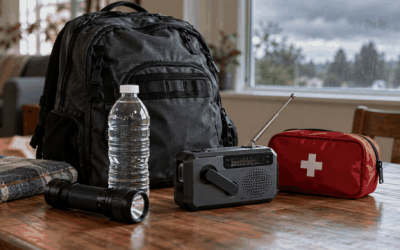
- Stage your shelter kit. Shoes, helmets for everyone, a flashlight, a charged phone and power bank, essential medications, and pet carriers or leashes.
- Charge devices. Phones, power banks and radios. Why: storms often knock out power right when you need information most.
- Rethink travel. Postpone non-essential trips during the peak hours. Vehicles offer poor protection.
- If you live in a mobile home, plan to leave early. Identify a sturdy building nearby and go there before warnings start. Mobile homes cannot provide adequate protection, even when tied down.
- Check on others. Make sure older neighbors, people with disabilities and anyone without a smartphone know about the watch.
Gear That Helps
Midland WR120B NOAA Weather Alert Radio
SAME county programming · 60+ alert types · battery backup. Sounds an alarm for your county even if your phone is silenced, which matters most for overnight watches. Budget to mid tier.
Midland WR400 Weather Radio Deluxe
SAME county programming · large display · battery backup. A step-up home unit with a louder alert and clearer screen. Mid tier.
FosPower A1 Emergency Weather Radio
NOAA weather band plus AM/FM · solar and hand crank · built-in power bank and flashlight. Useful in a shelter kit when power goes out. Budget tier.
Frequently Asked Questions
What does a tornado watch mean?
It means conditions are favorable for tornadoes to form in and near the watch area over the next several hours. No tornado needs to be present yet. Stay alert, keep a way to receive warnings close, and be ready to go to shelter.
How long does a tornado watch last?
Most watches run about 4 to 8 hours. They can be canceled early for some counties, extended, or replaced as storms evolve, so check updates rather than relying on the original end time.
Who issues a tornado watch?
The Storm Prediction Center in Norman, Oklahoma, issues tornado watches for the United States after coordinating with local National Weather Service offices. Tornado warnings come from the local offices.
Is a tornado watch or warning more serious?
A warning is more serious. A watch says tornadoes are possible; a warning says one is happening or is indicated by radar near you, and you should take shelter immediately.
What does PDS mean in a tornado watch?
PDS stands for Particularly Dangerous Situation. The Storm Prediction Center adds it when forecasters have high confidence in multiple intense tornadoes, rated EF2 or stronger, within the watch area.
Can a tornado happen without a tornado watch?
Yes. Some tornadoes form quickly from storms that were not expected to produce them, and warnings can be issued without a watch in effect. Always respond to a warning, whether or not a watch was issued.