Key takeaways
- Pro: Handles medium-weight fabrics like canvas or denim without consistent skipping
- Pro: Automatic needle threader reduces frustration for older eyes or shaky hands
- Con: Requires a power outlet or four AA batteries, so it is not truly grab-and-go cordless
When a storm leaves you with a split tarp seam, a torn curtain rod pocket, or a rain jacket zipper backing that has come loose, you need a mending solution that works right now — not next week when you can get to a tailor. A small sewing machine that handles a single layer of cotton but chokes on canvas is not a storm-prep tool. It is a toy.
That distinction is the entire problem this roundup addresses. Across these eight machines, prices range from under twenty dollars to roughly one-fifty, and the performance gap between the cheapest handheld units and the full-featured portables is enormous. Owner feedback consistently flags three failure points: skipped stitches on thick fabric, unreliable thread tension, and machines that feel solid in photos but strip gears within months. We compared published specifications, listed prices, and recurring owner reports to identify which models actually earn a place in an emergency kit and which ones only look convenient.
Our top picks


As an Amazon Associate we earn from qualifying purchases at no extra cost to you.
Quick Picks
| Product | Best For | Price |
|---|---|---|
| Brother XM2701 | Versatile home repairs | $149 |
| Mini Sewing Machine (12 Stitches) | Absolute beginners on a tight budget | $39.99 |
| Brother XM3700 | More stitch options at low cost | $123.38 |
| Electric Mini Sewing Machine (Dual Speed) | Kids and casual DIY crafters | $42.99 |
| SINGER Stitch Sew Quick | One-handed emergency patches | $18.64 |
| Handheld Sewing Machine (Blue) | Travel-size quick fixes | $19.99 |
| Rxmeili Portable 12-Stitch | Kit-heavy starter setups | $49.99 |
| KPCB Tech Mini Sewing Machine | Finger-guard safety for children | $39.99 |
How We Picked
Four criteria drove every recommendation here. First, stitch reliability on varied fabric weights — a machine that only sews thin cotton has limited emergency value. Second, whether the unit ships with accessories that matter out of the box, like a foot pedal, extension table, or needle set. Third, price-to-durability ratio based on how often owners report mechanical failure within the first year. Fourth, portability — actual size and weight, not just a marketing claim.
The 8 Best Small Sewing Machines in 2026
Brother XM2701
The XM2701 is the closest thing in this group to a full sewing machine shrunk into a portable frame. Twenty-seven built-in stitches cover everything from straight seams to decorative zigzag patterns, and the automatic needle threader saves time when you are working under stress. Owners praise the included six presser feet as a genuine value-add at this price.
- Pro: Handles medium-weight fabrics like canvas or denim without consistent skipping
- Pro: Automatic needle threader reduces frustration for older eyes or shaky hands
- Con: Requires a power outlet or four AA batteries, so it is not truly grab-and-go cordless
Skip this if you need something you can operate one-handed while holding a torn tarp flap. It demands a flat surface and two hands.
Mini Sewing Machine (12 Stitches)
At under forty dollars this unit earns its spot by being better than nothing and not pretending otherwise. Twelve stitch options sound modest, but a straight stitch and a zigzag cover ninety percent of emergency mending. The included accessories — typically two bobbins, several needles, and a small thread set — make it usable straight from the box.
- Pro: Compact enough to fit in a drawer beside a go-bag without taking space
- Pro: Price is low enough that a failure in two years is acceptable
- Con: Thread tension is inconsistent on thicker materials, a recurring complaint in owner reviews
Skip this if you plan to sew more than lightweight cotton or basic polyester. It will frustrate you.
Brother XM3700
The XM3700 sits in an interesting middle ground: thirty-seven built-in stitches at a price barely below the XM2701, but in a more compact body. The extra stitch library matters if you do garment work beyond mending — hemming with a blind stitch, reinforcing with a triple stretch stitch, and so on. Owners report smoother operation than many competitors under $130.
- Pro: Highest stitch count in the sub-$150 bracket without a bulk increase
- Pro: Speed control lets you slow down for precision work on tricky corners
- Con: Foot pedal is sold separately in some bundles, so check the listing carefully
Skip this if you only need a basic straight stitch and want the lowest price possible.
Electric Mini Sewing Machine (Dual Speed)
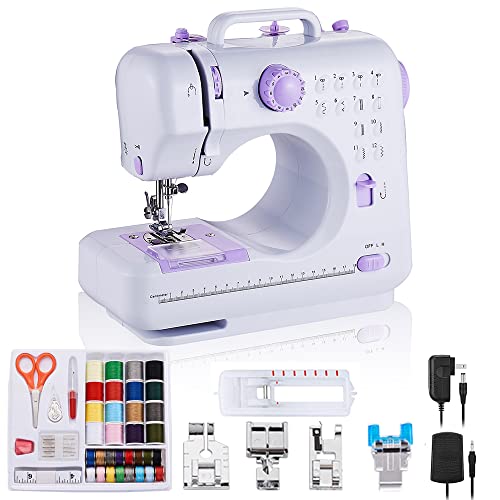
This machine markets to families, and the dual-speed function is the key differentiator. Slow speed gives a child enough control to sew a straight line; fast speed lets an adult finish a long seam quickly. The included extension table and full kit (thread, bobbins, needles, scissors) mean you can start immediately.
- Pro: Extension table stabilizes fabric and prevents the common “puckering” beginners cause
- Pro: Foot pedal included, unlike several similarly priced competitors
- Con: Plastic housing feels fragile and some owners report bobbin winder jamming after heavy use
Skip this if durability matters more than a complete starter package.
SINGER Stitch Sew Quick
At the lowest price in this roundup, the SINGER handheld is a single-purpose tool: you press it against fabric and it stitches a running line. No foot pedal, no table, no fuss. It runs on four AA batteries and weighs almost nothing. For a quick patch over a torn screen door mesh or a bag seam, it works within seconds.
- Pro: Truly cordless and one-handed — you can sew without removing the item from its place
- Pro: Brand reliability at a price under twenty dollars
- Con: Only does a basic lockstitch; no zigzag, no reverse, no speed control
Skip this if you need anything beyond a straight line on thin-to-medium fabric.
Handheld Sewing Machine (Blue)
This is functionally the same category as the SINGER handheld — a cordless, single-line stitcher — but without the brand name behind it. It ships with a small sewing kit that adds bobbin thread, needles, and a seam ripper. Owners note that stitch quality is acceptable for very light fabric but unreliable on anything with stretch or thickness.
- Pro: Includes a kit that the SINGER unit does not, so total setup cost is comparable
- Pro: Color option appeals to kids or makes it easy to identify in an emergency bag
- Con: Less consistent quality control than branded competitors; some units arrive misaligned
Skip this if you want a guaranteed stitch pattern. The SINGER at a lower price is the safer bet.
Rxmeili Portable 12-Stitch
The forty-two-piece kit is the reason this machine makes the list. That bundle typically includes bobbins, thread, needles, scissors, a seam ripper, and sometimes a needle threader — enough accessories to outfit a small household sewing corner. The machine itself sews twelve stitches and runs on batteries or an adapter.
- Pro: Kit value alone justifies the price if you are starting from zero supplies
- Pro: Lightweight and compact enough for a craft drawer or travel suitcase
- Con: Owners report tension adjustment is awkward and sometimes requires a screwdriver tweak
Skip this if you already own thread and bobbins — you are paying a small premium for accessories you do not need.
KPCB Tech Mini Sewing Machine
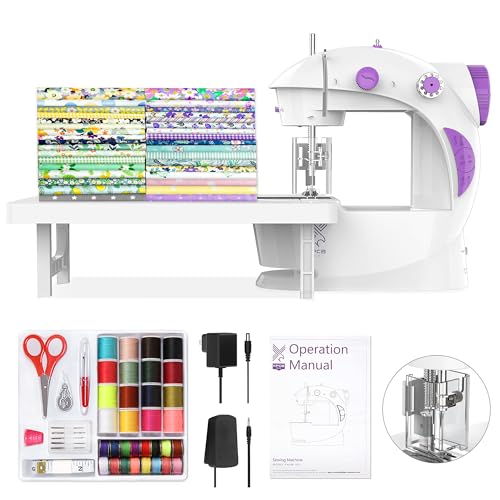
The finger guard is the headline feature, and it works. A transparent plastic barrier between the needle path and the operator’s hands prevents the most common beginner injury — a needle through a fingertip. The machine also includes a small amount of practice fabric, which is a thoughtful touch for a child’s first project.
- Pro: Finger guard meaningfully reduces injury risk for young or impatient users
- Pro: Practice fabric included, so there is no excuse not to start immediately
- Con: Limited stitch count and no reverse function, which means every seam must be locked by hand
Skip this if the user is an adult doing real mending — you will outgrow it fast.
Buying Guide
Stitch Type and Fabric Range
A straight stitch handles basic seaming. A zigzag stitch prevents raw edges from fraying and accommodates slight misalignment in emergency repairs. If you are mending tarps, tent fabric, or bag webbing, you need a machine rated for medium-to-heavy weight. Handheld single-line models simply cannot manage those materials reliably.
Power Source and Portability
Battery-only units are genuinely portable but often underpowered on thicker fabric. AC-powered portables need an outlet or a long cord. The best compromise for storm kits is dual-power models that accept an adapter and fall back to batteries when the grid is down.
What a “Kit” Actually Includes
Marketing language blurs the word “kit.” A useful kit includes matching thread spools, pre-wound bobbins, a set of needles in at least two sizes, and a seam ripper. If the listing does not specify contents, assume you will buy extras separately and factor five to ten dollars into your comparison.
Our Verdict
Top pick: the Brother XM2701, because its stitch range and fabric tolerance make it the only machine here that handles everything from a torn shirt hem to a split tarp seam without compromise. Budget pick: the SINGER Stitch Sew Quick at $18.64, which is the cheapest unit that still produces a functional lockstitch. Condition where another wins: if the user is a young child, the KPCB Tech with its finger guard is safer than anything else on this list regardless of price.
FAQ
Can a handheld sewing machine replace a regular one for storm repairs?
No. Handheld units produce a basic running stitch and cannot handle multiple layers, thick fabrics, or anything that needs a secure backstitch. They are best for emergency patches when a full machine is not available.
What is the minimum stitch count I should look for?
Three is the practical floor: straight, zigzag, and a lock or bartack pattern. Below that, you are limited to single-line repairs and cannot finish edges properly.
Do battery-powered small sewing machines lose power on thick fabric?
Yes, this is one of the most common failure reports in owner reviews. As the needle encounters resistance, motor speed drops and stitches become uneven or skipped. AC power or dual-power machines avoid this problem entirely.
How long should a small sewing machine last with occasional use?
Owner feedback on budget models suggests one to three years for units under fifty dollars, while the Brother portables commonly report five years or more. Plastic gears and bobbin-case wear are the typical failure points.