Key takeaways
- Compare 4 waterproof headlamps for cave exploration by output, runtime, IP rating and battery, with spot, flood and red modes for wet passages and long trips.
A cave removes every outside light source, so the lamp on your helmet becomes your only way to read passage walls, place your feet and find your way back to the entrance. Cave exploration also adds conditions that ordinary trail lighting rarely faces at once: dripping water, tight crawls that knock a lamp against rock, mud on switches and trips that can run far longer than a single evening hike.


The four headlamps below were chosen for that environment rather than for general camping. Each one is rechargeable, sealed against water, and offers more than one beam type or brightness level, so you can run a wide flood for close route finding, a focused spot for checking a chamber ahead, and a low mode that stretches the battery when the trip runs long.
Quick Picks
As an Amazon Associate we earn from qualifying purchases.
| Product | Best for | Key spec from title |
|---|---|---|
| Fenix HM70R | Best overall | 1600 lumens |
| Fenix HP25R V2.0 | Best for long trips | 1600-lumen spotlight |
| Fenix HM65R-T V2.0 | Best lightweight pick | 1600 lumens |
| Black Diamond Storm 500-R | Best compact backup | 500 lumens |
How to Choose
Water Sealing for Wet Passages
Water resistance decides whether a lamp survives a cave with stream passages, waterfall spray or a crawl through standing water. An IP68 rating means the housing is sealed for immersion beyond one meter, which suits lamps that may be dunked briefly in a sump or rinsed under a drip line. IP67 covers immersion up to one meter for thirty minutes, while IP66 protects against powerful water jets but is not an immersion rating. For regularly wet caves, treat IP68 as the safer baseline, keep spare O-rings in your repair kit, and check that the charging port stays sealed or covered before every trip underground.
Spot, Flood and Red Beam Options
A single beam shape rarely suits a whole cave trip. A spotlight with a longer throw helps you check whether a passage continues, spot a survey marker or read the far wall of a chamber before committing to a route. A wide flood beam is better for crawling, climbing and map work, because it lights your hands and footholds without a harsh hotspot. Red light preserves your eyes’ adjustment to darkness during rests and avoids blinding partners at close range. Look for a lamp that separates these modes clearly, so you can switch with gloves on and without cycling through a blinding turbo setting underground.
Runtime and Battery Format
Published maximum output is the least useful number on a long trip; what matters is how long a usable mid or low level lasts. A large 21700 cell stores more energy than an 18650, and rear-mounted battery cases balance weight across the helmet but add a cable to protect. Integrated packs are simpler, with nothing to swap in the dark, yet they end the trip when they run flat. Plan around the level you will actually use for most of the passage, carry a charged spare cell where the design allows one, and remember that cold cave air can shorten real runtime compared with laboratory figures.
Helmet Fit, Controls and Durability
A caving lamp lives on a helmet, not a bare head, so check how the mount and headband behave over a hard shell. Some models include helmet attachment hooks or clips that stop the band sliding on smooth plastic. Controls should work with muddy gloves: large buttons, a lockout that prevents accidental activation in a pack, and a tilt mechanism that points the beam at your feet for climbs. Aluminium bodies handle knocks against rock better than thin plastic shells, and a recessed lens survives scrapes in tight crawls. Finally, weigh the lamp with its battery fitted, because front-heavy setups strain your neck over hours.
The 4 Best Options
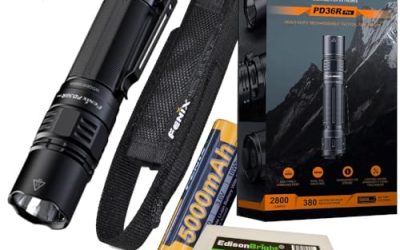
Fenix HM70R
The HM70R is the most complete single lamp in this group for mixed cave trips. Its main white beam covers chamber checks and route finding, the neutral white flood handles close work without harsh glare, and the red mode covers rests and partner-friendly pauses. The 21700 battery gives it the capacity for long pushes, the aluminium body suits a helmet-mounted life of knocks and scrapes, and the hidden USB-C port keeps the sealing intact when closed. It is heavier than the lightest option here, yet that weight buys output, runtime and a genuinely immersion-rated housing for wet systems.
Specs
- Maximum output: 1600 lumens
- Beam distance: 186 meters
- Battery: one 21700 Li-ion battery, 5000 mAh, included
- Maximum runtime: 100 hours on the lowest general level
- Light sources: white, neutral white high-CRI and red LEDs
- Water resistance: IP68
- Charging: USB Type-C, hidden port
- Weight: 206 grams including battery and headband
Best for: Cavers who want one primary helmet lamp for wet, varied passages.
Watch out for: The 21700 format means spare cells are larger to pack than 18650 spares.
ASIN: B09FX248CM
Fenix HP25R V2.0
The HP25R V2.0 splits its battery into a rear case, which balances the lamp on a helmet during long vertical or crawling sections where a front-heavy light becomes tiring. Its spotlight and floodlight are controlled by separate switches, so you can change beam type in the dark without cycling through unrelated modes, and the flood low level is rated for hundreds of hours for extended basecamp or survey use. Helmet attachment hooks and cable clips are included for hard-shell mounting. Its IP66 rating handles spray and rain well, although it is not the immersion-rated choice in this group for sump-prone caves.
Specs
- Spotlight maximum output: 1600 lumens
- Floodlight maximum output: 400 lumens
- Spotlight beam distance: 290 meters
- Battery: one Fenix ARB-L21-5000 Li-ion battery, included
- Floodlight low runtime: 400 hours
- Light sources: white spotlight, neutral white floodlight and red light
- Water resistance: IP66
- Charging: USB Type-C
- Weight: 238 grams including battery and headband
- Included in this listing: headlamp, battery, USB Type-C cable, helmet attachment hooks, cable clips and LumenTac organizer
Best for: Long survey or expedition-style trips where balance and flood runtime matter most.
Watch out for: IP66 is a water-jet rating, not immersion; keep it out of sumps and deep pools.
ASIN: B09BP56XK8
Fenix HM65R-T V2.0
The HM65R-T V2.0 is the lightweight route into this class of lamp, built around a compact body and a sport-fit headband that adjusts with a bidirectional click dial. It pairs a white beam for distance with a warm white beam that is comfortable for close reading of rock texture, formations and survey notes, and its lowest levels stretch to a 300-hour maximum runtime for multi-day trips where charging is impossible. The IP68 housing suits wet passages, and the included 18650 battery is a common format that many cavers already carry spares for. Output matches the bigger lamps here, in a noticeably smaller package.
Specs
- Maximum output: 1600 lumens
- Beam distance: 170 meters
- Maximum runtime: 300 hours
- Light sources: white and warm white beams
- Battery: one Fenix ARB-L18-3400 18650 Li-ion battery, included
- Water resistance: IP68
- Charging: USB Type-C
- Headband: bidirectional click-adjustable sport headband
Best for: Weight-conscious cavers and multi-day trips built around low-level runtime.
Watch out for: The running-focused headband may need the band checked for slip on smooth helmet shells.
ASIN: B0CWS1K37L
Black Diamond Storm 500-R
The Storm 500-R plays a different role: a compact, sealed second lamp that lives in a pack or cave bag as insurance, or a primary light for shorter, drier trips. Its integrated battery removes spare-cell decisions, the digital lockout stops it switching on inside a bag, and Brightness Memory returns it to your last level instead of a default blast. PowerTap lets you jump between full power and your dimmed setting quickly, and red, green and blue night-vision modes cover close work without wrecking dark adaptation. Output is well below the Fenix lamps, so plan its role around proximity light rather than chamber checks.
Specs
- Maximum output: 500 lumens
- Beam distance: 120 meters
- Battery: integrated BD 2400 rechargeable lithium-ion battery
- Charging: micro-USB
- Runtime: 7 hours on high, 19 hours on medium, 350 hours on low
- Water resistance: IP67, waterproof and dustproof, tested to operate up to 1 meter underwater for 30 minutes
- Features: PowerTap, Brightness Memory and digital lockout
- Modes: distance, dimming, strobe, red, green and blue night vision
Best for: A sealed backup lamp, or a primary light for short trips in drier caves.
Watch out for: The integrated battery cannot be swapped underground, and charging is micro-USB rather than USB-C.
ASIN: B09NQKZ4BP
Which One Fits Your Situation
You Explore Wet Caves With Stream Passages
Choose between the two IP68 Fenix lamps. The HM70R suits cavers who want the strongest all-round beam mix on one helmet, while the HM65R-T V2.0 suits anyone counting grams or stretching low levels across several days. Both housings are rated for immersion, which matters when a passage involves wading, spray or an accidental dunk. Whichever you pick, add a sealed backup light to your bag, because no single lamp should be a caving group’s only plan.
Your Trips Run Long and Involve Survey or Vertical Work
The HP25R V2.0 fits this pattern best. Its rear battery case balances the helmet during hours of looking up ropes and down pitches, the separate flood switch makes map and station work straightforward, and the very long flood low runtime covers extended underground camps. Protect its connecting cable from sharp rock edges, and treat its IP66 housing as spray protection: route it away from sumps and deep water sections where an immersion-rated lamp belongs instead.
You Want a Backup Lamp That Lives in Your Pack
The Storm 500-R is built for this job. Its lockout prevents the slow, invisible battery drain of a lamp switching itself on against other gear, the sealed integrated design shrugs off a wet bag, and the low level runs for hundreds of hours if a primary lamp fails far from the entrance. Check its charge before every trip, because an integrated battery cannot be replaced with a spare cell at the moment you discover it is flat.
You Are Fitting Out a First Caving Helmet
Start with the HM70R as the primary lamp and add the Storm 500-R as the independent second light when budget allows. That pairing covers distance checks, close flood work and an emergency fallback without sharing a battery format or a failure point. Mount both before your first trip, practise the switches with gloves on at home, and set your low levels in advance so the first tight crawl is not where you learn the controls.
Common Mistakes
- Relying on one lamp with no backup, even though a single failure underground leaves you completely without light.
- Judging a lamp by turbo lumens instead of the runtime of the mid and low levels you will actually use for most of the trip.
- Taking an IP66 or splash-rated lamp into stream passages and sumps that call for an immersion rating.
- Forgetting to engage the lockout, then finding the battery flat because the lamp switched on inside a pack.
- Mixing battery formats across your lights, so the spare cells you packed fit none of the lamps that failed.
Frequently Asked Questions
How many lumens do you need for cave exploration?
Most passage travel works well between roughly 100 and 400 lumens, which balances visibility against runtime and heat. Higher outputs near 1600 lumens help for short checks of large chambers or distant leads, but they drain batteries quickly and can dazzle partners. A lamp with several well-spaced levels matters more than a single headline figure, because you will spend most of any trip on the middle settings.
Is a headlamp or a handheld flashlight better in caves?
A headlamp is the practical primary light because caving constantly uses both hands for crawling, climbing and handling ropes or survey gear. Handheld lights still earn a place as backups or for pointing into side passages without turning your whole helmet. Many cavers carry a headlamp as the main light, a second independent lamp, and a small handheld, so no single failure removes all illumination.
What IP rating should a caving lamp have?
IP68 is the safer target for wet caves, since it covers immersion beyond one meter and the accidental dunking that happens in stream passages. IP67 handles immersion up to one meter for thirty minutes and suits moderately wet trips. IP66 protects against powerful jets and spray only, so treat it as a dry-to-damp cave rating and keep that lamp away from sumps and deep pools.
How many lights should you carry underground?
Carry at least two independent light sources, and three is a widely used standard for longer or more committing trips. Independence matters: separate batteries, separate switches and ideally separate mounting, so one flooded housing or flat cell cannot take out your whole setup. Check every lamp and charge every battery before entering, and agree within the group what happens if someone drops to their last working light.
More from Amazon
Programs that pair well with the guide above. Offers and eligibility are set by Amazon and may change.
Free shipping on eligible items, Prime Video and more. Eligible new members can start with a free trial.
Start a Prime free trialAudiobooks and podcasts to listen to on the go. Eligible new members can start with a free trial.
Try Audible freeAd-free music streaming. Eligible new subscribers can start with a free trial.
Try Music Unlimited freeA free business account with business pricing and bulk-buying tools for work, shop or home office.
Create a business accountAs an Amazon Associate we earn from qualifying purchases.