Key takeaways
- Sudden loud noise: thunder can reach 110-130 decibels close to a strike, similar to a siren or jackhammer, which triggers a fight-or-flight surge.
- Loss of control: you cannot stop lightning, wind, or outages, and uncertainty fuels worry thoughts like what if the power goes out or a tree falls.
- Catastrophic thinking: social media videos and severe weather alerts make rare outcomes feel likely, even when your local risk is low.
- Being alone: without another person to confirm you are safe, anxious thoughts loop faster. That is why iam scared of being on my own in a storm is such a common search during nighttime storms.
- Sensory sensitivity: flashing lightning, pressure changes, and house creaking keep light sleepers and children on alert.
Thunderstorm anxiety is a normal stress response to loud noise, loss of control, and perceived danger, and you can calm it in minutes by getting to a safe indoor room, reducing noise and flashing light, and using slow breathing paired with a concrete safety check.
- Why is fear so powerful during storms?
- Should I be scared of thunderstorms?
- How to stay calm during a thunderstorm: 7-minute reset plan
- What to do when you are scared alone in a storm
- How to calm storm anxiety with kids and family
- How to not be scared of thunderstorms long term
- When storm fear needs extra help
- Quick answers to common storm anxiety questions
If you are scared of being on your own in a storm right now, do this: go inside a sturdy building away from windows, unplug from live storm coverage for 10 minutes, put on steady background sound, and tell one person where you are. Most thunderstorm fear drops once your brain gets proof you are sheltered and have a plan.
Why is fear so powerful during storms?
Thunderstorms hit several anxiety triggers at once. A sudden thunderclap activates the startle reflex, darkness and power flickers remove visual certainty, and wind, hail, or sirens signal that the environment is unpredictable. For sensitive nervous systems, children, people with PTSD, or anyone who experienced a previous bad storm, the brain links thunder with danger and reacts before logical thinking catches up.
Common drivers of thunderstorm anxiety and storm anxiety include:
- Sudden loud noise: thunder can reach 110-130 decibels close to a strike, similar to a siren or jackhammer, which triggers a fight-or-flight surge.
- Loss of control: you cannot stop lightning, wind, or outages, and uncertainty fuels worry thoughts like what if the power goes out or a tree falls.
- Catastrophic thinking: social media videos and severe weather alerts make rare outcomes feel likely, even when your local risk is low.
- Being alone: without another person to confirm you are safe, anxious thoughts loop faster. That is why iam scared of being on my own in a storm is such a common search during nighttime storms.
- Sensory sensitivity: flashing lightning, pressure changes, and house creaking keep light sleepers and children on alert.
Should I be scared of thunderstorms?
Respect thunderstorms, but most people indoors in a sturdy building are at very low risk. Lightning and straight-line winds cause injuries each year in the United States, but deaths are rare compared to the number of storms. Anxiety makes the risk feel immediate and personal, while the actual statistical risk for a person following basic shelter rules is small.
Use this table to separate reasonable caution from anxiety-driven fear:
| Hazard | Typical U.S. yearly impact | Highest risk situation | What actually protects you |
|---|---|---|---|
| Lightning | About 20 deaths and 200-300 injuries per year | Outside, under trees, on water, on open fields or sports fields | Inside a house or large building for 30 minutes after last thunder |
| Tornado from severe thunderstorm | About 70 deaths per year on average, highly variable by year | Mobile homes, vehicles, upper floors without safe room | Lowest floor, interior room without windows |
| Flash flooding | Largest thunderstorm death toll, often 100+ per year including tropical systems | Driving through flooded roads, basement flooding | Never drive through water; move to higher ground |
| House fire from lightning | About 15,000-20,000 lightning-related fire claims per year reported to insurers | Homes without surge protection, damaged roofs | Whole-house surge protector, unplug sensitive electronics |
The takeaway for how to not be scared of thunderstorms is simple: if you are inside, off phones with cords, away from plumbing and windows, and not driving through water, you have already removed the main dangers. Anxiety may still say otherwise, but the safety checklist is complete.
How to stay calm during a thunderstorm: 7-minute reset plan
This step-by-step checklist is built for both adults and families. It takes about 7 to 15 minutes, which matches the peak of most anxiety surges.
- Minutes 0-2: Confirm shelter. Go to an interior room on the lowest comfortable floor. Close blinds or curtains to block lightning flashes. Bring phone, flashlight, water, and a blanket. Reason: your nervous system calms faster when it sees physical barriers between you and the storm.
- Minutes 2-4: Shrink the noise. Put in foam earplugs, noise-reducing earbuds, or over-ear headphones with calm music, rain sounds at low volume, or a podcast. For children, let them choose the sound. Reason: unpredictable thunder is the main startle trigger; steady sound masks the sudden spike by 20-30 decibels.
- Minutes 4-6: Slow your breathing. Inhale through the nose for 4 seconds, hold 2 seconds, exhale slowly for 6 seconds. Do 6 rounds. Place a hand on the chest and stomach to feel the stomach rise. Reason: a longer exhale lowers heart rate and tells the brain the threat has passed.
- Minutes 6-8: Do a fact check. Count flash-to-bang seconds to estimate lightning distance: divide seconds by 5 to get miles, divide by 3 to get kilometers. If thunder takes 15 seconds, the lightning is about 3 miles or 5 kilometers away. Reason: a number replaces vague dread with concrete information.
- Minutes 8-11: Occupy your hands. Make tea, build a pillow fort with kids, do dishes, fold laundry, play cards, or write down worries and next actions. Avoid refreshing radar every 30 seconds. Check a trusted forecast like the National Weather Service only every 15-20 minutes. Reason: active tasks stop rumination faster than trying to force yourself not to think.
- Minutes 11-15: Connect. Text a friend, neighbor, or family member: Storm is loud here, I am safe inside at home. No need to reply fast. If alone, stay on a low-pressure call or voice chat. Reason: social reassurance lowers perceived isolation, which is half of storm fear at night.
- After 15 minutes: Stay sheltered until 30 minutes after the last thunder. Keep lights warm and low, keep shoes on if severe warnings are active, and keep pets nearby. If a severe thunderstorm warning or tornado warning is issued, switch from calming mode to safety mode and follow official shelter instructions.
How to estimate lightning distance
Use the flash-to-bang rule when you see lightning:
| Seconds between flash and thunder | Approximate distance | What it means |
|---|---|---|
| 3 seconds | 0.6 miles / 1 kilometer | Very close; stay fully inside, away from windows and plumbing |
| 6 seconds | 1.2 miles / 2 kilometers | Close; do not go outside for any reason |
| 15 seconds | 3 miles / 5 kilometers | Storm is nearby; remain indoors |
| 30 seconds | 6 miles / 10 kilometers | Storm is moving away or developing; wait 30 minutes after last thunder |
| No thunder heard after 30 seconds | More than 6-8 miles / 10-13 kilometers | Usually safe from direct strike, but keep monitoring if sky is dark |
What to do when you are scared alone in a storm
Being alone amplifies every sound. Prepare a solo storm kit before storm season so you do not have to think when anxiety is high.
- Pick one safe spot in advance, such as a bedroom closet area, bathroom without windows, or living room interior wall. Keep a battery lantern, phone charger, blanket, water, and earbuds there.
- Create a 30-minute comfort playlist or downloaded podcast episode. Streaming can buffer during outages; downloaded audio usually keeps playing for 8-12 hours on a charged phone.
- Use the 3-3-3 grounding method: name 3 things you see, 3 things you hear besides thunder, and move 3 body parts slowly. This pulls attention back to the safe room.
- Narrate safety out loud: I am inside, doors locked, windows closed, I am away from water and electrical cords. I will check alerts again in 15 minutes. Hearing your own calm voice reduces panic.
- Ask for check-ins before the storm. A simple message to a neighbor or group chat like Storms make me nervous, can we check in tonight helps you feel watched over without needing constant reassurance.
- Do not sit by a window filming lightning. Glass, metal frames, and open porches increase risk and keep your nervous system fully alert to every flash.
How to calm storm anxiety with kids and family
Children borrow calm from adults. If you act like a confident guide rather than hiding your own fear completely, kids settle faster.
- Give storms a job and a plan: Thunder is the sound after lightning, and our job is to stay cozy inside until it passes. Show them the safe room in daylight so it feels familiar at night.
- Lower stimulation: dim overhead lights, close curtains, turn off dramatic storm videos. Let kids wear headphones, hold a stuffed animal, or wrap tightly in a blanket for pressure comfort.
- Make it predictable: use a visual timer for 15 minutes, then check together. Count slowly between flash and bang and write the numbers down like scientists.
- Avoid promising zero danger. Instead say: Lightning is dangerous outside, which is why we are safe inside. Our house protects us, and we know what to do.
- Keep routines: snack, card game, story, teeth brushing by lantern light. Routine tells a child’s brain that this is still a normal evening.
- For pets, set up an interior bed with water, close curtains, play steady background noise, and stay neutral. Do not over-coddle shaking, just stay nearby and keep activity low.
How to not be scared of thunderstorms long term
Short-term calming gets you through tonight. Long-term work shrinks thunderstorm anxiety for the whole season.
- Learn the shelter rules once, then stop researching during storms. Knowing the 30-minute rule, indoor safety, and flood rules removes the need for emergency Googling at midnight.
- Gradually retrain your response. On calm days, listen to low-volume thunder sounds for 2-3 minutes while breathing slowly in your safe room. Stop if distress rises above 4 out of 10. Repeat every few days and slowly raise volume. This is basic desensitization and works best when you feel in control.
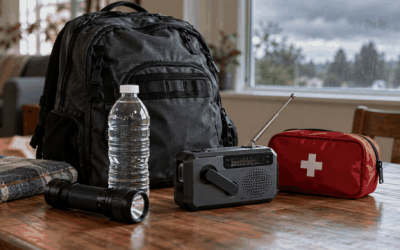
- Fix the house worries that feed anxiety: test flashlights monthly, keep one power bank fully charged, store 1 gallon of water per person, keep shoes and car keys by the safe room during watches, and install a battery-powered NOAA weather radio, which usually costs in the general range of 30 to 60 dollars.
- Limit alert overload. Keep wireless emergency alerts on, but mute extra weather apps and local group chats during storms. One trusted source prevents conflicting warnings.
- Track patterns. Write down storm date, what helped, and anxiety level from 1 to 10. Many people find their fear peaks for 10-20 minutes then falls by half, which proves to the brain that panic is temporary.
When storm fear needs extra help
Occasional nervousness is normal. Consider talking to a primary care doctor or mental health professional if thunderstorms cause panic attacks, vomiting, inability to sleep alone, missing work or school, or obsessive radar checking for hours every day in storm season. These can be signs of specific phobia, often called astraphobia, or generalized anxiety that responds well to cognitive behavioral therapy.
Seek immediate support from a trusted crisis line in your country if anxiety feels unmanageable or you feel unsafe with your thoughts during a storm. You do not need to wait until storm season ends to ask for help.
Quick answers to common storm anxiety questions
How can I calm down during a storm fast?
Move inside away from windows, dampen sudden noise with headphones or earplugs, breathe out longer than you breathe in for 6 rounds, and do a hands-on task for 10 minutes. Fast calm comes from shelter plus steady sensory input, not from convincing yourself to feel no fear.
Why am I still scared even when I know I am safe?
Because the amygdala reacts to loud, sudden sounds faster than logic. Knowledge alone does not stop adrenaline. Pair facts like lightning distance with body calming like slow breathing, warmth, and pressure from a blanket.
Is it safe to sleep during a thunderstorm?
Yes, if you are in a sturdy building, not in a tent, vehicle, or mobile home under a tornado warning, and not in a flood-prone basement. Use a weather radio with an alarm for warnings so you can sleep without checking your phone.