Key takeaways
- 0 to 5 minutes: Secure your safe space. Go to an interior room on the lowest floor, away from windows. Unplug sensitive electronics, close curtains or blinds to block flashes, bring water, phone charger, flashlight, and pets inside. Reasoning: removing decisions and visual triggers tells your brain you have taken control.
- 5 to 8 minutes: Cut noise and light spikes. Turn on a fan, white noise machine, or calm TV show at moderate volume. Wear foam earplugs or over-ear noise-reducing headphones if thunder startles you. Do not sit with ears pressed to a window or porch door. Reasoning: steady background sound prevents the startle reflex from firing at full strength.
- 8 to 13 minutes: Do physiological reset breathing. Try box breathing: inhale through nose 4 seconds, hold 4 seconds, exhale slowly 6 seconds, hold 2 seconds. Repeat for 5 cycles, about 2 to 3 minutes total. Place feet flat on floor and name 5 things you see, 4 you can touch, 3 you hear besides thunder, 2 you smell, 1 you taste. Reasoning: longer exhales lower heart rate, and grounding pulls attention away from catastrophic thoughts.
- 13 to 20 minutes: Get facts once, then limit checks. Check one forecast for: storm direction, estimated end time, and warnings for your county. Say it out loud: The storm is moving northeast at 30 mph and should end by 8:40 p.m. I am inside and safe. Set a 20-minute timer before checking again. Reasoning: a definite end time stops the feeling that it will last forever.
- During the loudest 15 to 30 minutes: Occupy hands and body. Do a low-focus task: puzzle, card game, coloring, folding laundry, making tea, stretching, playing with a pet. Avoid caffeine, alcohol, and doomscrolling storm videos. If you are scared of being on your own in a storm, call or text one person or join a live weather broadcast for company. Reasoning: your hands cannot shake as much when they are busy, and social contact lowers cortisol.
- After the storm: Discharge tension. Shake out shoulders, take a short walk inside, drink water, splash cool water on face. Open curtains again and look at clearing sky. Reasoning: completing the stress cycle prevents anxiety from lingering for hours.
- Within 24 hours: Rewrite the memory. Write 3 lines: what you did well, what helped most, what to prepare next time. Replace I barely survived with I felt scared but I stayed inside, breathed, and waited it out. Reasoning: this weakens the panic memory that fuels the next episode of how to not be scared of thunderstorms.
Thunderstorm anxiety is a normal nervous system response to loud noise, flashing light, and loss of control, and you can calm it during a storm by securing your space, lowering sensory input, and using a timed breathing and grounding routine.
- Why Is Fear So Powerful During Storms?
- Should I Be Scared of Thunderstorms?
- How to Stay Calm During a Thunderstorm: 7-Step Plan
- What Actually Lowers Storm Anxiety Fast?
- Alone vs. With Family: Choose the Right Strategy
- How to Help Kids Who Are Scared of Thunderstorms
- Build a Storm Anxiety Kit Before Storm Season
- When to Get Help and What to Do in a Severe Warning
- FAQ
You do not need to eliminate the fear to stay safe. You need a plan that keeps your body calmer while the storm passes. This guide explains why storms feel so frightening, whether you should be scared, and exactly how to stay calm during a thunderstorm whether you are alone or with family.
Why Is Fear So Powerful During Storms?
Thunderstorms hit several fear triggers at once: sudden loud sounds, bright flashes with no warning, darkness, power outages, shaking windows, and alert notifications. Your amygdala treats a close thunderclap like a threat and releases adrenaline before your logical brain can assess the real risk.
That is why storm anxiety can feel physical. Common symptoms include racing heart, shallow breathing, nausea, sweating, shaking, urge to hide, checking radar repeatedly, trouble swallowing, or feeling frozen. Children may cry, cling, cover ears, or ask the same safety questions repeatedly. Adults living alone often report the worst spike in the 5 to 10 seconds between lightning and thunder because the brain is waiting for the boom.
Past experience makes thunderstorm anxiety stronger. If you lived through a tornado warning, house damage, flooding, a power outage at night, or being caught outside in lightning, your brain links the next rumble to that memory. Lack of sleep, caffeine, news alerts, and being on your own in a storm also lower your threshold for panic.
Should I Be Scared of Thunderstorms?
A healthy respect is useful, blind panic is not. In the United States, lightning kills about 20 people per year and injures hundreds more, while severe thunderstorms can also bring damaging winds, hail, flash flooding, and tornadoes. The risk is real but highly manageable if you are indoors and away from water, open fields, and wired electronics.
Use this simple rule: if you can hear thunder, you are close enough to be struck by lightning and you should be inside. You do not need to be scared for hours after the storm has moved more than 10 miles away. Most fear comes from uncertainty, not the current radar picture. Checking one reliable source like the National Weather Service or a NOAA Weather Radio, then putting the phone down, reduces anxiety more than watching lightning maps refresh every minute.
Seek extra support if storm anxiety disrupts your life: you avoid sleeping alone for weeks in storm season, you panic during distant rain, you cannot work when clouds build, or you rely on alcohol or sedatives to get through every storm. That level of astraphobia responds well to cognitive behavioral therapy and exposure work with a licensed counselor.
How to Stay Calm During a Thunderstorm: 7-Step Plan
This is a practical routine for how to calm down during a storm. It works alone, and you can adapt it for kids. Start it as soon as you hear a forecast, not when you are already panicking.
Step-by-step calm-down checklist with timings
- 0 to 5 minutes: Secure your safe space. Go to an interior room on the lowest floor, away from windows. Unplug sensitive electronics, close curtains or blinds to block flashes, bring water, phone charger, flashlight, and pets inside. Reasoning: removing decisions and visual triggers tells your brain you have taken control.
- 5 to 8 minutes: Cut noise and light spikes. Turn on a fan, white noise machine, or calm TV show at moderate volume. Wear foam earplugs or over-ear noise-reducing headphones if thunder startles you. Do not sit with ears pressed to a window or porch door. Reasoning: steady background sound prevents the startle reflex from firing at full strength.
- 8 to 13 minutes: Do physiological reset breathing. Try box breathing: inhale through nose 4 seconds, hold 4 seconds, exhale slowly 6 seconds, hold 2 seconds. Repeat for 5 cycles, about 2 to 3 minutes total. Place feet flat on floor and name 5 things you see, 4 you can touch, 3 you hear besides thunder, 2 you smell, 1 you taste. Reasoning: longer exhales lower heart rate, and grounding pulls attention away from catastrophic thoughts.
- 13 to 20 minutes: Get facts once, then limit checks. Check one forecast for: storm direction, estimated end time, and warnings for your county. Say it out loud: The storm is moving northeast at 30 mph and should end by 8:40 p.m. I am inside and safe. Set a 20-minute timer before checking again. Reasoning: a definite end time stops the feeling that it will last forever.
- During the loudest 15 to 30 minutes: Occupy hands and body. Do a low-focus task: puzzle, card game, coloring, folding laundry, making tea, stretching, playing with a pet. Avoid caffeine, alcohol, and doomscrolling storm videos. If you are scared of being on your own in a storm, call or text one person or join a live weather broadcast for company. Reasoning: your hands cannot shake as much when they are busy, and social contact lowers cortisol.
- After the storm: Discharge tension. Shake out shoulders, take a short walk inside, drink water, splash cool water on face. Open curtains again and look at clearing sky. Reasoning: completing the stress cycle prevents anxiety from lingering for hours.
- Within 24 hours: Rewrite the memory. Write 3 lines: what you did well, what helped most, what to prepare next time. Replace I barely survived with I felt scared but I stayed inside, breathed, and waited it out. Reasoning: this weakens the panic memory that fuels the next episode of how to not be scared of thunderstorms.
What Actually Lowers Storm Anxiety Fast?
Not all coping tools work equally. Loudness is the main driver of panic, followed by unpredictability and feeling alone.
| Technique | How to do it | Time to effect | Best for |
|---|---|---|---|
| Box breathing with long exhale | 4 sec in, 4 sec hold, 6 sec out, 5 cycles | 2 to 5 minutes | Racing heart, hyperventilating |
| Steady background sound | Fan or white noise at 50 to 60 decibels, plus closed door | 1 to 3 minutes | Startle response to thunderclaps over 90 to 110 decibels |
| Single reliable forecast check | Check NWS once, note end time, 20-minute recheck limit | 3 to 5 minutes | Repeated radar checking, what-if thoughts |
| Cold reset | Cool washcloth on face and neck for 30 to 60 seconds | 1 to 2 minutes | Hot, flushed, dizzy panic surge |
| Call a buddy or family huddle | Stay on phone or in same room, talk through thunder gaps | 5 to 10 minutes | Being alone, nighttime storms |
| Muscle release | Tense shoulders 5 seconds, release; repeat 5 times | 3 to 4 minutes | Shaking, jaw clenching, stomach knots |
If thunder is extremely close, with less than 5 seconds between flash and bang, do not try to breathe through it on a porch to prove bravery. Move inside, add ear protection, and wait 30 minutes after the last thunder before going out. For lightning distance, divide seconds between lightning and thunder by 5 to get approximate miles. For example, 10 seconds equals about 2 miles, 20 seconds equals about 4 miles.
Alone vs. With Family: Choose the Right Strategy
Storm anxiety feels different when you are responsible for children or when no one else is home. Match your plan to your situation.
| Your situation | Biggest challenge | Do this | Avoid this |
|---|---|---|---|
| Alone at home, I am scared of being on my own in a storm | Silence makes every boom louder, no reassurance | Move to smallest interior room, turn on lights and steady sound, call friend or listen to local broadcast | Sitting in dark watching live lightning strike videos |
| Alone with young kids | Kids mirror your panic | Narrate calmly: That was thunder. We are safe inside. Let’s count to the next rumble together. Build a blanket fort away from windows | Saying there is nothing to be scared of while pacing or shouting |
| With teens | They hide fear and overuse radar | Give them a job: timekeeper for flash-to-bang counts, charger manager, pet comforter | Letting everyone track different apps with conflicting warnings |
| Night storm, trouble sleeping | Darkness plus sudden waking | Sleep in interior room, earplugs plus fan, phone on Do Not Disturb except Wireless Emergency Alerts | Sleeping near tall windows or with weather radio at full volume by pillow |
| Driving or caught outside | No shelter, rising panic | Pull into parking lot away from trees, stay in car with windows up, wait 30 minutes after last thunder | Standing under tree, touching metal fence, or trying to outrun the cell |
How to Help Kids Who Are Scared of Thunderstorms
Children need explanation plus routine, not just reassurance. Teach them in daylight, not mid-storm, that thunder is the sound of lightning heating air and cannot hurt them through house walls when they are away from windows and plumbing.
- Create a Storm Calm Box: flashlight, coloring book, headphones, stuffed animal, water bottle, and a card with your 4-step routine.
- Practice the thunder game: when you hear thunder, everyone takes one slow breath and counts 1-2-3-4 together, then continues playing. This builds the association that thunder equals pause and breathe, not run and scream.
- Let them ask the same question three times, answer the same way each time: Yes, our house is a safe place. Lightning goes to tall outside things first, and we are inside away from that. After three times, redirect to an activity.
- Avoid whispering or looking frightened between booms. Speak in a normal, slightly low voice. If you use medication for anxiety yourself, take it only as prescribed and do not frame it to kids as storm medicine they will need too.
Build a Storm Anxiety Kit Before Storm Season
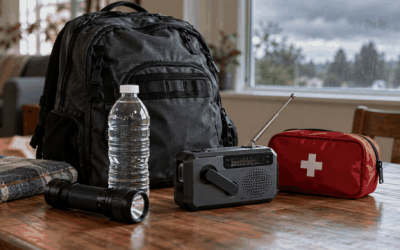
Preparation prevents panic because you do not have to search in the dark. Keep these in one tote in your safe room:
- LED flashlight plus extra batteries, portable phone battery bank charged to 80 percent or higher
- NOAA Weather Radio with battery backup, set to your county SAME code with volume at conversational level
- Foam earplugs rated 22 to 33 NRR or over-ear noise-reducing earmuffs for kids and sensitive sleepers
- Water, simple snack, any nightly medication, leash and carrier for pets
- Printed list: emergency contacts, address of lowest interior room, 30-minute lightning rule, when to go to basement or storm shelter for tornado warning
To stop storm anxiety from growing year after year, practice gradual exposure in calm weather. Watch faint storm sounds at low volume for 5 minutes while doing box breathing, then turn it off. Next week try 10 minutes. Do not start with intense close-strike videos. Pair training with facts: modern houses with wiring and plumbing channel lightning around you if you stay off corded phones, away from showers and sinks during the peak, and unplugged from unnecessary electronics.
When to Get Help and What to Do in a Severe Warning
Normal thunderstorm anxiety peaks and fades with the storm. Get professional help if fear lasts days after clear skies, you have panic attacks, chest pain, fainting, or you cannot stay home alone from April through August. A primary care doctor or therapist can screen for specific phobia, panic disorder, or PTSD.
If a Severe Thunderstorm Warning or Tornado Warning is issued for your location, switch from calming to sheltering: go to basement or lowest interior room without windows, cover head with mattress or helmets, wear sturdy shoes, bring pets in carriers. Do not stand at windows filming. Wait for official all-clear, not just quieter rain.
FAQ
How to not be scared of thunderstorms at night alone?
Move to an interior room with lights on, add steady fan noise and earplugs to blunt 90-decibel-plus thunderclaps, and keep one human connection open by phone or live radio. Knowing the estimated end time and repeating I am inside, the storm will pass by a set time, shortens the panic window.
Why do I feel sick or shaky during storms?
Adrenaline diverts blood to muscles and speeds breathing, which causes shaking, nausea, and lightheadedness. Slow exhales, sipping water, cool air on the face, and unclenching jaw and shoulders for 3 to 5 minutes usually settle it. If you have chest pain, fainting, or vomiting, seek medical care.
Does storm anxiety ever go away?
Yes, for most people it lessens with a repeatable plan, limited alert checking, and daylight practice. Fear returns when you avoid all storms or reinforce panic by escaping every rumble. Consistent calm reps teach your brain that thunder is loud but survivable.