Key takeaways
- Compare rechargeable C batteries for flashlights on chemistry, voltage and charging method, with capacity figures taken from each Amazon listing.
Rechargeable C batteries for a flashlight force one decision that disposable cells never ask about: voltage and chemistry. A traditional flashlight was designed around disposable C cells, and swapping in rechargeables changes what the light receives. Nickel-metal hydride cells deliver a lower nominal voltage than disposables but recharge in an ordinary bay charger, while newer lithium C cells hold a steady disposable-like voltage and recharge through a cable plugged into the cell itself. Pick the wrong family and you can end up with a dimmer light, a charger that does not fit, or cells that arrive with no way to refill them at all.


This guide is for owners of C-cell flashlights, lanterns and radios who are tired of buying disposables, storm-kit builders who want cells that can wait in a drawer and still work, and anyone comparing the two chemistries honestly. Every product below is the same type: a rechargeable C-size battery suitable for a flashlight. Each pick was chosen from the name and specifications on its Amazon product page, so the capacity, voltage and charging figures quoted here come from those listings, including the important detail of whether a charger or cable is part of the package.
Quick Picks
As an Amazon Associate we earn from qualifying purchases.
| Product | Best for | Key spec from title |
|---|---|---|
| YUEBVIWIE Rechargeable C Batteries 4 Pack | Flashlight owners who want steady 1.5V output and cable charging | 5000mWh, 1.5V lithium, USB-C 4-in-1 charging cable |
| EBL Rechargeable C Batteries 5000mAh | Owners with a bay charger who want the classic NiMH route | 5000mAh Ni-MH C size, pack of 8 |
The contrast in that table is the whole story of this category. One route keeps the voltage your flashlight was designed for and moves the charging into the cell; the other keeps the charging in a separate bay unit and accepts the lower voltage that nickel-metal hydride chemistry provides. Neither is automatically right. Your flashlight, your existing charger and how long the cells sit between uses decide it, and the sections below walk through each of those checks in order.
How to Choose
Understand the Voltage Difference Before Anything Else
Disposable C cells are 1.5 volt cells, and a flashlight’s brightness and driver behavior were designed around that figure. Nickel-metal hydride rechargeables are nominally 1.2 volt cells, so a light running on them can be slightly less bright, and a light with a low-voltage warning or a finicky driver may behave differently than it does on disposables. Lithium rechargeable C cells in this category are listed at 1.5 volts, matching the disposable figure and holding it steadier across the discharge. Check your flashlight’s manual or markings for any voltage guidance, then match the cell family to it instead of discovering the difference during a power outage.
Separate the Two Charging Systems Completely
These two products recharge in incompatible ways, and mixing them up wastes money. The lithium cells here charge through a USB-C cable that connects to the cells, with a 4-in-1 cable included in the listing, so no bay charger is needed. The NiMH cells need a bay charger that accepts C-size nickel-metal hydride cells, the kind of charger sold for AA, AAA, C and D rechargeables, and that charger is a separate purchase if you do not own one. Never put lithium cells in a NiMH bay charger or NiMH cells on a charging setup meant for lithium. Decide which ecosystem you are joining, because the cells you buy next year should match it.
Read Capacity Figures in Their Own Units
Listings in this category quote capacity in two different units, and comparing them directly misleads. The NiMH pack here is rated in milliamp hours, 5000mAh at its lower voltage. The lithium pack is rated in milliwatt hours, 5000mWh at 1.5 volts, which is an energy figure rather than a charge figure. A bigger-looking number in one unit is not automatically more energy than a smaller number in the other. The practical translation for a flashlight owner is simpler: both packs are positioned as full-size C replacements for high-drain lights, so judge them on voltage behavior, charging method and cycle claims rather than on a headline number in mismatched units.
Count Cells Against Your Lights and Your Rotation
A rechargeable system works best with a rotation: one set in the flashlight, one set charged and waiting. Count the C cells each of your lights and lanterns takes, add the waiting set, and let that total choose your pack size. The 4 pack here suits a single two-cell or four-cell light with no rotation, or a two-cell light with a spare pair only if the counts line up. The 8 pack covers a four-cell lantern plus a full spare set, or several smaller lights at once. Also weigh the cycle figures in the listings, since a household that recharges monthly and a storm kit that recharges yearly ask different things of the same cell.
The 2 Best Options
YUEBVIWIE Rechargeable C Batteries 4 Pack
This is the modern route into rechargeable C cells. The listing describes a 4 pack of lithium C cells rated at 5000mWh and 1.5 volts, named LR14 in the title, with a USB-C 4-in-1 charging cable included and a stated cycle life of 1500 plus cycles, aimed at flashlights, toys and radios. The 1.5 volt output is the headline for a flashlight owner, because it matches the disposable cells the light was designed around, and cable charging removes the need to own or store a bay charger. For a household whose only C-cell devices are a flashlight and a radio, this is the simpler system to adopt and to explain to everyone else in the house.
Specs
- Brand: YUEBVIWIE
- Pack quantity: 4 pack per listing title
- Battery size: C cell, LR14 per listing title
- Chemistry: Lithium per listing title
- Capacity: 5000mWh per listing title
- Voltage: 1.5V per listing title
- Charging: USB-C 4-in-1 charging cable included per listing title
- Cycle life: 1500 plus cycles per listing title
- Stated uses: Flashlights, toys and radios per listing title
Best for: Flashlight owners who want disposable-matching 1.5V output without buying a bay charger.
Watch out for: These cells charge by cable only; do not place them in a NiMH bay charger, and keep the included cable with the cells so the set stays usable.
ASIN: B0F2T5MFJG
EBL Rechargeable C Batteries 5000mAh
EBL’s pack is the established nickel-metal hydride route. The listing describes C-size Ni-MH rechargeable batteries rated at 5000mAh, sold here as a pack of 8, from a brand whose range centers on rechargeable cells and the bay chargers that serve them. NiMH cells are the forgiving, widely supported option: they work in any C-cell flashlight that accepts rechargeables, they charge in the same bay charger as your AA and AAA rechargeables, and low self-discharge versions hold their charge in a drawer far better than older generations did. The trade is the 1.2 volt nominal output described in the How to Choose section, which most simple flashlights tolerate well and some regulated lights notice.
Specs
- Brand: EBL
- Pack quantity: Pack of 8 per listing title
- Battery size: C size per listing title
- Chemistry: Ni-MH per listing title
- Capacity: 5000mAh per listing title
- Charging: Requires a compatible NiMH bay charger for C cells, sold separately
- Stated format: Ready2Charge line per related listing data
Best for: Households already running NiMH AA and AAA cells who want C cells in the same system.
Watch out for: Budget for a C-capable NiMH charger if you do not own one, and expect the 1.2V nominal output rather than the 1.5V of disposable cells.
ASIN: B00FHVR8KC
The honest summary is that these two packs serve two different households. The lithium pack modernizes one or two lights with the least extra equipment and the closest match to disposable behavior. The NiMH pack plugs a flashlight into a wider rechargeable household system, where one charger serves every battery drawer in the house. Choosing between them is really choosing which of those households is yours, and either answer is defensible when it is made on purpose rather than by accident.
Which One Fits Your Situation
Your Flashlight Is Your Only C-Cell Device
Choose the YUEBVIWIE 4 pack. With one light to feed, a bay charger is equipment bought for a single job, while the included USB-C cable charges the cells from the same adapters already charging your phones. The 1.5 volt output also keeps the light behaving the way it did on disposables, which matters when the light is a trusted emergency tool whose performance you already know by heart and do not want to relearn in the dark.
Your House Already Runs on Rechargeable AA and AAA Cells
Choose the EBL 8 pack. Your bay charger, if it accepts C cells, becomes the single charging station for everything, and the larger pack covers a lantern and a flashlight with a rotation set left over. One system means one routine: cells come out of a device, go into the charger, and return to the charged drawer. That simplicity is worth more across a whole household than a voltage advantage in a single light.
The Cells Will Sit in a Storm Kit for Months
Either family can work, so decide by your checking routine. NiMH cells in a low self-discharge line are built to wait, and a seasonal top-up on the bay charger is a familiar ritual. The lithium cells hold their 1.5 volt output and recharge by cable, which suits a kit stored away from the main charger. Whichever you choose, write the charge date on the kit and recheck the cells when you recheck the rest of the kit each season.
Your Flashlight Seems Dim or Fussy on Rechargeables
That symptom points at voltage, so move to the YUEBVIWIE lithium cells and their listed 1.5 volt output. Some lights, especially regulated LED models, respond noticeably to the difference between 1.2 volt and 1.5 volt cells. Before blaming any battery, confirm the light is rated for rechargeable C cells at all and that the contacts are clean, then test with the voltage its designer expected. If the light still misbehaves on both families, the light itself is the problem to solve.
Common Mistakes
- Putting lithium rechargeable cells into a NiMH bay charger, or the reverse, instead of using each family’s own charging method.
- Comparing a capacity figure in milliamp hours directly against one in milliwatt hours and treating the larger number as the larger battery.
- Buying cells without counting how many your lights take, leaving no charged rotation set when the first set runs down.
- Assuming every flashlight behaves identically on 1.2 volt cells and being surprised by a dimmer or fussier light.
- Storing rechargeable cells fully drained for a season, then blaming the chemistry when they need attention before use.
Chargers, Adapters and More C Cells to Consider
Once you have C cells, the charger decides how long they last. These options round out a storm kit.
Tenergy Centura 8-Pack Rechargeable C Batteries
Low self-discharge NiMH cells that stay ready in a storage kit, in a larger pack for multiple lights.

EBL Universal Smart Battery Charger
A multi-bay charger that handles C, D, AA and AAA NiMH cells, so one unit can cover your household.

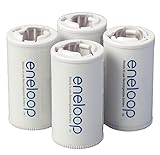
Eneloop C Size Battery Adapters (4 Pack)
Spacers that let AA NiMH cells fit C-size devices. Useful if you already have AA cells, though capacity is lower than true C cells.
BEVIGOR Rechargeable C Batteries
Another NiMH C option with low self-discharge and precharged cells.

Frequently Asked Questions
Can rechargeable C batteries really replace disposables in a flashlight?
Yes, with the voltage caveat covered in this guide. C-size rechargeables fit the same compartment and power the same lights. Nickel-metal hydride cells deliver a nominal 1.2 volts against the disposable 1.5 volts, which most simple lights tolerate with slightly reduced output, while the lithium cells listed here are rated at 1.5 volts for a closer match. Check your light’s documentation if it warns about rechargeables, then choose the family that matches its expectations.
Do I need a special charger for rechargeable C batteries?
For NiMH cells, you need a bay charger that accepts C-size nickel-metal hydride cells; many chargers sold for AA and AAA also list C and D slots, so check yours before buying another. For the lithium cells in this guide, no bay charger is used at all: the listing includes a USB-C 4-in-1 cable that charges the cells directly. The two systems do not interchange, so the charger question is answered by the chemistry you choose.
Why do the two listings quote capacity in different units?
Because the makers chose different measures. Milliamp hours describe charge at a given voltage, while milliwatt hours describe total energy. A 5000mAh figure at 1.2 volts and a 5000mWh figure at 1.5 volts are not the same quantity wearing two labels, and neither converts to the other by simply copying the number. For a flashlight buyer, the useful comparison is practical: voltage behavior in your light, how the cells charge, and the cycle life each listing states.
How should I store rechargeable C batteries for emergencies?
Keep them in the flashlight or in a labeled case in the same kit, partly or fully charged according to the maker’s guidance on the product page, and away from loose metal objects that could touch both terminals. Recheck and top them up on a seasonal rhythm alongside the rest of the kit. A rechargeable system rewards a routine: the households that get years from these cells are the ones that treat charging and checking as a calendar habit, not a crisis activity.
More from Amazon
Programs that pair well with the guide above. Offers and eligibility are set by Amazon and may change.
Free shipping on eligible items, Prime Video and more. Eligible new members can start with a free trial.
Start a Prime free trialAudiobooks and podcasts to listen to on the go. Eligible new members can start with a free trial.
Try Audible freeAd-free music streaming. Eligible new subscribers can start with a free trial.
Try Music Unlimited freeA free business account with business pricing and bulk-buying tools for work, shop or home office.
Create a business accountAs an Amazon Associate we earn from qualifying purchases.