Our Short List of 3

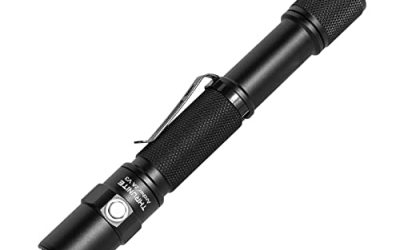
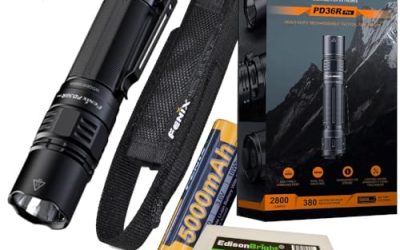
- Best for: Hunters who want a rechargeable mini illuminator for scanning while walking.
- Light source: Infrared LED, 850nm wavelength
- Power: 5 watts
- Focus: Adjustable focus lens, spot to flood
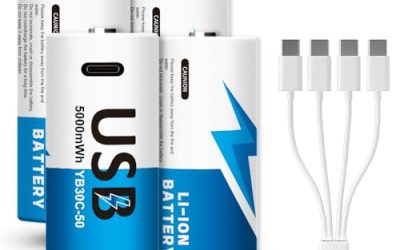
- Battery: 1 lithium-ion battery, included

- Best for: Hunters who want zoom control and a choice of rechargeable or AAA power.
- Model: A100-IR
- Light source: Infrared LED, invisible infrared light
- Wavelength: 850nm
- Mode: Single mode, on and off
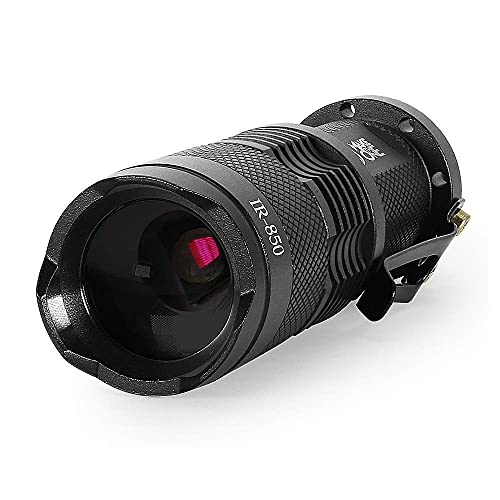
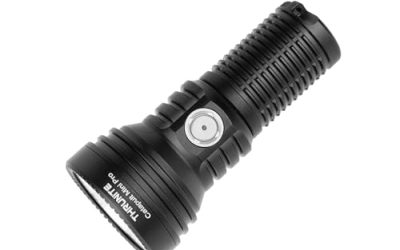
- Best for: A pocketable short-range backup illuminator that runs on a single AA cell.
- Model: IR 850_SML
- Light source: 850nm infrared LED assembly
- Wavelength: 850nm
- Lens: Zoomable magnifying lens with anti-reflective coating as described in the manual
All 4 Picks at a Glance
| Product | Specs | Action |
|---|---|---|
| DARKBEAM IR Flashlight Infrared 850nm Mini |
| Check price on Amazon |
| UltraFire A100-IR IR LED Torch 850nm |
| Check price on Amazon |
| Maketheone IR Torch 3 Watt 850nm |
| Check price on Amazon |
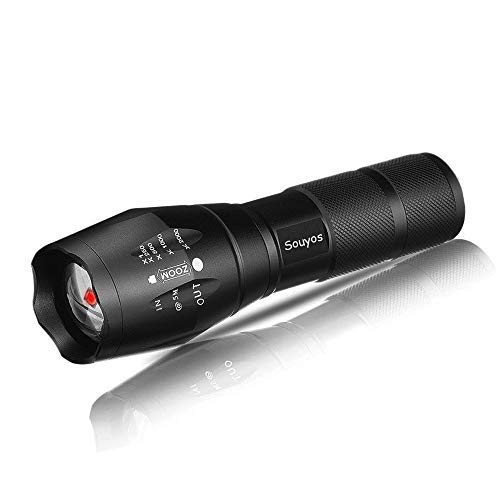 Souyos IR Illuminator LED 850nm Flashlight |
| Check price on Amazon |
Key takeaways
- Compare five 850nm IR flashlights for hunting with night vision, covering wavelength, focus, battery fit and mounting, to add range without white light.
An infrared flashlight solves a different problem from a normal hunting torch. Your night-vision scope, monocular or goggles can only show what infrared light reaches, so a weak built-in illuminator leaves distant feeders, field edges and fence lines dark even when the optic itself is capable. The real decision is matching wavelength, beam focus and battery format to the device you already own.
This guide is for hog, coyote and varmint hunters using digital or tube night vision, plus landowners who check livestock and boundaries after dark. Every pick below is a dedicated infrared model chosen from its Amazon listing name and stated specifications, not a white-light torch with a coloured filter added. It also covers the practical checks that matter before a first night out, from cell size and charging to switch position when you are wearing gloves.
Quick Picks
As an Amazon Associate we earn from qualifying purchases
| Product | Best for | Key spec from title |
|---|---|---|
| DARKBEAM IR Flashlight Infrared 850nm Mini | Rechargeable handheld scanning on foot | 850nm infrared LED |
| WAYLLSHINE 850nm IR Illuminator E6 | Simple single-mode scope support | 850nm infrared wavelength |
| UltraFire A100-IR IR LED Torch 850nm | Zoom beam with flexible battery choice | 850nm zoomable IR light |
| Maketheone IR Torch 3 Watt 850nm | Lightweight short-range backup light | 3 Watt 850nm infrared |
| Souyos IR Illuminator LED 850nm Flashlight | Focused illumination for varmint setups | 850nm IR illuminator LED |
How to Choose
Wavelength and Night-Vision Compatibility
Begin with the wavelength your optic can actually use, because an infrared beam is invisible to the unaided eye and only appears through a compatible device. Every model in this guide emits 850nm light, the common choice for digital scopes, night-vision monoculars and goggles that list 850nm sensitivity. Check your optic manual before ordering, especially if the device was supplied with a 940nm illuminator, since swapping wavelengths changes how bright the picture looks. Also remember that 850nm emitters can show a faint glow at the lens, so placement and beam direction matter when you want to stay discreet around wary animals.
Beam Focus and Useful Distance
A fixed wide beam lights a bait site or yard evenly but fades quickly with distance, while a zoom or adjustable-focus head concentrates the same output into a tighter spot for longer views. The DARKBEAM, UltraFire, Maketheone and Souyos models all describe adjustable or zoom focus, so you can widen the beam for close scanning and narrow it for a distant hedgerow. Judge distance claims against your optic rather than the torch alone, because sensor sensitivity, magnification and weather all change the picture. Fog, rain and dust reflect infrared back toward you, so a slightly wider, dimmer-looking beam often reads better than maximum spot in poor air.
Battery Format and Runtime Planning
Battery choice decides how easy a light is to keep running across a season. The DARKBEAM includes a rechargeable lithium-ion cell and USB charging, which suits regular use from home or a vehicle. The WAYLLSHINE E6 and UltraFire A100-IR accept a rechargeable cell or AAA cells with a holder, giving a fallback when charging is not possible, although the cells themselves are not included. The Maketheone runs on a single AA cell, the simplest option for a spare light in a pack. Whichever format you pick, carry a charged spare, confirm polarity before dark, and never mix cell types inside one light.
Mounting, Handling and Weather Sealing
Decide early whether the light will live on a scope mount, sit on a tripod, or stay in your hand, because that choice affects weight, switch access and how steady the beam stays. A compact mini torch is easier to carry while walking between stands, while a heavier zoom body can feel more secure clamped beside an optic. Look for an aluminium body, a tail switch you can operate with gloves, and stated water resistance if the light will face dew or rain. The UltraFire listing states IPX4, while others describe water resistance more generally, so treat unrated models as splash protection only and dry them after use.
The 5 Best Options
DARKBEAM IR Flashlight Infrared 850nm Mini
- Best for: Hunters who want a rechargeable mini illuminator for scanning while walking.
- Light source: Infrared LED, 850nm wavelength
- Power: 5 watts
- Focus: Adjustable focus lens, spot to flood
- Battery: 1 lithium-ion battery, included
Hunters who want a rechargeable mini illuminator for scanning while walking.
The listed three-hour runtime means a long night may need a mid-session recharge or a second light.
This compact DARKBEAM suits hunters who scan on foot and want one rechargeable light to pair with a handheld monocular or a scope between stands. Its listing describes a 5W infrared LED at 850nm with an adjustable-focus lens, so the beam can open up for a feeder at close range or tighten for a longer look across a field. The included lithium-ion battery and USB charging remove the need to stock loose cells, and the aluminium body keeps the package light enough for a jacket pocket or belt carry during repeated moves.
WAYLLSHINE 850nm IR Illuminator E6
The WAYLLSHINE E6 is the straightforward option in this group, with a single on and off mode instead of a menu of settings to manage in the dark. That simplicity fits a dedicated scope-side light that you switch on when a shot opportunity or a clear identification view is needed, then switch off again. Its listing states an 850nm high-power infrared LED in an aluminium alloy body, powered either by three AAA cells in the supplied holder or by one rechargeable cell of the stated size, which makes emergency power easy to find at short notice.
Specs
- Model: E6, model number E6-Infrared-1M-BK
- Light source: High-power infrared LED
- Wavelength: 850nm
- Mode: Single mode, on and off tail switch
- Battery: 3 AAA batteries with holder, or 1 rechargeable cell, not included
- Input voltage: 3.7V to 4.5V as listed
- Material: Aluminium alloy body
- Weight: 125g
- Water resistance: Water resistant as listed
Best for: A simple, always-ready illuminator for a night-vision scope or camera device.
Watch out for: Batteries are not included, so add the holder cells or a suitable rechargeable cell before your first outing.
ASIN: B07VVNTQ7P
UltraFire A100-IR IR LED Torch 850nm
- Best for: Hunters who want zoom control and a choice of rechargeable or AAA power.
- Model: A100-IR
- Light source: Infrared LED, invisible infrared light
- Wavelength: 850nm
- Mode: Single mode, on and off
Hunters who want zoom control and a choice of rechargeable or AAA power.
Confirm which battery you will use before buying a mount setup, since the torch ships without a battery.
The UltraFire A100-IR is built around a zoomable 850nm beam and a single-mode switch, a combination that suits hunters who move between close cover and more open ground in one session. Sliding the focus changes the beam from a wider wash for scanning a clearing to a tighter spot for picking out eyeshine or body shape farther away through the optic. Its listing gives an aluminium alloy body, IPX4 water resistance and two battery routes, one 18650 cell or three AAA cells, so the same torch can run on rechargeable power at home or disposable cells on a trip.
Maketheone IR Torch 3 Watt 850nm
- Best for: A pocketable short-range backup illuminator that runs on a single AA cell.
- Model: IR 850_SML
- Light source: 850nm infrared LED assembly
- Wavelength: 850nm
- Lens: Zoomable magnifying lens with anti-reflective coating as described in the manual
A pocketable short-range backup illuminator that runs on a single AA cell.
The listed 30-metre light path makes this a close-range choice, so pair it with a stronger light for open fields.
At just 68 grams and powered by one AA cell, the Maketheone is the easy spare to keep in a coat, truck or range bag for shorter-range work. Its manual and listing describe a 3 Watt 850nm assembly behind a zoomable magnifying lens, with a listed light path of 30 metres, which frames it honestly as a close-range helper for bait sites, yards and woodland edges rather than an open-field spotlight. The aircraft aluminium body with a hard-anodized finish and water-resistant, skid-proof design suits a light that will be handled often and stored between trips without ceremony.
Souyos IR Illuminator LED 850nm Flashlight
- Best for: Varmint and hog hunters adding focused infrared light to an existing night-vision setup.
- Light source: Infrared LED
- Wavelength: 850nm
- Focus: Adjustable focus
- Operation: Tail-button switch, on and off as listed
Varmint and hog hunters adding focused infrared light to an existing night-vision setup.
You will see almost nothing without a night-vision device switched on, so check the pairing before judging the beam outdoors.
The Souyos model is aimed squarely at the varmint and hog hunting use named in its listing, with an 850nm infrared LED and adjustable focus for use through a night-vision scope, monocular, goggles or camera. The listing stresses that this is not a regular white-light flashlight: to the unaided eye you see little more than a faint glow at the emitter, while the device picture gains the illumination. That makes it a sensible pick for a hunter who already owns night vision and simply needs a dedicated infrared source shaped for focused work rather than general camp lighting.
Which One Fits Your Situation
Scanning Fields on Foot Between Stands
Choose the DARKBEAM mini if most of your hunting involves walking, glassing and then moving again. The included rechargeable cell, USB charging and adjustable focus keep the kit small, and the body is easy to carry while you work a monocular. Begin the night fully charged and save full output for moments when distance or identification really demands it.
A Fixed Light Beside a Night-Vision Scope
Pick the WAYLLSHINE E6 or the Souyos when the light will stay paired with one optic all night. The E6 brings the simplest controls, a single on and off mode with flexible AAA or rechargeable power, while the Souyos offers adjustable-focus infrared for varmint setups. Align the beam with the optic field of view at home first, tighten every mount, and confirm the switch falls naturally under your thumb.
Mixed Cover, Feeders and Open Ground
Take the UltraFire A100-IR when one outing crosses several kinds of ground. Zoom out for a feeder, gate or woodland edge, then zoom in when the view opens across a field and your optic needs a tighter pool of infrared. The choice between an 18650 cell and AAA cells helps on longer trips, where you can begin on rechargeable power and fall back on widely available cells.
A Spare Light for the Truck or Pack
Keep the Maketheone as the backup you hope not to need. A single AA cell, a 68-gram body and a short listed light path make it ideal for checking a nearby bait site or finishing a close-range session if the main illuminator fails. Stored with a fresh cell beside it, it solves the most common night problem: having no working infrared light at all.
Common Mistakes
- Buying an infrared torch without owning night vision, then expecting a visible beam like a normal flashlight.
- Mixing 850nm and 940nm expectations without checking which wavelength the optic manufacturer specifies.
- Leaving the beam zoomed to a tight spot for close work, which creates a bright centre and dark edges through the optic.
- Arriving with the wrong cells, especially with models that ship without any battery included.
- Mounting the light before aligning it, so the beam points away from the centre of the scope picture.
Frequently Asked Questions
Can you see an 850nm infrared flashlight without night vision?
No, not as a usable beam. The listings for these models describe the light as invisible to the unaided eye, with at most a faint glow visible at the emitter itself. You need a night-vision scope, monocular, goggles or an infrared-sensitive camera to see the illuminated scene. If you need visible light for walking or camp tasks, carry a separate ordinary torch for that job.
Is 850nm or 940nm better for hunting?
It depends on the optic and how discreet you need to be, and every model in this guide is an 850nm unit. Many digital night-vision devices respond strongly to 850nm, which is why it is the common pairing. A 940nm light can show less glow at the emitter but may look dimmer through the same device. Follow the wavelength your optic manufacturer recommends rather than mixing parts at random.
How far will an IR flashlight reach at night?
Reach is a system result, not a torch-only number. The Maketheone listing states a 30-metre light path, while zoom models concentrate their beam for longer views, but sensor quality, magnification, humidity and airborne dust all change the picture. A clean lens, a correctly focused beam and a charged battery do more for real distance than chasing the largest headline figure on a listing page.
Can an IR flashlight damage a night-vision device?
Pointing any intense light source directly into a sensitive device at close range is poor practice, so handle an illuminator like a beam tool, not a toy. Use the lowest effective focus and output for the distance, avoid shining it into another hunter optic at arm length, and switch it off when you are handling gear face to face. Follow both the torch and optic manuals for any device-specific warnings.
More from Amazon
Programs that pair well with the guide above. Offers and eligibility are set by Amazon and may change.
Free shipping on eligible items, Prime Video and more. Eligible new members can start with a free trial.
Start a Prime free trialAudiobooks and podcasts to listen to on the go. Eligible new members can start with a free trial.
Try Audible freeAd-free music streaming. Eligible new subscribers can start with a free trial.
Try Music Unlimited freeA free business account with business pricing and bulk-buying tools for work, shop or home office.
Create a business accountAs an Amazon Associate we earn from qualifying purchases.