Our Short List of 3

- Best for: Warehouses weighing palletised or crated freight at one permanent station
- Capacity: 1000 lb in 0.1 lb increments, per the listing title
- Platform: 24 x 24 inch steel deck with diamond tread plate
- Indicator: PEC-IN202 indicator with serial output
- Load cell cable: 15 ft

- Best for: Two-sided packing benches where loader and labeller stand opposite each other
- Capacity: 660 lb maximum
- Readability: 0.1 lb / 0.05 kg
- Display: LCD, digital, double-sided with 90 to 135 degree rotation
- Material: alloy steel and stainless steel
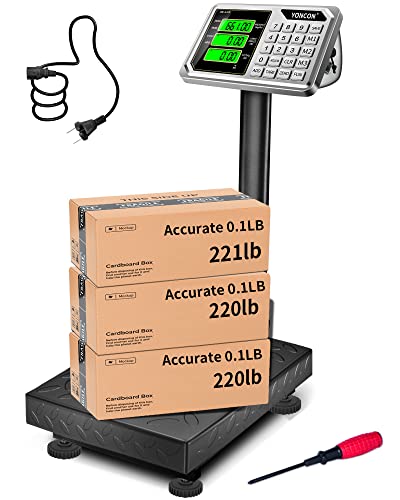
- Best for: Smaller operations that prepare freight occasionally and need the floor space back afterwards
- Capacity: 662 lb (300 kg) maximum, 0.4 lb minimum
- Accuracy: 0.1 lb increments
- Open dimensions: 32.3 x 19.7 x 15.8 inches
- Folded dimensions: 19.7 x 15.8 x 7 inches
All 5 Picks at a Glance
| Product | Specs | Action |
|---|---|---|
| PEC Tools FS Series Floor Scale 24×24 |
| Check price on Amazon |
| CXWAWSZ 660lb Industrial Floor Platform Scale |
| Check price on Amazon |
| Yoncon A6-300 Digital Industrial Platform Scale |
| Check price on Amazon |
 VEVOR Computing Digital Platform Scale TCS-300A5-B |
| Check price on Amazon |
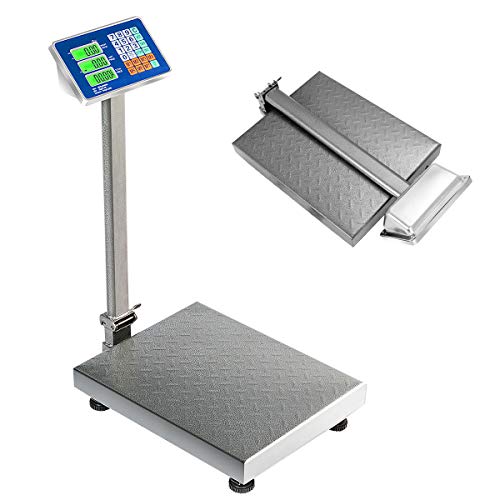 Giantex 660lbs Weight Computing Digital Scale |
| Check price on Amazon |
Key takeaways
- Compare five shipping platform scales for freight prep, from a 24-inch floor scale to foldable 660 lb platforms, by capacity, readability and display.
Freight preparation fails quietly at the weighing step. A carton that leaves the bench heavier than its paperwork says it is can trigger reweigh fees, a returned shipment, or an argument with a carrier that the shipper rarely wins. The real decision is therefore not raw capacity alone. It is whether the platform fits the largest boxes you actually handle, whether the display stays readable once a tall carton covers the deck, and whether the reading is fine enough to catch packing mistakes before a pallet is wrapped.
This guide is for small warehouses, e-commerce shippers moving into freight, and workshop dispatch benches that have outgrown a small postal scale. Every pick below is a platform or floor scale with a separate or raised indicator, chosen from the capacity, platform size, readability, and construction stated on its Amazon listing.
Quick Picks
As an Amazon Associate we earn from qualifying purchases
| Product | Best for | Key spec from title |
|---|---|---|
| PEC Tools FS Series Floor Scale 24×24 | Pallet and crate weighing at a fixed station | 1000 lb capacity in 0.1 lb steps |
| CXWAWSZ 660lb Industrial Floor Platform Scale | Reading weights from either side of the bench | 660 lb capacity, rotating double-sided display |
| Yoncon A6-300 Digital Industrial Platform Scale | A folding scale that stores between jobs | 661 lb capacity in 0.1 lb steps |
| VEVOR Computing Digital Platform Scale TCS-300A5-B | Everyday carton weighing on a raised column display | 660 lb load, 0.1 lb accuracy |
| Giantex 660lbs Weight Computing Digital Scale | Long standby use away from a fixed outlet | 660 lb capacity, 72 hours of continuous use |
How to Choose
Match platform size to your largest regular load
Capacity gets the attention, but deck size decides whether a scale is usable day after day. A freight carton rarely sits neatly in the middle of a small plate, and an overhanging load can lean against a wall, a bench leg, or the operator, quietly stealing weight from the reading. Measure the footprint of the biggest carton or crate you ship each week, then choose a deck that holds it fully with room to spare. A 24-inch square floor deck suits crates and stacked cartons, while decks around 16 by 20 inches fit single large boxes at a packing bench.
Separate headline capacity from working capacity
A scale that tops out at 660 lb sounds generous until the load itself includes a pallet, a crate, and protective packaging, all of which count against that limit. Add up the heaviest complete shipment you prepare, including everything that will sit on the deck, and keep a sensible margin below the stated maximum rather than planning to weigh right at the ceiling. Operations that occasionally cross that line should step up to a 1,000 lb floor scale instead of overloading a smaller platform and risking sensor damage or drifting readings.
Check readability against your lightest freight
Readability works in the opposite direction from capacity. Many heavy platform scales read in 0.1 lb steps, which is plenty for catching a missing component in a 200 lb crate but too coarse for spotting a small part missing from a light carton. Think about the smallest packing error you need the scale to catch, then confirm the increment is smaller than that error. If your freight work mixes heavy crates with lighter boxed goods, one platform may not serve both ends well, and a second, finer bench scale can be the honest answer.
Decide how the display will be read and powered
Once a tall carton sits on the deck, a display built into the base disappears behind it. Raised column indicators, rotating double-sided screens, and remote indicators on a long cable each solve that problem differently, and the right choice depends on whether staff load from one side or both. Power matters just as much in a working warehouse. Rechargeable batteries free the scale from a fixed outlet and suit seasonal or overflow areas, while mains power with battery backup keeps a permanent packing station running through a full shift without charging discipline.
The 5 Best Options
PEC Tools FS Series Floor Scale 24×24
- Best for: Warehouses weighing palletised or crated freight at one permanent station
- Capacity: 1000 lb in 0.1 lb increments, per the listing title
- Platform: 24 x 24 inch steel deck with diamond tread plate
- Indicator: PEC-IN202 indicator with serial output
- Load cell cable: 15 ft
Warehouses weighing palletised or crated freight at one permanent station
The 24-inch deck and steel frame make this a place-it-once scale, not one to carry between rooms
This is the fixed-station option in the group, built around a steel channel frame and a diamond tread deck sized for crates rather than parcels. Its indicator connects through a long load cell cable, so the readout can sit on a bench or wall where staff actually stand, instead of at floor level beside a pallet. For a dispatch area that weighs the same kind of heavy shipment every day and rarely needs to move the scale, that permanence is the point: set it up once, level it on its adjustable feet, and leave it ready.
CXWAWSZ 660lb Industrial Floor Platform Scale
- Best for: Two-sided packing benches where loader and labeller stand opposite each other
- Capacity: 660 lb maximum
- Readability: 0.1 lb / 0.05 kg
- Display: LCD, digital, double-sided with 90 to 135 degree rotation
- Material: alloy steel and stainless steel
Two-sided packing benches where loader and labeller stand opposite each other
Confirm the rotating display clears your tallest cartons before fixing the bench layout around it
The distinguishing feature here is the double-sided display, which rotates through a wide angle so a reading can be taken from either side of the platform. That suits benches where one person loads and another labels, or where the scale sits between two work areas. The foldable alloy steel and stainless steel build keeps the footprint manageable, and the included lithium-ion battery means the unit is not tied to wherever the nearest outlet happens to be. At 22 pounds, it is heavy enough to stay planted under a load yet still movable by one person.
Yoncon A6-300 Digital Industrial Platform Scale
- Best for: Smaller operations that prepare freight occasionally and need the floor space back afterwards
- Capacity: 662 lb (300 kg) maximum, 0.4 lb minimum
- Accuracy: 0.1 lb increments
- Open dimensions: 32.3 x 19.7 x 15.8 inches
- Folded dimensions: 19.7 x 15.8 x 7 inches
Smaller operations that prepare freight occasionally and need the floor space back afterwards
Folding scales need their feet re-levelled after each setup, so build that check into the routine
Yoncon builds this model around a 90-degree folding design, which changes the ownership proposition: instead of dedicating floor space permanently, the scale folds down to a slim package and comes out when a freight job arrives. The carbon steel platform and four adjustable non-slip feet address the usual weakness of portable platforms, which is stability on uneven warehouse floors. Its open working height puts the display at a comfortable reading level for carton work, and the switchable kilogram and pound units help operations that receive supplier paperwork in one unit and ship in the other.
VEVOR Computing Digital Platform Scale TCS-300A5-B
- Best for: A single packing bench handling a wide mix of carton weights every day
- Capacity: 660 lb, weighing range 0.2 to 660 lb
- Accuracy: 0.1 lb / 50 g
- Platform size: 20 x 16 x 2 inches
- Display screen: 5.7 x 1.6 x 0.9 inches on a 23.6-inch column
A single packing bench handling a wide mix of carton weights every day
The column display is fixed to the scale, so plan bench access from the front rather than both sides
VEVOR’s entry is the straightforward bench platform of the group: a carbon steel deck of 20 by 16 inches with the display carried on a 23.6-inch column, high enough to read over most cartons without a separate remote unit. The weighing range starts low, at 0.2 lb, so the same station can check a small boxed component in the morning and a heavy outbound carton in the afternoon. Tare and unit switching between kilograms and pounds cover the everyday freight-prep tasks, and the package is simple: the scale, an adapter, and a manual, with nothing extra to assemble or maintain.
Giantex 660lbs Weight Computing Digital Scale
- Best for: Mobile weighing points, loading doors, and seasonal overflow packing areas
- Capacity: 660 lb / 300 kg maximum, 4.40 lb / 2 kg minimum
- Weighing unit increment: 100 g
- Open dimensions: 16 x 24 x 32 inches
- Folding dimensions: 16 x 30 x 7 inches
Mobile weighing points, loading doors, and seasonal overflow packing areas
The 100 g increment is coarser than the 0.1 lb steps of the other picks, so it suits heavier freight only
Giantex aims this scale at workplaces where the weighing point moves or the outlet situation is awkward. The maker states up to 72 hours of continuous use from a full charge, with battery, AC, and DC supply options, so the scale can live on a trolley, at a loading door, or in a temporary packing area during peak season. The stainless iron top is easy to wipe down after dusty freight work, and the whole unit folds from its working size to a flatter stored size. At 19.5 pounds net, it is the lightest full-capacity option here.
Which One Fits Your Situation
You weigh palletised freight at the same spot every day
Choose the PEC Tools FS Series. A fixed floor scale earns its space when the workflow comes to it: the 24-inch square deck takes crates and stacked cartons that would overhang a bench platform, the 1,000 lb ceiling leaves room for the pallet itself, and the cabled indicator can be mounted where the person preparing paperwork actually stands. Portability would add nothing here except setup time.
Your packing bench is staffed from both sides
The CXWAWSZ platform fits this layout best. Its rotating double-sided display means the person loading a carton and the person printing paperwork can both read the same weight without walking around the bench or lifting the load off to check. The battery power also helps on island benches with no convenient outlet, and the foldable frame clears away if the bench is needed for other work.
Freight is occasional and floor space is scarce
Pick the Yoncon A6-300. Folding to seven inches thick, it stores against a wall or under a bench and deploys only when a freight shipment is being prepared. The capacity still covers serious carton and crate work, and the adjustable feet compensate for the uneven floors that portable scales usually suffer on. Just re-level it each time it comes out.
One bench handles everything from small boxes to heavy cartons
The VEVOR TCS-300A5-B covers the widest daily range at a single station. Its range begins at 0.2 lb, far lower than the minimum loads of the heavier folding models, while still reaching 660 lb for outbound freight. The raised column display stays visible over typical cartons, which makes it a sensible default for a growing shipper who is buying a first real platform scale.
Common Mistakes
- Buying on capacity alone and ignoring deck size, so regular cartons overhang the platform and lean on nearby objects during weighing.
- Forgetting that the pallet, crate, and packaging count toward the scale’s maximum along with the goods themselves.
- Placing a platform scale on uneven or soft flooring and never adjusting the feet, which skews readings and strains the load cells.
- Choosing a coarse 100 g increment for work that includes light cartons, then being unable to verify small packing contents by weight.
- Leaving a battery-powered scale uncharged until dispatch day; build charging into the closing routine instead of the shipping routine.
Frequently Asked Questions
How much capacity do I need for freight preparation?
Work from your heaviest complete shipment, including pallet, crate, and packaging, then add headroom rather than buying exactly at that figure. A 660 lb platform covers most carton and small-crate work. Operations that weigh loaded pallets or machinery should step up to a 1,000 lb floor scale like the PEC Tools model above.
Can a platform scale replace a small postal scale?
Only partly. Platform scales with 0.1 lb increments cannot verify light parcels or catch a small missing item in a light box, and some models list minimum loads of several pounds. Many shippers keep an inexpensive fine-reading bench scale for small parcels and reserve the platform for freight, which is cheaper than forcing one scale to do both jobs badly.
Where should a freight scale sit in the warehouse?
Put it on hard, level flooring close to where packing finishes, with clear access for a pallet truck or trolley and enough surrounding space that loads never touch walls or benches while being weighed. Fixed floor scales belong beside the wrapping area; folding models should have a marked spot so they return to the same level surface each time.
How do I keep readings trustworthy over time?
Level the scale with its adjustable feet whenever it is moved, keep the deck clear of strapping offcuts and debris, and check it periodically against a known weight such as a sealed, previously verified carton. Avoid dropping loads onto the platform, since repeated impacts damage load cells long before the deck itself shows wear.
More from Amazon
Programs that pair well with the guide above. Offers and eligibility are set by Amazon and may change.
Free shipping on eligible items, Prime Video and more. Eligible new members can start with a free trial.
Start a Prime free trialAudiobooks and podcasts to listen to on the go. Eligible new members can start with a free trial.
Try Audible freeAd-free music streaming. Eligible new subscribers can start with a free trial.
Try Music Unlimited freeA free business account with business pricing and bulk-buying tools for work, shop or home office.
Create a business accountAs an Amazon Associate we earn from qualifying purchases.