Our Short List of 3

- Best for: Grandparents and parents sharing a dark house with a toddler, who need changes, snacks and spare clothes in one packed bag rather than hunted room to room.
- Brand: KeaBabies, as named in the listing
- Type: Diaper bag backpack, per the listing name
- Role in the set: The hall post — where the toddler’s kit hangs packed, ready to move rooms
- It is a bag only — it carries the kit, never the child
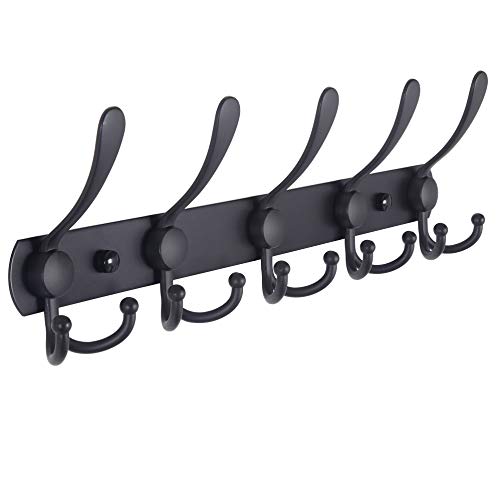
- Best for: A household cycling in and out through a storm, who need wet coats, hats and gloves on hooks by the door instead of steaming in a heap.
- Brand: Dseap, as named in the listing
- Type: Coat rack, wall mounted, per the listing name
- Stated form: 5 tri hooks, per the listing name — a fixed rail of hooks for coats and hats
- Role in the set: The mudroom post — where wet outerwear goes up by the door

- Best for: Households that pin sheeting, boards and tarps through a storm, who want the staple stock counted and shelved before the wind arrives, not hunted for during it.
- Brand: Arrow, as named in the listing
- Type: Staples, T25, per the listing name
- Role in the set: The fixing post — sheeting over the cracked pane, the notice board and the tarpaulin corners
- They are staples only — not a staple gun, a nail or a screw
All 5 Picks at a Glance
| Product | Specs | Action |
|---|---|---|
| KeaBabies Diaper Bag Backpack |
| Check price on Amazon |
| Dseap Coat Rack Wall Mounted 5 Tri Hooks |
| Check price on Amazon |
| Arrow T25 Staples |
| Check price on Amazon |
 LiBa Scalp Massager Shampoo Brush |
| Check price on Amazon |
 GUND Sesame Street Elmo Plush |
| Check price on Amazon |
Our Top Picks
- Arrow 259 T25 Staples for Installing Low Voltage9/16 Inch4.5 x 2.1 x 0.7 inches0.3 poundsCheck on Amazon
- GUND Sesame Street Elmo 13-Inch Muppet Plush ToyOne Size12.9 x 5.4 x 3.1 inches0.4 poundsCheck on Amazon
The squall came over the ridge at supper, rattled the gutters for an hour and left a split ash lying across the service line at the lane’s end. The utility’s recorded voice promises a crew tomorrow, then maybe the day after. In the farmhouse: a young couple, their daughter of twenty months, and her grandfather, down for the weekend with a suitcase packed for two nights of electricity.
Five posts carry the house through the wait. The hall, where the little one’s kit hangs packed and ready. The mudroom, where rain gear comes off between trips to the hens and the gate. The barn bench, where a box of staples waits for whatever the wind works loose. The bathroom shelf, where wash day is a basin and a kettle. And the hearth corner, where everyone lands by dark. Each post is graded as a buyer grades a parcel at the yard: on the lines its listing states, never on the word across the stack.
Quick Picks
As an Amazon Associate we earn from qualifying purchases
The boards by the barn were sold as copaiba-branco, and the word deserves the same caution as any yard name. Copaiba names Copaifera langsdorffii, a legume timber whose heartwood usually runs deeper reddish brown, streaked darker; branco, Portuguese for white, marks the pale end of the parcel at hand. One yard keeps the name for the species, the next lays it across close relatives, and the invoice cannot say which. The five posts below are held to the stricter standard: the stated lines on each listing.
| Product | Best for | Key spec from title |
|---|---|---|
| KeaBabies Diaper Bag Backpack | The hall post, the toddler’s kit packed in one bag on its hook | Diaper bag backpack, per the listing name |
| Dseap Coat Rack Wall Mounted 5 Tri Hooks | The mudroom post, rain gear and wet coats up off the floor | Wall mounted coat rack, 5 tri hooks, per the listing name |
| Arrow T25 Staples | The fixing post, pinning sheeting over the cracked pane and notices to the board | Staples, T25, per the listing name |
| LiBa Scalp Massager Shampoo Brush | The bathroom shelf post, the hand tool for basin washes | Scalp massager shampoo brush, per the listing name |
| GUND Sesame Street Elmo Plush | The hearth corner post, the toddler’s plush where the family gathers | Sesame Street Elmo plush, per the listing name |
None of the five posts is timber. Copaiba-branco lends the set its standard of proof: the grade of copaiba (Copaifera langsdorffii and relatives, Fabaceae) — heartwood pale pinkish brown to light reddish brown against the species’ deeper reddish brown with darker streaks; sapwood whitish to greyish and distinct; texture medium; grain straight to interlocked; moderately heavy and moderately hard; durability good, helped by its oily resin. Stated work: flooring, furniture, decking, joinery and turned work. A yard name shared across yards identifies nothing by itself, so each listing’s stated species and use decide the match rather than the name on the invoice.
How to Choose
A Yard Name Shared Across Yards Settles Nothing Alone
Copaiba points at Copaifera langsdorffii, and that sounds like the end of the matter. At the yard it is the start of one. One merchant reserves the word for the true species; another spreads it over close Copaifera relatives of similar weight and grain; a third reaches wider still. The buyer reading the headline cannot tell which parcel is stacked before him. Branco narrows the parcel to its pale end and answers nothing else. Beneath the grade word, the species line is the fixed point — which tree, stated on the listing. That line decides. The yard name does not.
Branco Picks the Pale End, Not a Different Timber
Branco is Portuguese for white, and on copaiba it picks the pale end of the parcel: heartwood pale pinkish brown to light reddish brown in a fresh-cut board, far from the deeper reddish brown, darker-streaked stock the species usually shows. The sapwood runs whitish to greyish and stands fairly distinct against the heartwood, so the pale grade reads paler where a board carries both. What the grade word never changes is the character beneath the colour. Pale copaiba is still copaiba — moderately heavy, moderately hard, medium in texture.
Character Lines, Not Colour, Fix the Timber’s Work
The stock’s stated character explains the work it is sold for. Copaiba is moderately heavy and moderately hard, medium in texture, its grain straight to interlocked, and its natural durability good — a steadiness the listing ties to the oily resin it carries. Flooring, furniture, decking, joinery and turned work follow from those lines: work that asks for a board of middling weight that takes a finish, holds an edge outdoors and serves daily. The stated uses are also a boundary. A parcel offered for work its character lines cannot support has been misread at the yard.
Grade Every Post on the Lines Its Listing States
Every post answers to one stated line, checked before the box is opened. The bag answers to its stated layout and dimensions against the kit it must swallow. The rack answers to its stated hook count and mounting lines against the mudroom wall. The staples answer to their stated size, leg length and pack count against the sheeting and the board. The brush answers to its stated form and bristle lines against the basin. The plush answers to its stated size and material lines against the small hands that will hold it. Stated lines are what arrive in the box.
The 5 Best Options
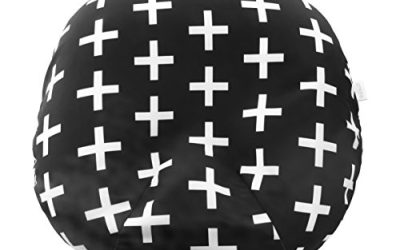
KeaBabies Diaper Bag Backpack
- Best for: Grandparents and parents sharing a dark house with a toddler, who need changes, snacks and spare clothes in one packed bag rather than hunted room to room.
- Brand: KeaBabies, as named in the listing
- Type: Diaper bag backpack, per the listing name
- Role in the set: The hall post — where the toddler’s kit hangs packed, ready to move rooms
- It is a bag only — it carries the kit, never the child
Grandparents and parents sharing a dark house with a toddler, who need changes, snacks and spare clothes in one packed bag rather than hunted room to room.
Confirm the stated layout and dimensions against the child’s kit before the storm season — a bag that swallows bottles but not spare clothes fails the post on the first night.
The hall post exists because a child of twenty months keeps her own hours, and none of them consult the utility’s estimate. Changes, snacks and spare clothes are wanted in whichever room the stove has warmed, and a kit scattered across two floors turns every errand into a lantern-lit search. The KeaBabies listing names a diaper bag backpack; it takes the post because the kit packs into one zipped bag on the hall hook, lifted and carried to the warmth, with her grandfather able to find everything in it.
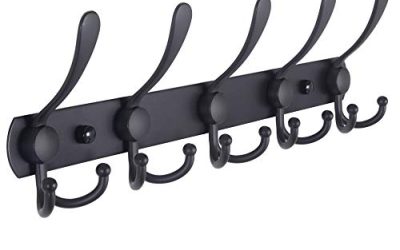
Dseap Coat Rack Wall Mounted 5 Tri Hooks
- Best for: A household cycling in and out through a storm, who need wet coats, hats and gloves on hooks by the door instead of steaming in a heap.
- Brand: Dseap, as named in the listing
- Type: Coat rack, wall mounted, per the listing name
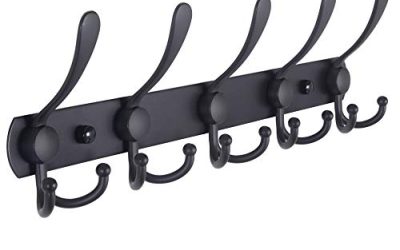
- Stated form: 5 tri hooks, per the listing name — a fixed rail of hooks for coats and hats
- Role in the set: The mudroom post — where wet outerwear goes up by the door
A household cycling in and out through a storm, who need wet coats, hats and gloves on hooks by the door instead of steaming in a heap.
Check the stated length and mounting lines against the mudroom wall first — the rack is only as steady as its fixings — and count the household’s coats against the five hooks.
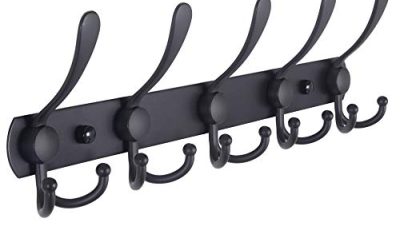
The mudroom post exists because a gale sends everyone out in turns — to the hens, to the gate and back — and each return brings a soaked coat, a dripping hat and gloves with nowhere to go. Draped over chairs they steam, drip and bury one another. The Dseap listing names a wall mounted coat rack with 5 tri hooks; it takes the post because the wet layers go up on the wall by the door the moment they come off, each on a hook of its own, and the floor stays passable.
Arrow T25 Staples
- Best for: Households that pin sheeting, boards and tarps through a storm, who want the staple stock counted and shelved before the wind arrives, not hunted for during it.
- Brand: Arrow, as named in the listing
- Type: Staples, T25, per the listing name
- Role in the set: The fixing post — sheeting over the cracked pane, the notice board and the tarpaulin corners
- They are staples only — not a staple gun, a nail or a screw
Households that pin sheeting, boards and tarps through a storm, who want the staple stock counted and shelved before the wind arrives, not hunted for during it.
Match the stated staple size to the gun your bench actually owns first — T25 is a fitting made for its own gun — then set the stated leg length against the sheeting and board it has to bite through.
A gale writes its own list of small repairs. The plastic sheeting over the cracked barn window wants pinning before the wind worries it free, the tarpaulin over the woodpile needs its corners held, and the board by the mudroom door fills with notes — crew estimates, a neighbour’s generator, the grandfather’s list. The Arrow listing names T25 staples; the box takes the fixing post because storm work runs on fasteners, and a bench that cannot pin sheeting, board or tarp is a bench watching the weather win. It is the plainest post in the set and the one missed first.
LiBa Scalp Massager Shampoo Brush
- Best for: Households washing hair over basins of kettle-heated water, who want the wash-day tool waiting on the shelf instead of discovered missing mid-wash.
- Brand: LiBa, as named in the listing
- Type: Scalp massager shampoo brush, per the listing name
- Role in the set: The bathroom shelf post — the hand tool stationed where wash day happens
- It is a hand tool only — worked by hand during a wash; not a shampoo and not a powered device
Households washing hair over basins of kettle-heated water, who want the wash-day tool waiting on the shelf instead of discovered missing mid-wash.
Confirm the stated size and bristle lines against your hand and hair first, and read the name plainly — it is a brush for working a wash by hand, not a treatment.
Washing still has to happen while the pump stands idle, and with water heated in kettles and carried to the basin in jugs, every wash becomes a planned, two-handed job. Hair is washed over the basin, heads in turn, and the tool for working shampoo through by hand is the sort of small thing a house misses once it is gone. The LiBa listing names a scalp massager shampoo brush; it takes the bathroom shelf post because it is a hand tool — nothing to charge, nothing to wait for — stationed where the washes happen.
GUND Sesame Street Elmo Plush
- Best for: Parents of a small child unsettled by a dark, silent house, who want her familiar plush waiting in the corner where the family rides out the wait.
- Brand: GUND, as named in the listing
- Type: Sesame Street Elmo plush, per the listing name
- Role in the set: The hearth corner post — the toddler’s plush stationed where the family gathers
- It is a plush only — a soft companion; the listing name promises no light, sound or motion
Parents of a small child unsettled by a dark, silent house, who want her familiar plush waiting in the corner where the family rides out the wait.
Confirm the stated size and material lines against the child’s age and habits first, and read the name plainly — it is a plush to hold, not a night-light or a sound soother.
The hearth corner post is the rug in front of the stove where the household collects: the grandfather’s chair, a box of picture books, the lamp nobody lights now. She knows that corner, and in a house that smells of woodsmoke and sounds wrong — no hum, no pump, no fridge — a familiar face is what settles her. The GUND listing names a Sesame Street Elmo plush; it takes the post because a soft companion kept in the gathering corner carries the youngest in the house through a strange, quiet night.
Which One Fits Your Situation
A small child runs the house on her own clock
Start with the hall post. A toddler’s schedule ignores the utility’s estimates, and every change in a cold room goes faster when the kit travels as one bag. Hang the packed backpack where everyone can find it — grandfather included — and the night changes stop being lantern-lit searches through dark rooms.
The mudroom is a wet-coat problem
Start with the mudroom post. Every trip to the hens or the gate ends at the same door, and coats that land in a heap stay wet, get stepped on and bury the gloves. Five hooks on the wall take a coat, a hat and a scarf per person as they come in, and the floor stays clear for the next trip.
The wind keeps finding things to loosen
Start with the fixing post. A two-day gale worries at sheeting, tarpaulin corners and the board by the door, and every loose edge left unpinned at dusk is a bigger job by morning. A counted box of the right staples by the gun turns each small repair into a two-minute job instead of a search.
The youngest is unsettled by a strange house
Start with the hearth corner post. A house without its hum is a new place to a child not yet two, and new places go better with a familiar face in them. Keep the plush on the rug by the stove, where the family gathers, and the corner does the settling work all evening.
Common Mistakes
- Reading copaiba-branco as a separate pale species and paying a novelty premium for it — branco is a grade word for the pale end of the same stock, and the stated species line, not the colour, settles what the boards are
- Grading a copaiba parcel by its heartwood colour alone — the sapwood runs whitish to greyish and stands distinct, so judging the parcel without reading both lines misreads sound stock as mixed or swapped boards
- Assuming good durability makes any use fair — the stated work runs to flooring, furniture, decking, joinery and turned work, and a parcel sold past its stated use is misread, however sound the timber
- Loading a wall-mounted rack like a freestanding tree — the five tri hooks hold coats and hats on a fixed rail, and a rack torn from its fixings by a loaded tool bag is a mounting mistake, not a product failure
- Reaching for whatever staples are in the drawer — a staple is a fitting, and the wrong size jams the gun or pulls through the sheeting; the stated size and leg length on the box are the lines that decide whether the fixing holds
Frequently Asked Questions
Does anything in this set contain copaiba-branco?
No. The five posts are a diaper bag backpack, a wall mounted coat rack, a box of staples, a scalp massager shampoo brush and a plush toy; none is timber. Copaiba-branco stands as the standard of proof — a pale grade word laid over a yard-named stock. The posts carry only the duties their listings state, graded on those lines alone.
Is copaiba a single species?
Copaiba names Copaifera langsdorffii, but the yard word stretches over close relatives in the Fabaceae family of similar weight and grain. That is why parcels sold under it vary, in colour most of all. A shared trade name identifies nothing by itself, so the stated species line, not the group name, settles what a parcel is.
What is copaiba-branco timber used for?
Flooring, furniture, decking, joinery and turned work. The stock is moderately heavy and moderately hard, with a medium texture, grain straight to interlocked and good natural durability helped by its oily resin — a profile suited to floorboards, furniture and turned pieces in daily service, rather than work demanding exceptionally hard, rot-proof wood.
What should a buyer read instead of the headline?
The stated lines beneath it. A yard name shared across yards identifies nothing by itself; each listing’s stated species and use decide the match, not the name on the invoice. The dark house agrees: bag, rack, staples, brush and plush earn their posts on stated forms and duties, never on the word above them.
More from Amazon
Programs that pair well with the guide above. Offers and eligibility are set by Amazon and may change.
Free shipping on eligible items, Prime Video and more. Eligible new members can start with a free trial.
Start a Prime free trialAudiobooks and podcasts to listen to on the go. Eligible new members can start with a free trial.
Try Audible freeAd-free music streaming. Eligible new subscribers can start with a free trial.
Try Music Unlimited freeA free business account with business pricing and bulk-buying tools for work, shop or home office.
Create a business accountAs an Amazon Associate we earn from qualifying purchases.