Key takeaways
- Backflush hollow-fiber filters after dirty use and dry them before storage.
- Never freeze a wet hollow-fiber filter; if it has frozen, replace it.
- Do not trust a filter against chemical contamination or fuel in flood water.
- Test your filter before the storm, not during it, so you know the flow and the assembly.
- Keep the dirty and clean sides separate to avoid cross-contamination.
- Store spare O-rings and the cleaning syringe with the filter.
The best emergency water filter setup combines a hollow-fiber squeeze filter such as the Sawyer Squeeze for flood water and stored containers, a bottle-style purifier such as the Grayl GeoPress when viruses are a concern, and chemical tablets as a lightweight backup. Filters with a 0.1 micron hollow fiber remove bacteria and protozoa, but only purifiers, or a filter plus a disinfection step, address viruses, which can matter after storm flooding and sewage overflows.
Our top picks


As an Amazon Associate we earn from qualifying purchases at no extra cost to you.
Quick comparison of emergency water treatment options
| Pick | Best for | Method | Removes | Rated capacity | Price range |
|---|---|---|---|---|---|
| Sawyer Squeeze | All-round emergency kit | 0.1 micron hollow fiber | Bacteria, protozoa | Up to 100,000 gallons (maker rating) | Budget |
| Sawyer Mini | Ultralight go-bag | 0.1 micron hollow fiber | Bacteria, protozoa | Up to 100,000 gallons (maker rating) | Budget |
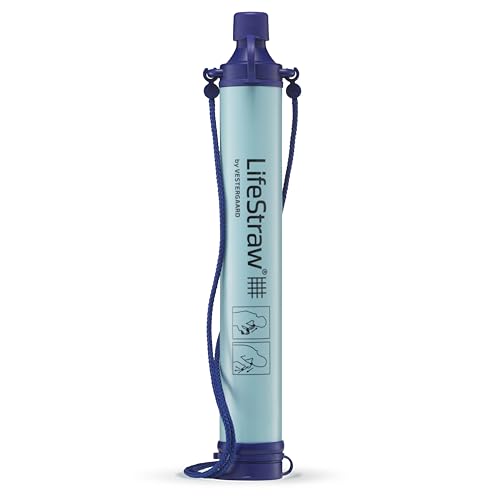
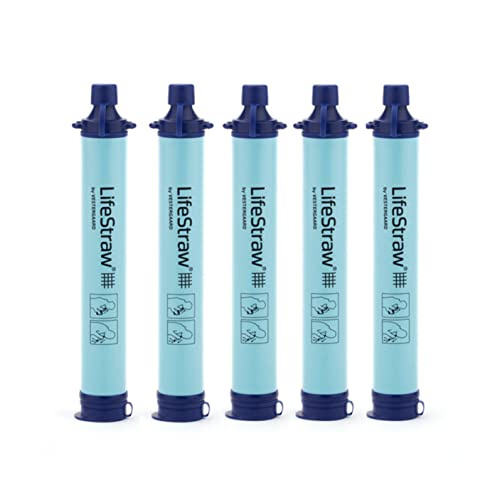
| LifeStraw Personal | Simplest drink-from-source option | 0.2 micron hollow fiber | Bacteria, protozoa | Up to 4,000 liters (maker rating) | Budget |
| Katadyn BeFree | Fast flow, collapsible bottle | 0.1 micron hollow fiber | Bacteria, protozoa | Up to 1,000 liters (maker rating) | Budget to mid |
| Grayl GeoPress | Virus protection, bottle format | Press purifier with carbon | Bacteria, protozoa, viruses | About 250 uses per cartridge (maker rating) | Upper-mid |
| Katadyn Hiker Pro | Pump filter for shallow sources | Pump with glass-fiber element | Bacteria, protozoa | Up to 750 liters (maker rating) | Mid-range |
| Aquatabs / chlorine dioxide tablets | Backup and virus step | Chemical disinfection | Bacteria, viruses, many protozoa | Per tablet, per liter | Budget |
Capacity and removal figures come from each manufacturer’s published specifications.
Best overall: Sawyer Squeeze
The Squeeze filters through a 0.1 micron hollow fiber membrane and threads onto standard bottles or the supplied pouches. It is light, cheap and rated for a very long life if you backflush it with the included syringe. It does not remove viruses or chemicals, so pair it with tablets after floods. Do not let it freeze with water inside, as ice can crack the fibers and ruin the filter without visible damage.
Best ultralight: Sawyer Mini
The Mini uses the same membrane technology in a smaller body and clips into a go-bag. Flow is slower than the Squeeze, but for a single user it is a solid, low-cost insurance item. Keep two if you have a family.
Best for simplicity: LifeStraw Personal
You sip directly from the water source with no moving parts. It is excellent for a bug-out bag, but you cannot filter into a container for cooking, and it is not a virus purifier. Treat it as a personal drinking device rather than a household solution.
Best fast flow: Katadyn BeFree
With a collapsible flask and 0.1 micron fiber, the BeFree delivers quick flow and rolls up small. The trade-off is that the flask can be fragile and the filter can clog if used with silty storm water, so pre-filter through a cloth first.
Best for viruses: Grayl GeoPress
The GeoPress is a press-style bottle that meets purifier standards for bacteria, protozoa and viruses, and the carbon element improves taste. After flooding or when sewage contamination is possible, this is the most reassuring single device in the list. The trade-offs are weight, price and a cartridge that must be replaced after its rated number of uses.
Best pump filter: Katadyn Hiker Pro
A pump lets you draw from shallow puddles or streams that a squeeze filter cannot reach. It is slower per liter and heavier, but it suits families filling several containers at once.
Best backup: chlorine dioxide tablets
Tablets such as Aquatabs or Katadyn Micropur are tiny and cheap. They treat bacteria and viruses and, with the longer contact time given on the label, protozoa as well. Water must be clear first, and there is a wait of 30 minutes to four hours depending on the product. Check expiration dates and store in a cool place.
Filter, purifier or tablets: how to decide
| Water source | Main risk | Recommended approach |
|---|---|---|
| Stored tap water going cloudy | Bacteria | Hollow-fiber filter or boil |
| Flood water, urban | Sewage, chemicals, viruses | Avoid if possible; pre-filter, then purify and use carbon; filters do not remove chemicals |
| Rain collected in clean containers | Low risk | Filter or tablets |
| Stream or pond | Protozoa and bacteria | Squeeze or pump filter |
Boiling at a rolling boil for one minute (three minutes above 6,500 feet) per CDC guidance remains the most reliable method when fuel is available. Keep one heat-free method and one boil method in the plan.
How much water to plan for
Emergency planners recommend at least one gallon per person per day for drinking and sanitation, about 3.8 liters. A family of four for seven days needs roughly 28 gallons, around 106 liters. A Sawyer Squeeze, rated for far more than that, will not run out; the practical limit is your time. Flow of about one liter per minute means roughly two hours of squeezing for 106 liters. A gravity setup using a hanging bag saves effort.
Maintenance and common mistakes
- Backflush hollow-fiber filters after dirty use and dry them before storage.
- Never freeze a wet hollow-fiber filter; if it has frozen, replace it.
- Do not trust a filter against chemical contamination or fuel in flood water.
- Test your filter before the storm, not during it, so you know the flow and the assembly.
- Keep the dirty and clean sides separate to avoid cross-contamination.
- Store spare O-rings and the cleaning syringe with the filter.
Building a layered emergency water plan
No single device covers every situation, so build three layers. The first layer is stored water: a gallon per person per day in sealed containers, rotated twice a year, which means you never need to treat anything during the first days of an outage. The second layer is a filter that handles ordinary raw sources such as rain barrels, a neighbor’s pond or the water heater tank, which holds 40 to 50 gallons of drinkable water in many homes if you drain it from the lower valve. The third layer is disinfection, either tablets or a purifier bottle, for the worst case when flood water or a broken main puts contaminants into every nearby source.
Write the plan down and keep it with the equipment. Include which filter goes with which container, how to backflush, the contact time for tablets and where the cleaning syringe lives. During a stressful night, a laminated card beats memory. Practice once a year by filtering a bucket of tap water together so every adult in the house, and older children, can run the system without help.
Water that filters cannot fix
If a water source smells of fuel, has an oily sheen, or sits near a damaged tank or industrial site, filters and tablets are not enough, since they target microbes rather than dissolved chemicals. Activated carbon helps with taste and some chemicals, but it is not a guarantee. In those cases, use stored water, bottled water or distribution points set up by local authorities, and follow boil-water or do-not-use notices from your utility.
Frequently Asked Questions
What is the best water filter for emergencies at home?
A Sawyer Squeeze or similar 0.1 micron hollow-fiber filter is the best low-cost choice. Add chlorine dioxide tablets or a purifier such as the Grayl GeoPress to cover viruses.
Do water filters remove viruses?
Most hollow-fiber filters do not, because viruses are smaller than their pores. Purifiers and chemical disinfection address viruses, and boiling does too.
Can I filter flood water?
Treat flood water as a last resort because it may contain sewage and chemicals that filters do not remove. Use stored or bottled water first, and if you must treat it, pre-filter and purify.
How long can I store emergency water?
Commercially bottled water has a printed date, and stored tap water is generally rotated every six months according to emergency guidance. Treat or replace water that tastes or smells off.
Is boiling better than filtering?
Boiling kills bacteria, viruses and protozoa but needs fuel and removes no chemicals or sediment. A filter and boiling work together as separate backups.