Our Top Picks
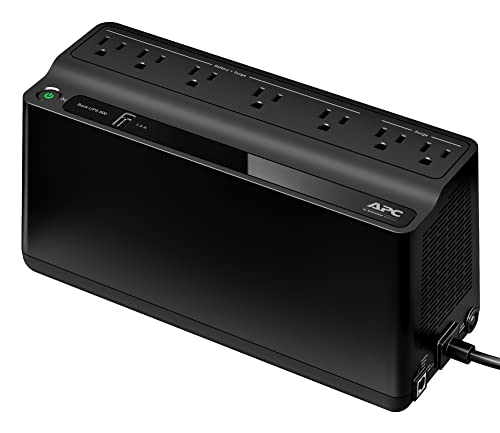 APC BE600M1 UPS Battery Backup & Surge Protector4.13D x 10.79W x 5.47H inches10.79 x 4.13 x 5.47 inches7.5 poundsCheck on Amazon
 CyberPower CP1500PFCLCD PFC Sinewave UPS Battery Backup and1500VA14 x 3.9 x 11 inches24.9 poundsCheck on Amazon

When a storm takes the power out, the two ways to keep a home network alive look similar on a shelf and behave very differently. A router mini UPS is a small DC battery that feeds the modem and router their native low voltage directly. An AC UPS is a general battery box with wall-style outlets that can run the router, a computer, and more, for a much shorter time. The real decision is scope: are you protecting one internet link for hours, or a whole cluster of gear for minutes?
This comparison is for storm-prone households deciding where the backup budget goes first, for remote workers whose router and desktop both matter, and for anyone who owns one type and wonders if the other covers a gap. The four models below, two from each side, were selected from the name and stated details on their Amazon pages, so every capacity and rating quoted here matches the listing itself.
Quick Picks
As an Amazon Associate we earn from qualifying purchases.
| Product | Best for | Key spec from title |
|---|---|---|
| TalentCell Mini UPS SL3400 (Mini DC) | Router and modem only, for the longest runtime | 27000mAh, 97.2Wh, DC 12V/9V, 18W USB-A/USB-C PD |
| Marsriva KP3 Mini UPS (Mini DC) | A link backup whose switchover the router never notices | 10000mAh, 36Wh, 0ms transfer, multi-port |
| APC Back-UPS BE600M1 (AC) | A router plus a small desk cluster on outlets | 600VA/330W, 7 outlets, USB charging port |
| CyberPower CP1500PFCLCD (AC) | A full desk or network corner that needs AVR and sine wave | 1500VA/1000W, 12 outlets, AVR, UL Certified |
How to Choose
Decide what actually needs power: one link or a cluster
List the devices that must stay alive in an outage, honestly. If the answer is the modem and the router and nothing else, a mini DC UPS is built precisely for that list, and every watt-hour it carries goes to the link. If the answer includes a desktop computer that must save work and shut down cleanly, a NAS that should never lose power mid-write, or a monitor and speakers for a weather radio stream, that is AC territory. The APC and CyberPower below exist for clusters; the TalentCell and Marsriva exist for the link. Buying the wrong scope wastes either money or runtime.
Compare runtime the fair way: conversion versus direct DC
An AC UPS turns battery DC into wall AC, and the router’s own adapter turns it back into DC, losing energy at both steps and running an inverter the whole time. That is why a large AC battery can still offer a modest runtime at a small load. A mini UPS skips the round trip and feeds DC straight to the device, so a 97.2Wh TalentCell can keep a modem and router going far longer than its size suggests. Judge the AC side by its VA and watt ratings for cluster loads, and the DC side by watt-hours against the link’s small combined draw.
Weigh the protection each type adds beyond the battery
Backup time is only half the purchase. The AC models here state surge protection in their titles, and the CyberPower adds AVR, which corrects minor voltage sags and swells without draining the battery, plus sine wave output for sensitive power supplies, with UL Certified stated in its title. A mini DC UPS adds no such conditioning for the rest of your gear; its protection job is narrower, keeping low-voltage devices fed and isolated from a dead outlet. In a storm zone with frequent brownouts, that conditioning can matter as much as the outage runtime, and it only exists on the AC side.
Keep both types safe: voltages, loads, and batteries
Each side has its own way to hurt the gear it protects. On the mini DC side, set the output voltage and check plug polarity for every device, because 12V fed into a 5V modem can destroy it, and never ask a mini UPS to carry a load beyond small network devices. On the AC side, respect the watt rating, keep battery outlets for electronics rather than heaters or laser printers, and leave room around the unit for heat. Both types use batteries that age: keep them ventilated, check charge indicators before storm season, and plan on replacement when runtime visibly shrinks.
The 4 Best Options
TalentCell Mini UPS SL3400 (Mini DC)
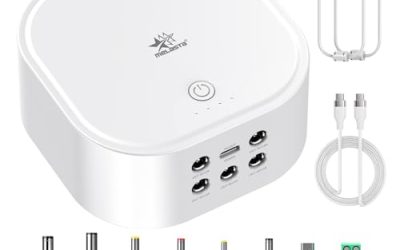
The TalentCell represents the strongest case for the mini DC approach: a 97.2Wh lithium ion battery, the largest in this comparison, feeding DC 12V and 9V outputs plus 18W USB-A and USB-C PD. The listing’s technical details describe multiple 12V outputs, enough for a modem, a router, and a third same-voltage box. In a storm outage it does one job, keeping the internet link alive for hours while the rest of the house sits dark. It cannot power anything that needs a wall outlet, and it makes no apology for that limit.
Specs
- Type: Mini DC UPS, per the product title
- Brand: TalentCell, per the product title
- Model: SL3400, per the product listing
- Capacity: 27000mAh, 97.2Wh, per the product title
- Battery: Lithium ion, per the product title
- DC output: 12V and 9V, per the product title
- USB output: USB-A and USB-C PD, 18W, per the product title
Best for: A household whose storm plan is internet, phones, and information, with the modem and router as the only wired load.
Watch out for: Anything in your setup that plugs into a wall outlet, including some provider gateways, is outside what this battery can feed.
ASIN: B07WLD32RP
Marsriva KP3 Mini UPS (Mini DC)

The Marsriva KP3 shows the mini DC side at its most focused. Its title states 10000mAh and 36Wh behind a 0ms transfer, so the modem and router never reboot when the grid fails, and its multi-port layout feeds the link’s boxes directly at low voltage. Against the AC side of this comparison, its argument is efficiency: no inverter, no conversion round trip, just stored DC energy going straight into the gear. Against the TalentCell, it trades capacity for a smaller unit built around flickers and short storm cuts.
Specs
- Type: Mini DC UPS, per the product title
- Brand: Marsriva, per the product title
- Model: KP3, per the product title
- Capacity: 10000mAh, 36Wh, per the product title
- Transfer: 0ms, per the product title
- Ports: Multi-port, per the product title
- Intended gear: Router, LED light, smartphone, CCTV camera, per the product title
Best for: A modem and router pair that must switch to battery without rebooting, through typical storm flickers and short cuts.
Watch out for: At 36Wh it is a short-outage device, so a home that regularly loses power for whole evenings should look at the TalentCell’s capacity instead.
ASIN: B0FF9PQ528
APC Back-UPS BE600M1 (AC)
The APC is the entry point of the AC side, and its title tells the story: 600VA and 330W across 7 outlets, with a USB charging port, aimed at computers, Wi-Fi routers, and home office electronics. In a storm it can hold the router and modem on battery outlets while also giving a small desktop or a NAS its shutdown window, something no mini DC unit can do. The trade is time: at a cluster load its battery is measured in minutes, and even at a router-only load the inverter overhead means it will not match a mini DC unit’s hours.
Specs
- Type: AC UPS, per the product title
- Brand: APC, per the product title
- Model: BE600M1, per the product title
- Capacity rating: 600VA / 330W, per the product title
- Outlets: 7 outlets, NEMA 5-15R, per the product title
- Extra: USB charging port, per the product title
- Battery: Sealed lead acid, per the product listing
Best for: A desk where the router shares backup duty with a small computer or storage device that needs a safe shutdown.
Watch out for: Only some outlets carry battery backup on units of this class, so check which sockets are battery-backed before the storm does it for you.
ASIN: B01FWAZEIU
CyberPower CP1500PFCLCD (AC)
The CyberPower is the heavy end of the comparison: 1500VA and 1000W, 12 outlets, AVR, sine wave output, and UL Certified stated in the title. The listing describes six battery-backed and six surge-only outlets, plus USB charge ports. This is the unit for a network corner that is really a small equipment rack, or a desk with a powerful desktop that needs clean power and a long, orderly shutdown. Against the mini DC models it wins on scope and conditioning, and loses on the one metric they specialise in: hours of runtime for a lone router.
Specs
- Type: AC UPS, per the product title
- Brand: CyberPower, per the product title
- Model: CP1500PFCLCD, per the product title
- Capacity rating: 1500VA / 1000W, per the product title
- Outlets: 12 outlets, per the product title; six battery-backed, per the product listing
- Regulation: AVR, per the product title
- Certification: UL Certified, per the product title
Best for: A full desk or network rack that needs surge protection, voltage regulation, and a proper shutdown window in storm season.
Watch out for: It is a mini-tower with a lead acid battery, so it needs floor or shelf space, ventilation, and a battery replacement plan over its life.
ASIN: B00429N19W
Which One Fits Your Situation
The storm plan is internet and information only
Choose the mini DC side. If your outages are usually short, the Marsriva KP3 covers the modem and router and never lets them reboot in the switch. If your area loses power for hours, the TalentCell SL3400 stretches the same job across the evening. Either way, the television, the fridge, and the lights are somebody else’s problem; the link stays up, and with it weather alerts, messages, and hotspot fallback for the household.
A desktop computer must shut down safely, not just stay on
Choose the AC side. A mini DC UPS cannot feed a desktop at all, while the APC BE600M1 gives a small machine its saving-and-shutdown window and keeps the router alive on another outlet. For a more powerful desktop or a NAS that runs through brownouts, step up to the CyberPower, whose AVR handles the sags that precede a full outage without spending the battery.
You already own one type and still lose connection
Diagnose which half failed. Owners of an AC UPS whose router still drops usually discover the router was on a surge-only outlet, or the battery aged out; owners of a mini UPS who lose their desktop work were never protecting it. The two types layer well together: the mini unit guards the link for hours, the AC unit guards the desk for minutes, and each does the job the other cannot.
Your area gets brownouts as often as blackouts
Lean AC, specifically toward the CyberPower. Its AVR corrects minor voltage swings without switching to battery, which suits a grid that sags every time the weather turns. A mini DC UPS still has a role for the router itself, since the modem and router fed from DC never see the sag at all, but the rest of your electronics only get conditioning from the AC side of this comparison.
Common Mistakes
- Buying an AC UPS for the router alone, then wondering why a big battery gives a short runtime at a tiny load.
- Buying a mini DC UPS and expecting it to protect a desktop, a NAS, or anything with a wall plug.
- Plugging the router into a surge-only outlet on an AC UPS and learning the difference mid-storm.
- Setting a mini UPS output to 12V for a modem whose adapter says 9V or 5V.
- Treating either battery as permanent, when both chemistries lose capacity and need checking before storm season.
Frequently Asked Questions
Which type keeps a router online longer in an outage?
The mini DC UPS, and it is not close at this load. It feeds the modem and router their native voltage directly, so a 97.2Wh unit works for hours on a link that draws only a few watts. An AC UPS spends energy on its inverter and conversion steps, so even a large model measures router-only runtime more modestly, while saving its strength for bigger loads.
Can an AC UPS replace a mini UPS entirely?
It can cover the router, and it adds surge protection and outlets for other gear, which a mini unit never will. What it cannot match is the mini unit’s hours of link-only runtime or its small always-in-line footprint at the network shelf. Households that care about both the desk and the link usually end up running one of each, layered.
Is one type safer for a modem than the other?
Both are safe when used as directed, and both have a characteristic error. On an AC UPS the modem uses its own adapter, so voltage is correct by construction; the risk is overloading outlets or using surge-only sockets. On a mini DC UPS the risk is yours to manage: the output voltage and plug polarity must match the modem’s label exactly before connecting.
What should a storm-prone home buy first?
Start with the device whose loss hurts most. If losing the internet cuts off weather information, work, and contact, the mini DC UPS comes first because it protects that link longest for the least complexity. If losing power mid-write could damage a computer or its data, the AC UPS comes first. Many homes buy the mini unit before storm season and add the AC unit when the desk grows.
More from Amazon
Programs that pair well with the guide above. Offers and eligibility are set by Amazon and may change.
Free shipping on eligible items, Prime Video and more. Eligible new members can start with a free trial.
Start a Prime free trialAudiobooks and podcasts to listen to on the go. Eligible new members can start with a free trial.
Try Audible freeAd-free music streaming. Eligible new subscribers can start with a free trial.
Try Music Unlimited freeA free business account with business pricing and bulk-buying tools for work, shop or home office.
Create a business accountAs an Amazon Associate we earn from qualifying purchases.