Key takeaways
- Five waterproof phone pouches for storm kits and flood prep, compared on fit, IP codes and closures as listed, with seal checks and flood safety notes.
- Top Pick: Hiearcool Waterproof Phone Pouch, 2 Pack
- Runner-up: JOTO Universal Waterproof Phone Case
- Also consider: Case-Mate IP68 Waterproof Phone Pouch
When a storm knocks out power and pushes water into streets and ground floors, a phone becomes a lifeline. It carries weather alerts, maps, family contacts and the flashlight many households reach for first. It is also one of the easiest things to ruin. One soaked pocket or one bag left on a wet floor can end a phone at the exact moment it is needed most.
A waterproof phone pouch is a simple layer of care for that problem. It will not turn a phone into flood gear, and it never replaces official guidance or common sense around rising water. What it can do is keep rain, spray and shallow standing water away from a working phone while you move to safety or wait out a storm in a dry room. This guide compares five pouches sold on Amazon, using only the fit, IP code and closure facts each listing states.
As an Amazon Associate, we earn from qualifying purchases.
Quick answer
For most storm kits, the Hiearcool 2 Pack and the JOTO case cover the basics: an IPX8 listing claim, a clear window, and room for large phones. The Case-Mate pouch adds flotation and an IP68 code for homes near water. The AiRunTech waist pouch suits go-bags, and the CACOE pouch floats and fits very large phones. Check every seal with a tissue inside first.
How to choose
Begin with fit. Measure your phone with its everyday case on, then compare those numbers with the size each listing names. A pouch that barely closes over a bulky case strains the seal and can pop open in a bag. Leave a little room so the closure shuts fully without force.
Next, read the IP code exactly as the listing prints it. IPX8 and IP68 claims describe immersion under conditions the maker sets, and the depth and time figures belong to each listing alone. One pouch’s code says nothing about another. Treat the code as a guide to splash and shallow-water protection, not as permission to carry a phone into deep or fast floodwater.
Look at the closure style. Most pouches here use a snap-and-lock bar or a sliding seal at the top. Whatever the style, follow the maker’s guidance for closing it, every time, and check the seal with a tissue inside first: seal the empty pouch, squeeze it gently in a sink of water, then open it and look for damp spots on the tissue. Repeat that check after any drop, and inspect the film for punctures and grit along the seal before each use.
Think about how the pouch will ride. A neck lanyard keeps a phone reachable under a rain jacket. A waist strap keeps it on the body when hands are busy carrying children, pets or supplies. A floating pouch is easier to spot and grab if it slips into shallow water at your feet. None of this matters if the pouch sits in a drawer, so store it in the storm kit itself, next to the power bank and flashlight.
Finally, plan for failure. A pouch is one layer of care, never a guarantee a phone stays dry. Back up photos and documents before storm season, keep a second way to receive alerts, such as a battery radio, and write key numbers on paper in the kit. If a pouch tears or its closure cracks, retire it.
Hiearcool Waterproof Phone Pouch, 2 Pack

The Hiearcool pouch is the roomy workhorse of this group. Its listing names a fit for phones up to 8.9 inches, which covers large handsets in slim cases, and it carries an IPX8 code. The clear window allows screen use while the phone stays sealed, so alerts and maps remain readable in rain. A lanyard is included, which suits a phone worn under a jacket during a wet evacuation walk.
Two pouches in the pack make it easy to split protection between two adults, or to keep a spare in a car kit. That spare matters: one pouch can live with the main supplies while the second rides in the go-bag. As with every snap-bar closure, the seal needs a firm, even close along its full width, and the tissue check is worth doing each storm season.
Specs:
– Fit: phones up to 8.9 in, as listed
– IP code: IPX8, as listed
– Pack count: 2 pouches
– Carry: lanyard included, as listed
– Screen use: touch screen through the clear window, as listed
JOTO Universal Waterproof Phone Case

The JOTO case is a long-running, simple design sized for phones up to 7 inches, with an IPX8 code in its listing. That smaller envelope suits standard handsets and keeps bulk down in a crowded kit bag. Clear front and back windows let the screen and camera work while sealed, which helps when photographing damage for records after a storm, once it is safe to be outside.
Because it has been sold in this form for years, the design is plain: a clear pouch with a snap-and-lock top. There is no flotation claim in the listing, so a dropped JOTO in deep water will sink. Use the lanyard and keep the phone on your body, not on a ledge near water. Households with very large phones should measure carefully, since the 7 inch limit is tighter than the Hiearcool fit.
Specs:
– Fit: phones up to 7 in, as listed
– IP code: IPX8, as listed
– Windows: clear front and back, as listed
– Closure: snap-and-lock top bar, as listed
Case-Mate IP68 Waterproof Phone Pouch

The Case-Mate pouch is the pick for households near water or expecting to move through flooded streets to reach higher ground. Its listing states an IP68 code and describes the pouch as floating, with a crossbody lanyard. Flotation does not protect a phone on its own, but a pouch that stays on the surface of shallow water is far easier to recover than one that sinks from sight.
The crossbody carry also keeps hands free, which matters when guiding children or carrying supplies. The listing describes the pouch as touchscreen friendly and compatible with all devices, though very large phones in thick cases should still be measured first. This is a single pouch rather than a multi-pack, so families may want one per adult.
Specs:
– IP code: IP68, as listed
– Buoyancy: floating, as listed
– Carry: crossbody lanyard, as listed
– Screen use: touchscreen friendly, as listed
– Color in this listing: Sand Dollar
AiRunTech Waterproof Pouch with Waist Strap, 2 Pack
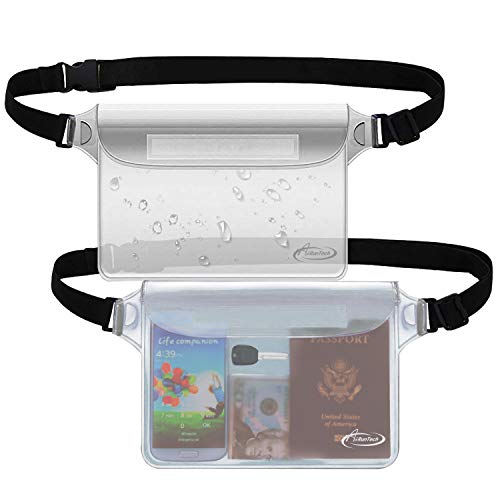
The AiRunTech pouch takes a different carry approach: a waist strap instead of a neck lanyard. Worn at the hip, it keeps a phone and small valuables close while hands stay free for carrying bags, holding a rail or managing a pet lead. Its listing gives an IPX8 code, and the pack holds two pouches, which suits a phone in one and documents or a small power bank in the second.
This format fits go-bags well, since the pouch can be worn the moment a household leaves rather than dug out of a pack in the rain. The waist strap also keeps the pouch from swinging while climbing stairs in a dark building. Run the tissue seal check on both pouches when they arrive and again before storm season.
Specs:
– IP code: IPX8, as listed
– Pack count: 2 pouches
– Carry: waist strap, as listed
– Model number: AiRunTech-pouch&case, as listed
CACOE Floatable Waterproof Phone Pouch, 2 Pack

The CACOE pouch is built around two ideas: flotation and room. Its listing describes the pouch as floatable and names a fit for phones up to 10.0 inches, the largest envelope in this guide. That extra space swallows big handsets in rugged cases, or a phone plus a folded paper map and a house key. Two pouches come in the pack.
For flood prep, a floatable pouch earns its place in kits kept near doors and in cars, where a fumbled phone can land in standing water. A bright color helps it stand out in murky shallows. The listing record reviewed for this guide did not print an IP code or a depth figure, so treat this pouch as splash and shallow-water protection and lean on the tissue seal check. Households that want a printed immersion claim should pick an IP-coded option above instead.
Specs:
– Fit: phones up to 10.0 in, as listed
– Buoyancy: floatable, as listed
– Pack count: 2 pouches
– Colors in this listing: black and green
– IP code: not printed in the listing details reviewed
Who should skip
Skip a phone pouch entirely if your storm plan is to stay put in a safe, dry home and your phone never leaves a dry room; a zip bag in a drawer covers the odd splash for many households. Skip the smaller JOTO if your phone and case measure near or over its 7 inch limit. Skip non-floating pouches if your route to safety crosses docks or deep puddles where a dropped phone is gone for good. And skip every pouch here if what you truly need is a sealed dry bag for documents and supplies; a phone pouch is sized for a phone, not a file box. No pouch on this page is a reason to enter floodwater, and anyone whose safety plan depends on wading should rethink the plan, not the pouch.
FAQ
How do I check a pouch seal before a storm?
Follow the maker’s closing guidance, then seal the empty pouch with a dry tissue inside. Hold it under a sink of water, squeeze gently, and open it after a minute. If the tissue shows any damp spot, clean grit from the seal and repeat. If it still lets water in, retire the pouch.
What do IPX8 and IP68 codes actually cover?
They describe immersion under conditions the maker sets for that product, and the depth and time figures come from each listing alone. They speak to still, shallow water in controlled conditions. Floodwater is moving and dirty, so treat any code as a splash and shallow-water guide, never as a promise.
Can I use the screen and camera through a pouch?
The listings for the Hiearcool, JOTO and Case-Mate pouches describe screen use through the clear window, and clear back windows allow camera use on the models that have them. Touch response can feel duller through the film, so set up alerts and contacts before sealing the phone in.
Where should the pouch live in a storm kit?
Keep it inside the main kit or go-bag, next to the power bank, so it is found in the dark without searching. A pouch left in a garage drawer will not help when water rises at night. Check its seal each storm season and whenever you refresh the kit.
Final verdict
For a general storm kit, the Hiearcool 2 Pack is the easiest recommendation: a printed IPX8 code, a roomy fit, and a spare for a second bag. The JOTO suits smaller phones and tight kit space. Households near water should look hardest at the floating Case-Mate and CACOE pouches, while the AiRunTech waist design fits go-bags and hands-busy evacuations. Whichever you choose, check the seal with a tissue inside first, inspect the film often, and remember that official guidance and your own safety come before any gear. A pouch guards a phone; it never guards a person.
More from Amazon
Programs that pair well with the guide above. Offers and eligibility are set by Amazon and may change.
Free shipping on eligible items, Prime Video and more. Eligible new members can start with a free trial.
Start a Prime free trialAudiobooks and podcasts to listen to on the go. Eligible new members can start with a free trial.
Try Audible freeAd-free music streaming. Eligible new subscribers can start with a free trial.
Try Music Unlimited freeA free business account with business pricing and bulk-buying tools for work, shop or home office.
Create a business accountAs an Amazon Associate we earn from qualifying purchases.