Key takeaways
- Most pitchers: chlorine taste and odor, some metals such as lead and copper (check the NSF 53 claim).
- Some pitchers: PFAS, fluoride, microplastics, pharmaceuticals. Only claims backed by an NSF/ANSI or equivalent certification for the specific contaminant count.
- Not designed for: bacteria, viruses and protozoa. For microbiological safety use a purifier meeting NSF/ANSI P231 or the EPA protocol, boil water, or use purification tablets.
The best water filter pitcher for most households is the Brita Elite for low running cost on city water, while Epic Pure and Clearly Filtered lead for broader contaminant removal and ZeroWater wins on very hard, high-TDS water. One storm-prep caution matters more than any ranking: pitcher filters improve taste and cut contaminants like lead and chlorine, but they are not designed to make unsafe water microbiologically safe during a boil-water advisory.
Our top picks


As an Amazon Associate we earn from qualifying purchases at no extra cost to you.
Quick comparison of the best water filter pitchers
| Pick | Best for | Key specs (per maker listings) | Price range |
|---|---|---|---|
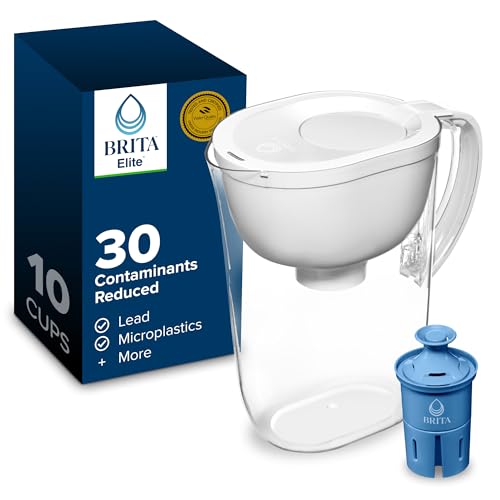
| Brita Elite | Best value and lowest cost per gallon | NSF/ANSI 42, 53, 401; about 120 gal or 6 months per filter | Budget to mid |
| Epic Pure | Best long filter life | About 150 gal per filter, broad contaminant list, lifetime warranty | Mid |
| Clearly Filtered | Best for PFAS and fluoride | NSF/ANSI 42 and 53 certified, 100 gal or 4 months per filter | Upper-mid |
| ZeroWater | Best for hard or high-TDS water | 5-stage, NSF/ANSI 42 and 53, about 20 to 40 gal per filter | Mid |
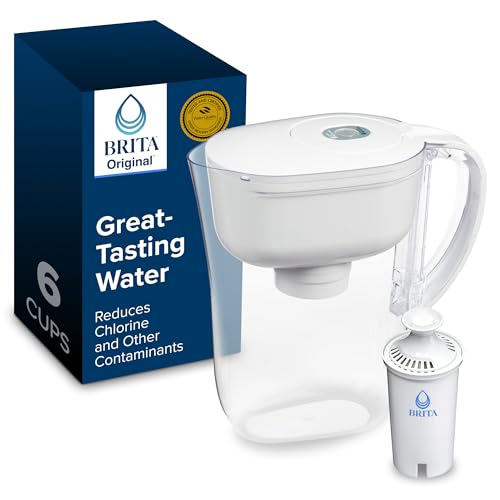
| PUR Plus | Best budget | Faster flow, about 40 gal or 2 months per filter | Budget |
Best value: Brita Elite
The Brita Elite is certified to NSF/ANSI 42 (chlorine taste and odor), 53 (health effects including lead) and 401 (emerging contaminants), and reviewers report it reduces lead by 99 percent. Each filter lasts about 120 gallons or six months, giving it the lowest cost per gallon of the major pitchers. For a household on municipal water with no special concerns, it is the sensible default.
Main trade-off: it is not aimed at PFAS or fluoride, and it does little for very high dissolved solids.
Best long filter life: Epic Pure
Epic Pure’s pitcher is rated for about 150 gallons per filter and carries a lifetime warranty on the pitcher, according to reviews. It is described as removing a broad list of health-related contaminants without Clearly Filtered’s premium running cost. The trade-off is that filter changes are less frequent but you should check the NSF certification list for the specific contaminants you care about.
Best for PFAS and fluoride: Clearly Filtered
Clearly Filtered is named best overall by several 2026 reviewers, and Water Filter Guru credits it with strong fluoride reduction. It is certified to NSF/ANSI 42 and 53 and filters last about 100 gallons or four months. It costs more to run per gallon than Brita, which is the price of broader removal. Note that one microplastics review points out that certification does not specifically cover microplastics.
Best for hard or high-TDS water: ZeroWater
ZeroWater uses a five-stage filter with ion exchange and is the pitcher that can bring a TDS meter reading to zero. It is certified to NSF/ANSI 42 and 53. The downside is filter life, about 20 to 40 gallons depending on your water hardness. With hard water, filters wear out quickly, so costs can climb.
Best budget: PUR Plus
PUR Plus is a low-cost pitcher with faster filtering and shorter filter life, about 40 gallons or two months per filter. It handles chlorine taste and lead, but does not address PFAS. It makes sense if you want a low entry price and are willing to replace filters more often.
Cost per gallon: a worked example
Suppose a household filters 1 gallon per day, or about 365 gallons a year. Filters needed per year:
| Pitcher | Filter life | Filters per year at 365 gal |
|---|---|---|
| Brita Elite | 120 gal / 6 months | 2 (limited by 6 months) |
| Epic Pure | 150 gal | About 3 |
| Clearly Filtered | 100 gal / 4 months | 3 to 4 |
| PUR Plus | 40 gal / 2 months | 6 to 9 |
| ZeroWater | 20 to 40 gal | 9 to 18 |
Multiply filters per year by the current filter price to get your annual cost. Reviewers rank Clearly Filtered and ZeroWater as the costliest to run per year, with the Brita Elite far cheaper. If your household filters more than 1 gallon per day, the gap widens fast.
What pitchers do and do not remove
- Most pitchers: chlorine taste and odor, some metals such as lead and copper (check the NSF 53 claim).
- Some pitchers: PFAS, fluoride, microplastics, pharmaceuticals. Only claims backed by an NSF/ANSI or equivalent certification for the specific contaminant count.
- Not designed for: bacteria, viruses and protozoa. For microbiological safety use a purifier meeting NSF/ANSI P231 or the EPA protocol, boil water, or use purification tablets.
During a boil-water advisory, follow local authority guidance first, which usually means a rolling boil for one minute (three minutes at elevations above 6,500 feet), then filter for taste if you wish.
How to choose
Check your water report first
Your utility’s annual Consumer Confidence Report lists contaminants and TDS levels. If you see lead or PFAS, choose a pitcher certified for those. If TDS is above about 300 ppm, ZeroWater’s ion exchange helps.
Look for certifications, not marketing
Look for NSF/ANSI 42, 53, 401 or 473 (PFOA/PFOS) listings on the manufacturer’s page or the NSF database. Vague “lab” claims without a certification are weaker.
Think about capacity and fridge fit
A 10 to 12 cup pitcher is easier to refill for families. Measure shelf height before buying a tall model.
Ownership realities
- Soak and flush new filters per instructions, since loose carbon fines can cloud the first batch.
- Change filters on time. Old filters can stop working and may grow bacteria.
- Wash the pitcher by hand weekly with mild soap and keep it in the fridge.
- Use only cold tap water, as hot water damages most filters.
Which pitcher should you buy?
| Your situation | Pick |
|---|---|
| City water, lowest running cost | Brita Elite |
| Want long life and broader removal | Epic Pure |
| Worried about PFAS or fluoride | Clearly Filtered |
| Hard well or tap water | ZeroWater |
| Tight budget | PUR Plus |
| Storm or boil-water event | Boil or purify first, then pitcher for taste |
Frequently Asked Questions
Do water filter pitchers remove bacteria?
Standard pitchers do not. They target chemicals and taste, so during a boil-water advisory you still need to boil or purify the water.
Which pitcher removes the most contaminants?
Clearly Filtered, Epic Pure and ZeroWater tend to lead lists, but the answer depends on the contaminant. Check each pitcher’s certification listing.
How often should I replace the filter?
Follow the maker’s interval: about 6 months for the Brita Elite, 4 months for Clearly Filtered, 2 months for PUR Plus and as the TDS meter indicates for ZeroWater. Replace sooner if flow slows or taste worsens.
Does ZeroWater remove too many minerals?
It removes dissolved solids, including minerals, so the water tastes very pure. Most people get minerals from food, but if you dislike the taste, choose a carbon-based pitcher.
Are filter pitchers worth it for emergency storage?
They help with day-to-day tap water, but they should not be your only plan. Store bottled water and keep a purifier or tablets for emergencies.