Our Top Picks

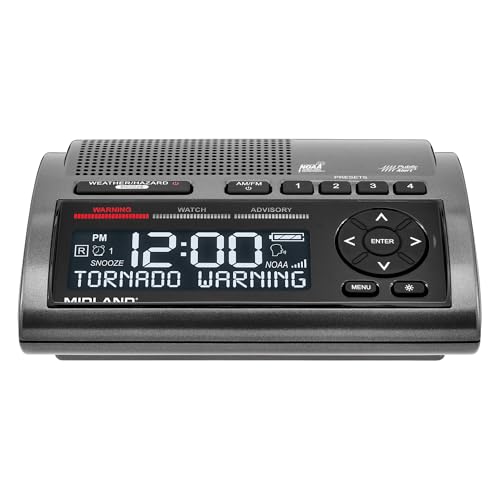
A weather radio sits quietly on a counter or nightstand until the National Weather Service issues a warning for your county, then it speaks up on its own. That one job, waking a household with an official warning while nobody reaches for a phone, is why these radios remain a core layer of home storm readiness. They do not replace phone alerts, local news, or guidance from officials. They add a dedicated path to the same warnings, one that keeps working when the power is out and the phone battery is low.
Choosing well matters more than choosing big. The right radio is programmed for your county, loud enough to wake you, and powered in a way that survives an outage. This guide covers the decisions that shape a good pick, then shows five real models: three desktop alert radios with county programming and two portable crank radios built for outages and go-bags.
As an Amazon Associate, we earn from qualifying purchases.
Quick answer
Choose a home weather radio with S.A.M.E. county programming so alerts match your address, a loud siren with voice or tone options, and battery backup that keeps watch during outages. Confirm a NOAA channel comes in clearly at your home, place the radio where the alert can wake you, and keep phone alerts as a second layer.
How to choose
Alert types and county coding
NOAA Weather Radio carries warnings, watches, and forecasts around the clock, plus non-weather emergency messages from public safety officials. The feature that makes a home radio useful instead of noisy is S.A.M.E., short for Specific Area Message Encoding. A S.A.M.E. radio lets you enter county codes, so it sounds only for the counties you pick rather than for every warning in the wider broadcast area. Look for a model that holds several counties if your home sits near a county line. Also check which alert types the radio can sound or mute: tornado and flash flood warnings should stay on, while some households mute lower-level watches at night. The National Weather Service publishes the county codes, and entering them carefully is the most important setup step.
Power options
A desktop alert radio usually runs on household power with batteries as backup, and that backup carries it through the outage that often arrives with the storm. Note how many batteries the backup takes and whether they are included. Portable models add a hand crank and a solar panel on top of a rechargeable pack, suiting a go-bag or a home where outages run long.
Reception
Every weather radio depends on a NOAA transmitter reaching your home. The seven weather band channels run from 162.400 to 162.550 MHz, and radios that scan and lock onto the strongest channel save guesswork. Confirm that a transmitter covers your county, then plan placement near a window or exterior wall.
Volume and display
An alert that cannot wake you has failed at its main task. Compare siren volume, whether the radio follows the tone with a spoken message, and whether flashing lights or color-coded indicators show the alert level at a glance. A clear display matters at 3 a.m.: look for readable text naming the warning.
Backup plan
Treat the radio as one layer. Keep phone weather alerts on, know your shelter spot, and follow official weather sources and local authority guidance during any event. Replace backup batteries on a schedule and recheck your county codes after any move.
Midland WR120B NOAA Emergency Weather Alert Radio
The WR120B is the classic desktop alert radio and a sensible reference point for the whole category. Its S.A.M.E. localized programming covers the counties you enter, and Midland lists more than 60 kinds of weather hazard and emergency alerts, from tornadoes and floods to wildfires and civil danger warnings. The display is trilingual, in English, Spanish, and French, which helps mixed-language households share one radio. It runs from the included AC adapter and switches to three AA batteries during an outage. There is no AM or FM band here, and that is the honest trade: this radio exists to listen for warnings, and it keeps that job simple for a nightstand or kitchen counter.
Specs:
- Brand and model: Midland WR120B
- Alert system: S.A.M.E. localized programming
- Alert library: more than 60 weather hazard and emergency alert types
- Programmable locations: up to 25
- Channels: receives all 7 NOAA weather channels
- Certification: Public Alert certified
- Display: trilingual, English, Spanish, and French; color-coded alert indicators
- Extra features: alarm clock; selectable alert tone
- Power: AC adapter included; 3 AA backup
Midland WR400 Deluxe NOAA Weather Alert Radio
The WR400 is the fuller-featured desktop option for households that want the alert radio to double as an everyday clock radio. Its digital S.A.M.E. technology programs up to 25 counties, and the selectable alert library runs to more than 80 event types, so you can keep the warnings that matter to your area and quiet the rest. The radio scans the weather band channels and locks onto the strongest signal, then announces alerts with a siren, a voice message, or a flashing light. AM and FM bands, a dual alarm clock with snooze, and a large display make it easy to live with daily. Power comes from the AC adapter with four AA batteries as backup, and a USB port can charge a phone during an outage.
Specs:
- Brand and model: Midland WR400
- Alert system: digital S.A.M.E. technology
- Programmable counties: up to 25
- Alert library: more than 80 selectable event types
- Signal handling: scans weather band channels and locks onto the strongest signal
- Alert modes: siren, voice alert, and flashing light
- Bands: NOAA weather band, AM, and FM
- Extra features: dual alarm clock with snooze; USB port for charging a phone
- Power: AC adapter; 4 AA battery backup, not included
Sangean CL-100 Weather Alert Table-Top Radio
The CL-100 pairs a proper alert radio with a genuinely pleasant tabletop clock radio, which matters because a radio you enjoy daily stays plugged in and ready. It is S.A.M.E. and Public Alert certified, receives NOAA reports covering severe weather advisories, civil emergencies, hazards, and evacuation details, and programs up to 25 counties. The AM and FM bands carry RBDS station data, and the display color-codes the alert level so a glance tells you whether the message is a watch or a warning. EEPROM memory holds your preset stations through power interruptions, and the unit runs on its AC adapter or four AA batteries.
Specs:
- Brand and model: Sangean CL-100
- Alert system: S.A.M.E. technology
- Certification: Public Alert certified
- Programmable counties: up to 25
- Bands: AM, FM with RBDS, and NOAA weather alert
- Display: color-coded alert indicators
- Memory: EEPROM backup for preset stations
- Power: AC adapter or 4 AA batteries
Midland ER310 Emergency Crank Weather AM/FM Radio
The ER310 takes a different approach: instead of county codes on a nightstand, it is a portable emergency radio built to keep working through a long outage. Its NOAA Weather Scan searches the seven weather band channels and locks onto the strongest one, and Weather Alert sounds an alarm when severe weather threatens your area, though it does not offer the county-by-county S.A.M.E. filtering of the desktop models above. Power is the headline: a solar panel, a hand crank, and a rechargeable 2600 mAh battery that Midland rates for up to 32 hours of radio operation, with six AA batteries as a further backup. The USB output can push some charge to a phone, and the CREE LED flashlight reaches 130 lumens with an SOS beacon mode. It suits go-bags, storm shelters, and homes that lose power often.
Specs:
- Brand and model: Midland ER310
- Alert system: NOAA Weather Scan and Weather Alert across 7 weather band channels
- Bands: NOAA weather, AM, and FM
- Battery life: up to 32 hours of radio operation per Midland
- Flashlight: CREE LED, 130 lumens, with SOS beacon mode
- Extra features: USB output for charging a phone; ultrasonic dog whistle
Kaito KA500 Voyager Emergency Weather Alert Radio
The KA500 Voyager is the long-running five-way powered option for people who want one radio that works almost anywhere. It receives AM, FM, shortwave, and the NOAA weather band with an alert function, covering local warnings plus broader listening when news is scarce. Five power paths keep it alive: a solar panel, a dynamo hand crank, an AC adapter input, AA batteries, and a built-in rechargeable battery pack. A flashlight and a reading lamp are built in, and the radio can charge a cellphone from its output. This black version carries model number KA500BLK. The Voyager does not do S.A.M.E. county filtering, so at home it sounds for the wider area rather than only your county.
Specs:
- Brand and model: Kaito KA500 Voyager, black, model KA500BLK
- Bands: AM, FM, shortwave, and NOAA weather alert
- Power: 5-way powered, solar panel, dynamo crank, AC adapter input, AA batteries, and built-in rechargeable battery pack
- Lighting: built-in flashlight and reading lamp
- Extra feature: cellphone charger output
- Manufacturer: Hisonic International, Inc.
Who should skip
Skip a desktop alert radio if no NOAA transmitter reaches your home with a usable signal; check coverage first, because no feature list fixes a silent band. Skip the crank portables as your only home alert if you need county-level filtering, since their alerts cover the wider broadcast area. Also skip any model whose backup batteries you will not maintain.
FAQ
Does a weather radio replace phone alerts?
No. A weather radio is one alert layer alongside official sources such as phone alerts, local news, and National Weather Service updates. Each path fails in different ways: phones die and networks jam, while a radio only needs batteries and a signal. Layering them means one failure does not leave your household unwarned.
What is a S.A.M.E. code and where do I find mine?
A S.A.M.E. code is the county code you enter into an alert radio so it sounds only for your area. The National Weather Service publishes the code list for every state and county. Enter the code carefully during setup, add neighboring counties if warnings there affect your travel or family, and recheck the codes after any move.
Will a weather radio wake me up at night?
That is its main purpose. Alert radios sit in standby and sound a siren, then often follow with a voice message or flashing light. Place the radio where the sound reaches your bed, keep the volume up, and confirm the alert override is on.
How often should I check the radio?
Give it a brief check each week when the scheduled NOAA check message airs, and confirm it still receives a clear broadcast. Replace backup batteries on a regular schedule rather than waiting for a low warning, and review your county codes and muted alert types each storm season.
Final verdict
For most homes, a S.A.M.E. desktop radio is the right anchor: the WR120B keeps it simple, the WR400 adds everyday radio and charging, and the CL-100 brings the friendliest daily listening. Add an ER310 or a KA500 if outages run long or you want a radio that travels.
More from Amazon
Programs that pair well with the guide above. Offers and eligibility are set by Amazon and may change.
Free shipping on eligible items, Prime Video and more. Eligible new members can start with a free trial.
Start a Prime free trialAudiobooks and podcasts to listen to on the go. Eligible new members can start with a free trial.
Try Audible freeAd-free music streaming. Eligible new subscribers can start with a free trial.
Try Music Unlimited freeA free business account with business pricing and bulk-buying tools for work, shop or home office.
Create a business accountAs an Amazon Associate we earn from qualifying purchases.