Our Top Picks
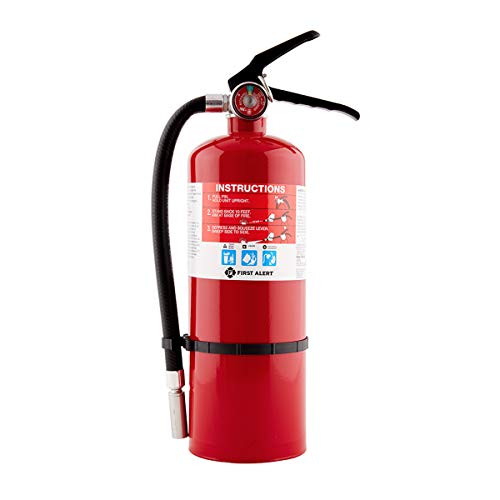

A home fire extinguisher only helps when it matches the kind of fire in front of you and sits close enough to reach in seconds. Kitchens, garages, workshops, and laundry rooms each carry different risks, from cooking oil and gasoline to lint, paint, and overloaded outlets. Picking a unit by habit can leave a household with coverage for the wrong fire class and none for the one that actually happens.
This guide walks through the fire classes, sizes, and build types that matter for home use, then profiles five real units sold for houses, garages, and cars. It also covers placement, monthly checks, and the limits of any portable unit. An extinguisher is one layer of a home safety plan that also includes working smoke alarms and a clear escape route.
As an Amazon Associate, we earn from qualifying purchases.
Quick answer
For most homes, choose a multipurpose ABC extinguisher for each main floor, sized so every adult in the house can lift and aim it with confidence. Add a small B:C kitchen or car unit where grease and fuel risks live, keep each unit near an exit path, check the gauge monthly, and use a unit only on a small, contained fire with a clear exit behind you.
How to choose
Begin with fire classes, because the class letters on the label decide what a unit can handle. Class A covers ordinary combustibles such as wood, paper, cloth, and many plastics. Class B covers flammable liquids, including gasoline, oil, solvents, and cooking grease. Class C covers energized electrical equipment, such as appliances and breaker panels. Class K covers cooking oils in commercial kitchens, a setting that calls for guidance from a fire professional rather than a household pick.
Match the classes to each room. A living area or hallway usually calls for ABC coverage, since furniture, paper, and electronics share the same space. A kitchen needs a unit that handles Class B grease flare-ups, placed where you can reach it without leaning over the stove. A garage benefits from ABC coverage near the door, away from stored fuel. A car calls for a compact B:C unit that mounts securely.
Size is a balance between capacity and control. A larger cylinder holds more agent and discharges longer, yet it helps no one if the person holding it cannot aim steadily. Pick the heaviest unit each adult in the home can carry and point with confidence, and favor two midsize units on different floors over one oversize unit in a closet.
Decide between rechargeable and single-use designs. Rechargeable metal units can be refilled by a certified professional after a discharge, which suits main-floor and garage roles. Single-use units are simpler and lighter, and they get replaced after any discharge or when the maker says their service life ends.
Upkeep is simple but not optional. Check the pressure gauge monthly and confirm the needle sits in the green zone the maker marks. Look for a intact pin and seal, a clear nozzle, and no dents, rust, or leaks. Have rechargeable units serviced as the maker directs, and replace any discharged unit, even a partly used one.
Finally, know the limits before a fire ever begins. A portable extinguisher is only for a small, contained fire, with a clear exit behind you and another adult ready to call for help. If the fire grows, spreads to walls or ceilings, or fills the room with smoke, leave at once and call emergency services from outside.
First Alert HOME2PRO Heavy Duty Rechargeable Extinguisher
The HOME2PRO is the heavy duty anchor pick for a main floor, garage, or workshop. Its listing describes a rechargeable compliance unit built for home and commercial settings, with all-metal construction and a commercial-grade metal valve and trigger. The stated figure of 2-A:10-B:C gives it broader Class A reach than a basic household unit, suiting rooms where wood furniture, stored boxes, and electronics sit side by side.
The maker includes a mounting bracket, so the unit can hang by a doorway where an exit path stays behind the person using it. The agent is mono ammonium phosphate, the dry chemical commonly used for ABC coverage. Because the unit is rechargeable, a certified professional can refill it after a discharge instead of the household replacing the whole cylinder.
Specs:
- Brand: First Alert
- Model: HOME2PRO, model number 1039897
- Fire classes: A, B, C
- UL figure: 2-A:10-B:C
- Agent: Mono ammonium phosphate dry chemical
- Rechargeable: Yes, by a certified professional
- Included: Mounting bracket
First Alert HOME1 Standard Rechargeable Home Extinguisher
The HOME1 is the straightforward household pick for a hallway, kitchen entry, or bedroom floor. The listing states a figure of 1-A:10-B:C and describes coverage for wood, paper, trash, plastics, gasoline, oil, and electrical equipment fires, which maps neatly onto the mix in most living spaces. All-metal construction with a commercial-grade metal valve and trigger gives it a sturdier build than basic single-use cans.
Like the larger HOME2PRO, this unit is rechargeable by a certified professional, so a discharge does not automatically mean a full replacement. Its smaller figure on Class A makes it a sensible second unit for an upper floor, while a heavier unit guards the ground floor and garage.
Specs:
- Brand: First Alert
- Model: HOME1, model number FE1A10GR195
- Fire classes: A, B, C
- UL figure: 1-A:10-B:C
- Construction: All-metal, commercial-grade metal valve and trigger
- Rechargeable: Yes, by a certified professional
Kidde FA110 Multipurpose Home Extinguisher
The Kidde FA110 is a long-running household staple built around simplicity. The listing states that it holds 2.5 pounds of monoammonium phosphate agent and is built to combat basic home fires: trash, wood, and paper under Class A, liquids and gases under Class B, and electrical equipment under Class C. The cylinder is aluminum, and a UL approved wall hanger comes in the box, so mounting takes little extra shopping.
Kidde frames this model as a single-use residential unit, which keeps the ownership rules clear: after any discharge, replace it rather than refilling it. A 6-year limited warranty from the maker backs the unit. It suits apartments and smaller homes, and works as an extra unit near a laundry room or home office.
Specs:
- Brand: Kidde
- Model: FA110, model number FA110G
- Fire classes: A, B, C
- Agent: Monoammonium phosphate, 2.5 lb
- Material: Aluminum
- Use type: Single use
- Included: UL approved wall hanger
- Warranty: 6-year limited, per the listing
First Alert AUTO5 Compact Car and Garage Extinguisher
The AUTO5 fills the vehicle and small-space role in a home safety plan. First Alert designs this compact unit for automotive use, and its listing gives a figure of 5-B:C, aimed at flammable liquid and electrical fires rather than ordinary combustibles. That focus fits the risks in a car or a garage corner near fuel cans and chargers, where a grease or gasoline flare-up is the realistic worry.
The listing lists a 5-year limited warranty and a part number of AUTO5, with FESA5 as the model family name. Because the unit carries no Class A figure, it should ride along as a supplement to a full ABC unit in the house, never as the only extinguisher a household owns. Mount it where it cannot roll loose, and keep it away from heat sources.
Specs:
- Brand: First Alert
- Model: AUTO5, model family FESA5
- Fire classes: B, C
- UL figure: 5-B:C
- Designed for: Automotive use, compact storage
- Warranty: 5-year limited, per the listing
First Alert EZ Fire Spray AF400 Aerosol Extinguisher Spray
The EZ Fire Spray takes a different form from every cylinder above. It is an 18 fluid ounce aerosol spray, model AF400, that stores like a cleaning can in a kitchen cabinet, a dorm room, or a camper. That small footprint makes it a practical backup for renters and travelers who may not be able to mount a full cylinder, and a handy second layer near a stove or grill cart.
Frame expectations honestly, though. An aerosol spray is a supplement for very small, early flare-ups, not a substitute for a classed extinguisher with a stated figure on its label. The listing presents it as an extinguishing spray rather than a classed cylinder, so the main floors of a home still need a proper ABC unit by the exit path. Keep the can away from heat sources, and replace it after any use.
Specs:
- Brand: First Alert
- Model: AF400
- Format: Aerosol extinguishing spray
- Size: 18 fluid ounces
- Color: Red
Who should skip
Skip the whole category if your plan is to fight anything beyond a small, contained fire. No portable unit on this page is a tool for a spreading fire, a room filling with smoke, or a blaze blocking your exit; in those moments the right move is to leave and call emergency services. Households with commercial cooking setups or rental properties with code obligations should also skip consumer picks and follow local fire department and code guidance instead.
Skip the larger rechargeable units if no adult in the home can lift and aim them with control, and skip the compact car and spray options if they would become your only coverage.
FAQ
How many extinguishers should a home have?
A common pattern is one ABC unit on each main floor, plus a small kitchen or garage supplement where grease and fuel risks live. Place each unit near an exit path so a clear way out stays behind you. Your local fire department can confirm placement for your floor plan.
Where should a kitchen extinguisher be mounted?
Mount it near the kitchen exit, close enough to grab quickly but far enough from the stove that you never reach across burners to get it. A wall bracket by the doorway works well. Keep the path to the unit clear of clutter at all times.
How often should the pressure gauge be checked?
Check the gauge monthly and confirm the needle rests in the green zone the maker marks. Also look for a intact pin and seal and any dents or rust. If the gauge reads low or the unit looks damaged, have it serviced or replaced promptly.
What should happen after an extinguisher is used?
Treat any discharged unit as spent, even after a brief burst, since pressure and agent are partly gone. Rechargeable models go to a certified professional for refilling and inspection, while single-use models get replaced. Never hang a partly used unit back on its bracket.
Final verdict
Choosing a home fire extinguisher comes down to matching class letters to rooms, sizing the unit to the people who will hold it, and keeping up the monthly gauge habit. The First Alert HOME2PRO anchors a main floor or garage, the HOME1 covers everyday living spaces floor by floor, and the Kidde FA110 offers a simple single-use option with a hanger included. The AUTO5 guards cars and tight garage corners, while the EZ Fire Spray adds a compact backup layer. Remember the boundary that matters most: a unit is only for a small, contained fire with a clear exit behind you, and anything larger means leaving at once and calling emergency services.
More from Amazon
Programs that pair well with the guide above. Offers and eligibility are set by Amazon and may change.
Free shipping on eligible items, Prime Video and more. Eligible new members can start with a free trial.
Start a Prime free trialAudiobooks and podcasts to listen to on the go. Eligible new members can start with a free trial.
Try Audible freeAd-free music streaming. Eligible new subscribers can start with a free trial.
Try Music Unlimited freeA free business account with business pricing and bulk-buying tools for work, shop or home office.
Create a business accountAs an Amazon Associate we earn from qualifying purchases.